For Roman
on his ninth
birthday
From Grandpa
Jamieson
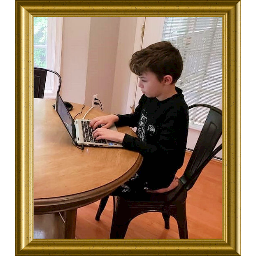

Chapter 1: Departure
Our story begins one evening in late June in the quiet backyard of a home in rural Virginia. A family - Mom, Dad, and two young boys, Roman, 9, and his younger brother Donovan, 6 – are roasting marshmallows over an open fire. Aside from the fire, the only light is that of the fireflies cavorting in the still evening air. But the forest behind them is alive with the sounds of nature – crickets, frogs, birds of various kinds, and lots of other sounds contributing to the raucous din.
Nevertheless, Roman notices a slight disturbance of some kind, perhaps a rustling of leaves or something, but he can’t quite determine what it is. He also notices that everyone and everything around him seems to be slowing down, including himself. And then everything seems to come to a complete stop. “Weird!” he thinks to himself.
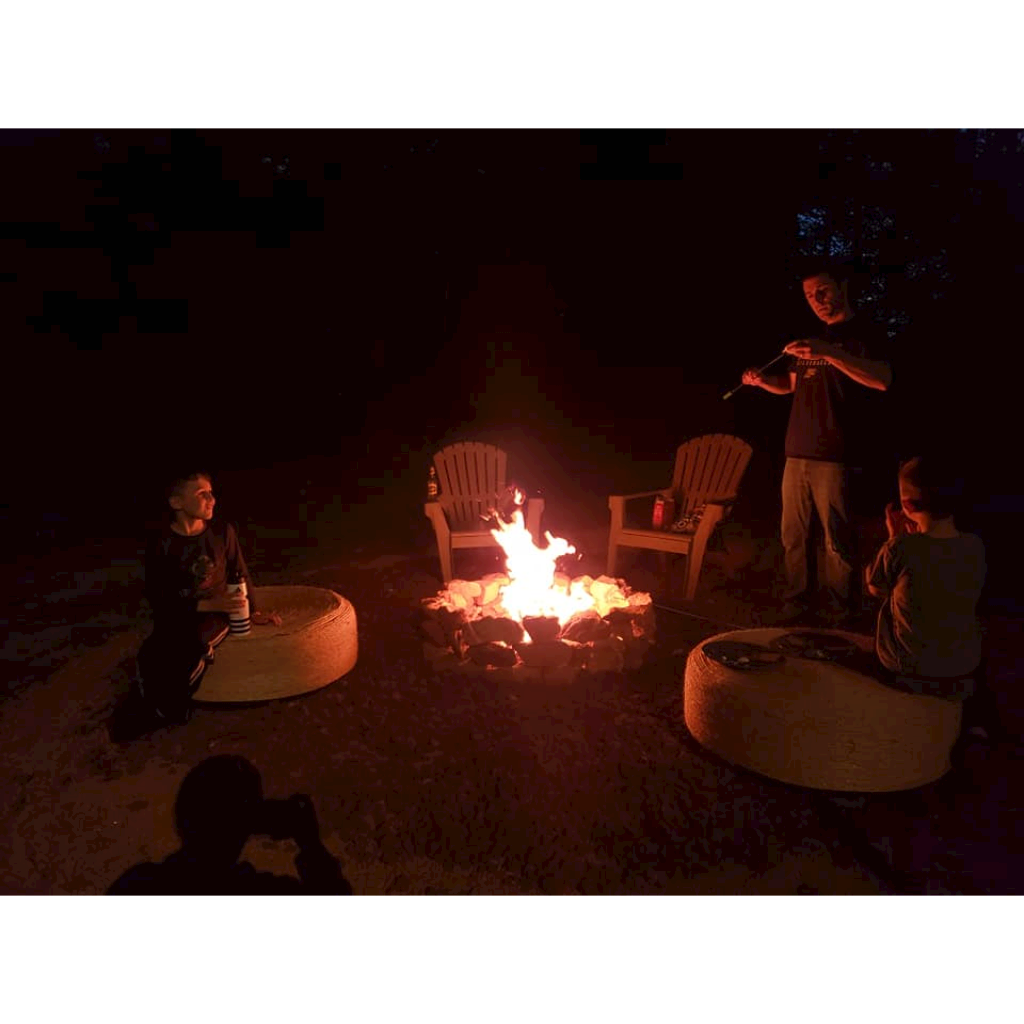
Johnny Whizbang
Lake Anna, Virginia, USA
June 2020
And then, suddenly, Roman finds himself blinking in the bright lights of what appears to be a futuristic star ship, standing next to a seemingly crazed person with a shock of unkempt white hair. That person is wearing a white lab coat and seems to be human, so that puts Roman a little bit more at ease.
Suddenly, the crazed person speaks, in what sounds a lot like English. “My name is Professor Warp Speed. Well, that’s my zippy name of course, not my birth name, but that’s the name I use. My birth name is Irving Schmidlap – not zippy, not zippy at all! What’s your zippy name?”
“Uh,” says Roman, “My name is Roman Christian. It’s the only name I have.”
“Roman Christian? Oh, my!” exclaims Professor Warp Speed, “That’s not zippy, not zippy at all! Your zippy name will be, uh, let’s see, how about Johnny Whizbang? Yeah, that’s it, Johnny
Whizbang! Very zippy! Very zippy, indeed!”
“Zip! Zip! Zip!” comes a chorus of voices from behind Roman – oops, I mean Johnny Whizbang – and he wheels around to see a dozen or more children about his age sitting in two rows of seats behind him. They all say “Hello!” in unison and then everyone laughs.
“Say hello to the Peanut Gallery!” says Professor Warp Speed, so Johnny Whizbang also says, “Hello”. Then he turns back to Professor Warp Speed and asks, “Where am I and how did I get here?”
“We borrowed you!” explains Professor Warp Speed. “You see, I’m from the present and all of you are from the past. Well, at least from my point of view. From your point of view, I’m from the future and so are all of the children in the Peanut Gallery. I picked them up at
different times and places on my way back through time. You were on the list, so I stopped here to pick you up, too.”
“Isn’t that kidnapping?” asks Johnny Whizbang.
“Oh, goodness gracious no, my boy! It was all approved by the President of the Medical History Department at Third Millennium University. All very legal and proper. I can assure you of that. I’ve got all the documentation. Do you want to see it?”
“Uh, no, I guess not. I’ll take your word for it,” replies Johnny Whizbang. “So who are you and why am I here?”
“I am a professor of Medical History at Third Millennium University and I am taking all of
you on a field trip through medical history,” says the good professor. “I froze time. Yes, sir! I can do that. I put everyone in your backyard into suspended animation, including you, and then I hornswoggled you into my timeship. When we are done, I will return you to the exact time and place when and where I got you and then unfreeze time. No one will be the wiser. Except for me and all of you, of course. What do you think of that, my boy?”
“Cool,” says Johnny Whizbang.
“Cool? Alexa. Define ‘cool’, 21st century slang,” says Professor Warp Speed, and a female voice says, “Zippy”. “Ah,” says Professor Warp Speed, “you mean zippy!”
“Zip! Zip! Zip!” comes the chorus from the Peanut Gallery, and once again Johnny Whizbang wheels around, but this time he also laughs. This might be fun, he thinks to himself.
“OK, Johnny Whizbang, why don’t you take a seat in the Peanut Gallery, but leave that seat on the end open. We’ve got one more pickup to make before we start the field trip. Let’s see, where are we heading? Ah, yes, St. Petersburg, Florida, 1957. Fasten your seat belts, buckaroos, we're going back into hyperdrive!”
Johnny Whizbang takes his seat and fastens his seat belt. He feels the timeship surge forward - or should I say backward? - and looks out the window. The world seems to be moving in reverse as the ship races back through time and eventually it all becomes a blur. Inside the ship, though, everything seems perfectly normal.
Suddenly, Professor Warp Speed cries out, “Here we are, buckaroos! December 1957. St. Petersburg. And, uh, 4743 22nd Avenue North. There he is, folks, sitting on his bike at the back of the house, right where he's supposed to be. This one should be easy. Alexa. Freeze time!”
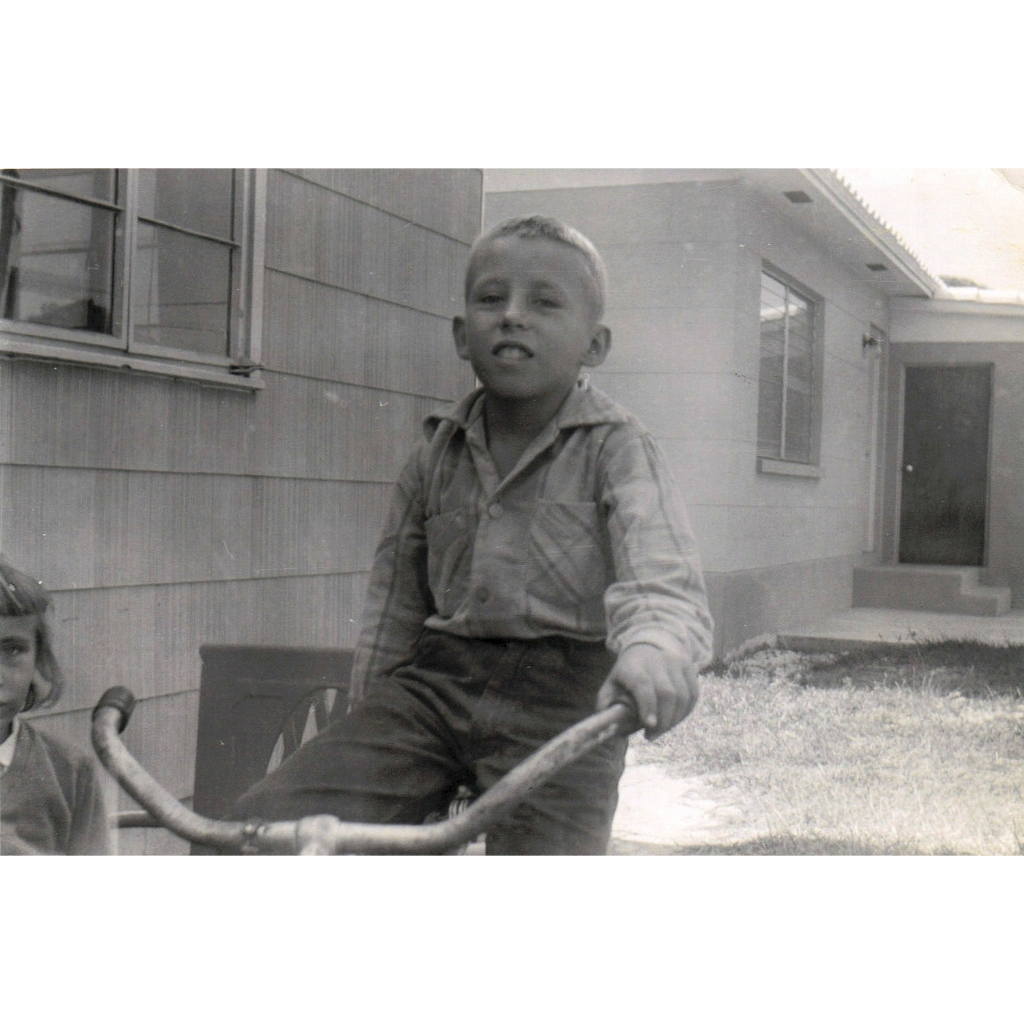
Rocky Rocket Boy
St. Petersburg, Florida, USA
December 1957
Professor Warp Speed leaves the ship and returns a few minutes later with another hornswoggled child, a boy about the same age as all the others. “Alexa. Wake the subject!” commands the professor, and the boy comes to life.
When Professor Warp Speed asks the boy his name, he says, “Bob Jamieson.” The professor says, “Not zippy! Not zippy at all!” and gives the boy a zippy new moniker: Rocky Rocket Boy. The Peanut Gallery chants in unison, “Zip! Zip! Zip!” and Rocky Rocket Boy takes the last remaining seat, right next to Johnny Whizbang.
Johnny Whizbang does a little bit of mental math, calculating approximately when this boy might have been born, and then leans over to Rocky Rocket Boy and whispers, “My grandpa’s name is Bob Jamieson. Could you be my grandpa?”
“How could I be your grandpa?” asks Rocky Rocket Boy, looking at Johnny Whizbang as if he might be crazy. “I’m the same age as you!” Apparently, Rocky Rocket Boy does not have a clear understanding of this whole time travel thing. Johnny Whizbang thinks it over and quickly dismisses the crazy notion that he could actually be related to any kid who wouldn't get that.
Professor Warp Speed fires up the timeship once more and off they go, hurtling again through time and space. “Yahooooooo!” yells Professor Warp Speed. “Zip! Zip! Zip!” shouts the Peanut Gallery. And off they go!
The kids in the Peanut Gallery are all very excited, but the next stop will take them to a time and place that is scarier than any of them ever imagined it would be.
Chapter 2: The Great Plague of London
"OK, buckaroos," says Professor Warp Speed, "We're going to begin our field trip in London in the year 1665. Over a period of 18 months, the city of London lost an estimated 100,000 lives, almost a quarter of its population, to the plague. This was the last major epidemic of the plague in London, and nowhere near the worst. It had come in waves, beginning as early as 1348. We're going to see this with our own eyes, but first we must prepare ourselves."
He explains that they will have to receive injections of a serum that will protect them from the infectious agent, a nasty little bacterium known as Yersinia pestis. They will also have to wear clothing suitable to the era, which the good professor has brought for them, all tailored to fit each of the students precisely. And they will have to learn the very strict rules about not doing or saying anything that might change history.
"While we are traveling to our destination," says Professor Warp Speed, "I would like to take the opportunity to explain to you what happened during what became known as the Black Plague or the Black Death. It was the worst pandemic in human history, taking anywhere from 75 to 200 million lives between 1347 and 1351 alone. Those are just estimates, of course, because accurate records were not kept in those days. And there were additional outbreaks throughout Europe for centuries after that. Since this is an English-speaking group, we will go to London to observe the effects of this horrible disease."
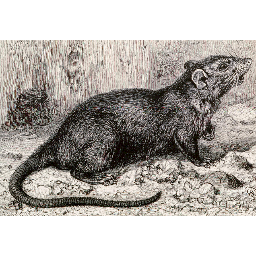
"Yersinia pestis was the infectious agent, a bacterium that caused a disease known as bubonic plague. It was carried by an aggressive species of rat, the black rat, that was common in London at the time. Fleas acquired the bacterium when they bit the rats, then infected humans when they bit them. Once infected, humans could infect other humans with whom they had close contact."
"No one knows for sure where Yersinia pestis originated, but it appears to have come from somewhere in Central Asia, where it was endemic in rodents. It was somehow transmitted to humans, probably through flea bites, and was carried to the Middle East along a network of trade routes known as the Silk Road. It arrived in Europe in the spring of 1347 and spread rapidly, reaching as far as England by 1348. And then it went on to ravage the continent repeatedly throughout the Middle Ages."
"Bubonic plague was a horrible disease that only a lucky few survived. No one knew the cause, but many people believed in the miasma theory, which held that it was the result of bad or corrupted air."
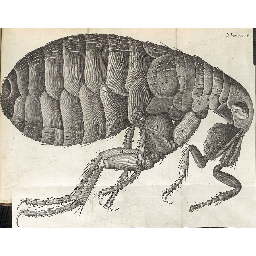
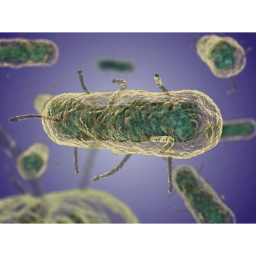
"Doctors resorted to a wide variety of treatments, including sweating, bloodletting, forced vomiting, and cupping. In some cases, a pigeon would be cut open and applied directly to a swelling. In all cases, the idea was to get the body to purge the disease. None of it worked, of course, but they kept trying anyway. In our time, any of a number of antibiotics could be used to cure this disease, but there were no antibiotics in those days. No one even knew that bacteria existed, since the microscope had not yet been invented."
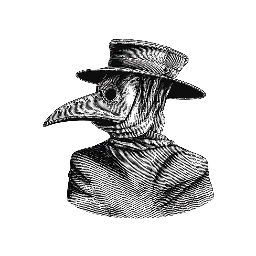
"The wealthy often fled to their country homes, but most people had to remain in the cities. They tried to avoid sick people whenever possible and wore elaborate masks designed to protect themselves from the bad air. Some people covered themselves from head to toe, as in this illustration, and this may have actually provided some protection."
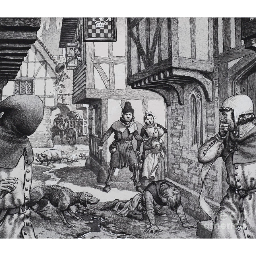
"Cities were very unsanitary places in those days. Livestock ran free through the narrow streets, which had troughs in the middle of them to collect the waste. People would dump their garbage, including food scraps and even human waste, into these troughs, and that would attract the rats responsible for the spread of the plague. One had to be very careful walking through these streets.
Great bonfires would be lit in the hope that the fire and smoke would somehow help to clear the bad air that was thought to be responsible for the disease. The smell of the waste in the streets and the smoke in the air made city life almost unbearable. The only relief from the plague came in the winter months, when the rats sought whatever warmth they could find and the flea population was greatly diminished."
When the timeship finally arrives at its destination, Dr. Warp Speed tells Alexa to cloak the timeship and parks it in a secluded area in the countryside about a mile from the city limits. The group emerges and begins hiking toward the city. When they arrive, the students are shocked by what they see. Dense clouds of smoke fill their lungs, making it difficult to breathe, and the stench is terrible. The streets are filthy and there are sick people everywhere. The townspeople cover their faces with masks, scarves, or whatever is available. They avoid each other and the students as they wander through the narrow streets. Everything that Dr. Warp Speed had told them was true! He had obviously been here before.
The students try not to interact with the townspeople, simply nodding or giving short answers when spoken to, but for the most part no one wants to speak to them anyway. As they wander around, they come upon a horse-drawn wooden cart attended by two rough looking men. "Bring out your dead!" they shout repeatedly as they progress slowly through the streets. And every once in a while, someone drags a body out to the street. The two men throw the body onto the cart and
continue on. The townspeople go about their business as if this is perfectly normal, which it is, according to Dr. Warp Speed. He instructs the group to follow the cart, which is eventually filled with bodies. The two men finally take it to the cemetery and dump the bodies into a large open pit, a mass grave that will be covered with dirt when it is full.
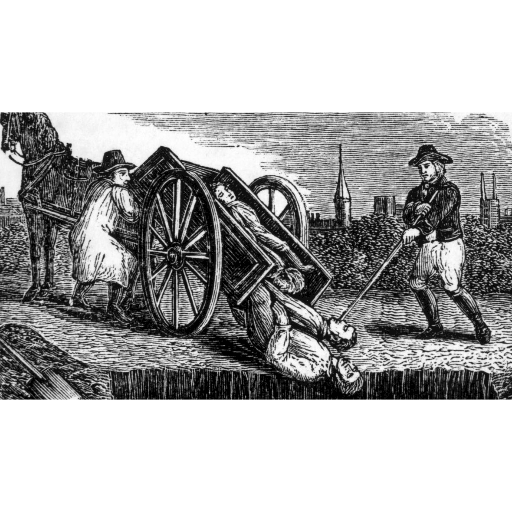
After a few hours, the children have had enough and want to return to the timeship, where they eat dinner and discuss the day's events. Eventually, they turn their attention to other matters and begin swapping stories about what life is like in the time periods from which they come. Rocky Rocket Boy tells a story about something that he claims happened at school one day.
"I hadn't done my homework," he says, "so when my teacher asked me who discovered America, I didn't have a clue, but I decided to trick her into giving me the answer. So I said to her, 'Mrs. McGillicutty, who do YOU think discovered America?' She looked very cross and said, "I don't THINK - I KNOW!" So I said, 'Well, I don't think I know either!'"
The other kids are all laughing, but the story sounds very familiar to Johnny Whizbang. He wonders where he has heard it before. And then, suddenly, he remembers that his grandpa had told him the exact same story! Could it be, he wonders for the second time, that Rocky Rocket Boy and his grandpa are one and the same?
Chapter 3. Smallpox Vaccination
The children sleep on route to the next destination, which is also in England, but this time in the spring of 1796. "Good morning, buckaroos!" says Dr. Warp Speed once the group is assembled around the breakfast table, and everyone says, "Good morning!" back to him.
"Today," says the professor, "we are going to experience one of the great moments in medical history, the world's first successful vaccination, in this case against a deadly disease known as smallpox. This disease no longer exists, thanks to the vaccines used to defeat it, but there is one person in this group who did receive a smallpox vaccination. That person is Rocky Rocket Boy, who was born in 1947. We picked him up in 1957, at a time when smallpox was still present in the world. However, it was completely eradicated in the United States by 1952, when Rocky Rocket Boy would have been only five years old. Rocky Rocket Boy would have received a smallpox vaccination as a very young child."
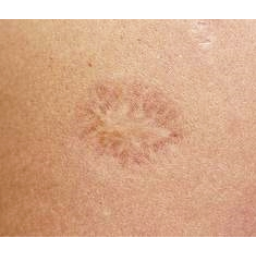
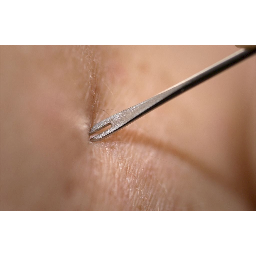
"The smallpox vaccination produced a scar because of the way it was administered. It was not just a shot, but rather was given by pricking the skin repeatedly with a bifurcated (two-pronged) needle. The scar would heal fairly quickly, though, especially in a very young child."
"No one knows when or where smallpox originated," says the professor. "It appears to have been with us since prehistoric times. Evidence of the disease has been found in Egyptian mummies dating back several thousand years and written descriptions of it have been found in Chinese documents dating back to the 4th century. It had spread throughout the Old World (Europe, Asia, and Africa) along trade routes by the 11th century and into the New World (North and South America) by the 16th century. About 3 out of every 10 people who contracted the disease died from it, and those who survived were usually left with ugly scars. Like the bubonic plague before it, smallpox was a horrible disease, but nobody knew what caused it or how to cure it.
"Of course," continues Professor Warp Speed, "smallpox was not defeated overnight. It took almost two centuries to kill it off. And that effort was started by Dr. Edward Jenner right here in England in the year 1796. To be fair, though, the idea did not originate with Jenner. In 1721, Lady Mary Wortley Montagu imported the practice of variolation into England after seeing it performed in Constantinople. This was a risky procedure whereby a person was infected with the actual disease by poking the skin repeatedly with a bifurcated needle in order to provoke immunity. Sometimes it worked and sometimes it didn't, often causing the disease instead of preventing it."
"Jenner was born in 1749 and received a strong basic education. As a child, he was inoculated against smallpox by variolation, which had a lifelong effect on his health. At the age of 14, he was apprenticed to a surgeon for 7 years, where he gained most of the experience to become a surgeon himself. But Jenner was interested in a wide variety of subjects, including zoology, which is the study of animals. And it was his interest in zoology that led to his experiments with vaccination. It gave him an understanding of how disease transmission occurred between species."
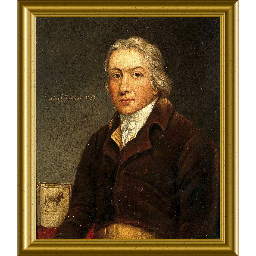
"Jenner noticed that milkmaids seldom developed smallpox and reasoned that it might be because they had been exposed to a similar but milder disease common in cows. Could it be, he wondered, that exposure to cowpox created an immunity to smallpox? Well, as it turned out, that was already common knowledge to the farmers and milkmaids, so Jenner decided to do an experiment to prove the connection scientifically."
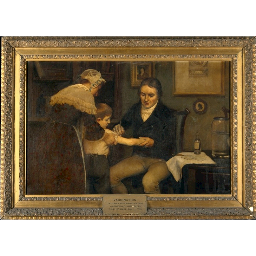
"When the milkmaids contracted cowpox, they would get blisters on their hands. When a milkmaid named Sarah Nelmes contracted the disease from a cow named Blossom, Jenner asked the girl if he could extract some of the pus from her blisters to conduct an experiment. She agreed and he collected his sample."
"Next, Jenner went to his gardener and asked for permission to use the cowpox pus to inoculate the man's 8-year-old son against smallpox. The man agreed, so the boy, James Phipps, was inoculated in both arms with the pus using the variolation technique mentioned earlier. The boy developed a mild fever, but not a full-blown infection. Later, Jenner used the same technique to try to infect the boy with smallpox. As expected, the infection did not take place. He tried it a second time with the same result, then repeated the experiment on a total of 23 people, including his own 11-month-old son Robert, to prove that his vaccination technique worked."
- Full access to our public library
- Save favorite books
- Interact with authors
- < BEGINNING
- END >
-
DOWNLOAD
-
LIKE(2)
-
COMMENT()
-
SHARE
-
SAVE
-
BUY THIS BOOK
(from $7.39+) -
BUY THIS BOOK
(from $7.39+) - DOWNLOAD
- LIKE (2)
- COMMENT ()
- SHARE
- SAVE
- Report
-
BUY
-
LIKE(2)
-
COMMENT()
-
SHARE
- Excessive Violence
- Harassment
- Offensive Pictures
- Spelling & Grammar Errors
- Unfinished
- Other Problem






COMMENTS
Click 'X' to report any negative comments. Thanks!