Thanks for reading!
best for ages 10+ Or 5th grade reading level.

A cell is the basic unit of life. The Cell Cycle
explains the growth and division of the cell. This cycle includes four stages, which are shown in the picture one. The cell cycle is important for survival, because it’s in charge of creating new cells everyday.
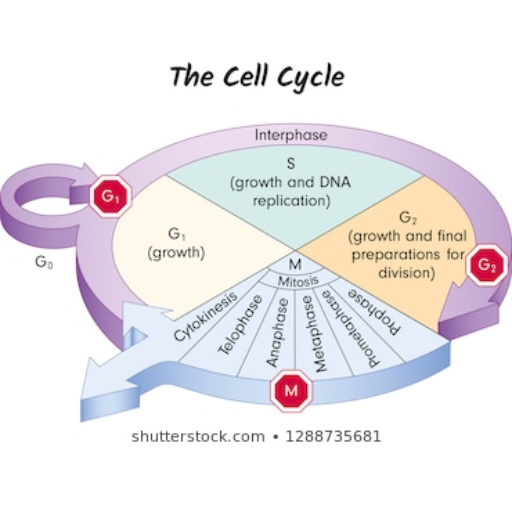
Picture 1:
One of the four stages of the cell cycle is the G1 phase, also known as the Gap 1 phase. In this phase the cell grows, and synthesizes mRNA (Messenger Ribonucleic acid) and proteins, which then prepares for events leading to mitosis. As the G1 phase ends, the cell moves into the S phase. In the S phase also known as the synthesis phase, the cell forms from the parent cells, which then divides into the daughter cells, at the end of the S phase it then goes into the G2 phase. In the G2 phase, also known as the Gap 2 phase, the cell goes through cell division, then preceded through Mitosis. During the M phase the cell divides its DNA and cytoplasm, making 2 new cells. The M phase is made up of Mitosis and Cytokinesis.
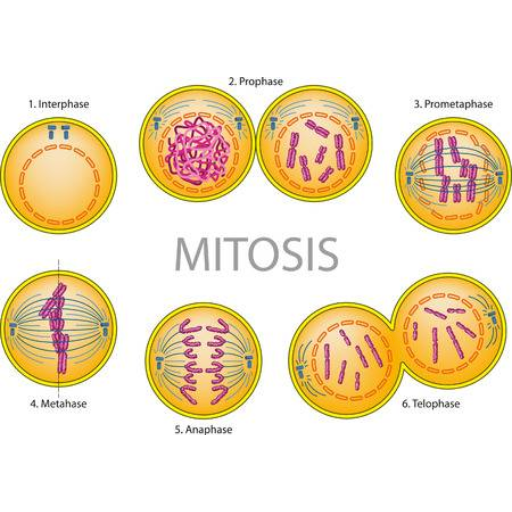
A Chromosome is a structure inside the nucleus of the cell, that is made of protein and a single DNA, which is passed from the parent to the offspring. There are three different parts of a chromosome, those of which are the centromere, the arm, and the telomere. During Mitosis, part of the cell cycle in which the chromosomes separate divides into two nuclei, while
Interphase is the resting phase, also known as the the longest in the cell cycle. The process of mitosis is shown in picture two.
Picture 2:
During Mitosis, it goes through five phases. Those phases being prophase, prometaphase, metaphase, anaphase, and telophase. During prophase, the longest phase of mitosis, the chromatin shrinks in the chromosome, which then breaks down the nuclear envelope. During prometaphase, the process of separating copied genetic material from the nucleus of the parents cells, which transfers into two identical daughter cells. During Metaphase the nucleus disappears, causing the chromosomes to appear in the cells cytoplasm, which then becomes visible under a microscope.
During Anaphase the chromosome pairs separate into two identical, single chromosomes. Finally during Telophase the cell separates the DNA from the cytoplasm, when the nuclear membrane forms around the chromosomes. Cytokinesis occurs after mitosis, it’s the cytoplasmic division of the cell.
Cancer Cells are cells that divide, forming tumors, and creating unusual cells. Cancer is mainly caused by a change in DNA, occurring mainly in the genes. These genes can cause cancer by cell division rates, organizing cell death. Cancer cells and normal cells are different, cancer cells are often sad looking and divide out of control, while normal cells look whole and don’t divide. Cancer cells spread rapidly, they normally spread to normal tissue, lymph nodes , or the organs. Cancer often spreads to other parts of the body, also known as Metastatic cancer. The cancer cells can cause heathy cells to grow out of control, or keep them alive when they should have died.
- Full access to our public library
- Save favorite books
- Interact with authors
- < BEGINNING
- END >
-
DOWNLOAD
-
LIKE(1)
-
COMMENT()
-
SHARE
-
SAVE
-
BUY THIS BOOK
(from $2.99+) -
BUY THIS BOOK
(from $2.99+) - DOWNLOAD
- LIKE (1)
- COMMENT ()
- SHARE
- SAVE
- Report
-
BUY
-
LIKE(1)
-
COMMENT()
-
SHARE
- Excessive Violence
- Harassment
- Offensive Pictures
- Spelling & Grammar Errors
- Unfinished
- Other Problem





COMMENTS
Click 'X' to report any negative comments. Thanks!