This book is dedicated to Bill Nye The Science Guy

Central and Peripheral Nervous System
The PNS(Peripheral Nervous system) is made up of all the nerves throughout the body.
The CNS (central Nervous system) consists of the brain and the spinal cord.


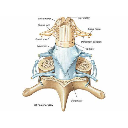
ewww

What are the meninges? The meninges are a set of membranes that separate the spinal cord from its surroundings and around the cranium they are called cranial meninges. Functions include: supply blood and protect spinal cord.
Spinal Meninges
Spinal Cord
Surrounding the spinal cord is white matter which has ascending and descending tacks that carry information.
The spinal cord is around 18 inches long and goes from the base of the cranium, to the L1 vertebrae.
There is also grey matter surrounding the spinal cord that processes all of the spinal reflexes
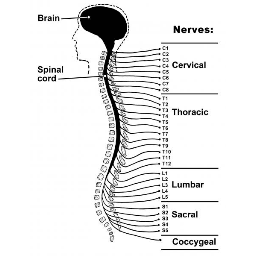
Along the spinal cord are spinal nerves. These nerves have mixed functions, meaning that they carry both sensory and motor information.
Spinal Nerves
There are also these "backup nerves" called nerve plexuses. These are webs of interwoven that are connected to the spinal nerves. They serve as additional or "backup" pathways whenever a spinal nerve gets damaged.
Examples of spinal nerves:
- Phrenic nerve, which controls the diaphragm
- Axillary nerve, which controls the shoulders
- Musculocutaneous nerve, which controls the upper arm
- Radial nerve, which controls the posterior portion of the arm down to the hand
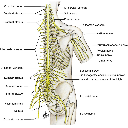
Our body senses pain before our brain processes it. For example if we put our hand on a hot stove, our spinal reflexes will move our hand away before our brain processes the pain.
Spinal Reflexes
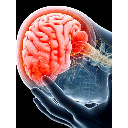
Overview of Brain
The brain is made up of 3 main regions, the Cerebrum, Cerebellum, and Brain Stem.
The Cerebrum is the largest part of the brain and controls all conscious thoughts. The Cerebellum is the "small brain" and it fine tunes conscious and subconscious movements, like balance. Finally, the brain stem processes information between the spinal cord, cerebrum, and cerebellum with ascending and descending tracks.
The Cerebellum
The cerebrum is the largest part of the brain. It controls conscious thoughts and intellectual functions. It also processes sensory and motor information. The surface of the cerebrum is made up of gray matter and is called the cerebral cortex
The cerebrum has two hemispheres, which are separated by the corpus callosum. It also has four lobes (frontal, parietal, occipital, and temporal).
The cerebrum is contralateral. This means that each hemisphere receives information from the opposite side of the body.
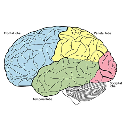
Sensory Motor and Processing area
Sensory: Olfactory cortex = producing smell. Auditory cortex receiving information from sound and Gustatory information from taste.
Motor (Voluntary movements) Frontal eye field voluntary eye movement. Primary Motor Cortex controls all skeletal movements. Broca's area used for involuntary speech muscles
Processing: Primary sensory cortex = receive info to touch. The somatic sensory associated area= get info and recognize pain. The prefrontal cortex =manages info to intellectual activities!



- Full access to our public library
- Save favorite books
- Interact with authors
- < BEGINNING
- END >
-
DOWNLOAD
-
LIKE
-
COMMENT()
-
SHARE
-
SAVE
-
BUY THIS BOOK
(from $2.99+) -
BUY THIS BOOK
(from $2.99+) - DOWNLOAD
- LIKE
- COMMENT ()
- SHARE
- SAVE
- Report
-
BUY
-
LIKE
-
COMMENT()
-
SHARE
- Excessive Violence
- Harassment
- Offensive Pictures
- Spelling & Grammar Errors
- Unfinished
- Other Problem





COMMENTS
Click 'X' to report any negative comments. Thanks!