
Foreword
After two years of solitary life at Walden Pond, Thoreau published Walden; or, Life in the Woods in 1854. Documenting his social experiment and defiance against society’s repetitious lifestyle, Thoreau addresses the multiple inquiries people had of his time in the woods, with a frequent one being whether or not he ever felt lonely in the woods. Thoreau provides a thorough and honest explanation to that common question in the chapter “Solitude”.
Many of Thoreau’s peers have argued that being in solitude is far too lonely. Being around other human beings is the key to companionship. However, in “Solitude”, Thoreau heavily emphasizes that solitude does not equate to loneliness and that those who insist they are well-acquainted are those who are the loneliest. When defining solitude, Thoreau presents a comparison between a farmer and a student. During the day, the farmer is employed in his fields, and so he does not feel alone. However, when the day retires, he “cannot sit down in a room alone, at the mercy of his thoughts, but must be where he can ‘see the folks’” (Thoreau). The farmer then
“wonders how the student can sit alone in the house all night and most of the day without ennui and ‘the blues;’ but he does not realize that the student, though in the house, is still at work in his field, and chopping in his woods” (Thoreau). With parallel structure and the repetition of “his”, Thoreau logically illustrates that the definition of solitude varies for every individual. Although employed, the farmer still feels the lingering loneliness when apart from his employment and people. On the other hand, the student is constantly at work despite remaining in the same place and away from other individuals. Because the student is constantly occupied with tasks and himself, the student does not feel lonely; he is merely in solitude. The farmer depends on other individuals to validate his existence. By employing repetitious sentence structure and repeating “his”, Thoreau emphasizes that the value of an individual’s solitude is measured by the individual and never by spectators.
Thoreau also exposes that most of society upholds a robotic facade to appear occupied. Through anaphora, Thoreau displays that society's robotic way of living is a facade to obscure its loneliness. When Thoreau addresses society, he
reveals, “We have had to agree on a certain set of rules, called etiquette and politeness, to make this frequent meeting tolerable and that we need not come to open war. We meet at the post-office, and at the sociable, and about the fireside every night; we live thick and are in each other’s way...” (Thoreau). By repeating “we” multiple times, Thoreau unifies society to compare their similar daily actions. Most people’s life consists of a trajectory that proceeds from school, work, marriage, children, retirement. Society simply follows a schedule. Society addictively adheres to times and rules so that they can guarantee human companionship. To society, loneliness is unacceptable. Individuals must be engrossed every second of the day to resist a solitary lifestyle. However, once society returns to their residence and retires like the farmer, society is forced to live in loneliness until its shallow and mindless day begins again. With every “we” that is repeated, Thoreau logically conveys that the people who unify to criticize Thoreau for being lonely are indeed lonely themselves.
As for Thoreau, he never felt alone in nature. He can never feel alone in nature when he was surrounded by so much. When he was living at Walden Pond, Thoreau
was “no more lonely than a single mullein or dandelion in a pasture, or a bean leaf, or sorrel, or a horse-fly, or a bumble-bee” (Thoreau). He was “no more lonely than the Mill Brook, or a weathercock, or the north star, or the south wind, or an April shower, or a January thaw, or the first spider in a new house” (Thoreau). Through polysyndeton, Thoreau lists out multiple elements of nature with multiple conjunctions to illustrate the immense sense of belonging he felt. In nature, Thoreau discovered a place for himself. Just like a dandelion, a bee, a spider, or the wind, Thoreau belongs in nature. Although Thoreau was not surrounded by the company of other human beings, he was surrounded by nature. Nature offers far more than society does.
With his philosophical thinking, Thoreau was ahead of his time. His works were published almost two hundred years ago, yet they speak the truths that contemporary society still remains ignorant of. In contemporary society, people are mindlessly engrossed in technology, achievements, work, materials. Not once do most people stop for a second of their programmed day to recognize nature and the company and relaxation it provides. Not once do people ponder and realize
whether or not they are occupied or are simply choosing to engage in relationships to validate their existence. Thoreau had already foreseen such tragedies during the 19th century, and to see these tragedies accumulate and intensify, Thoreau’s critique will be one of sorrow and anger. Therefore, through this children’s book, Thoreau’s message of the value of solitude and nature is immensely simplified to illustrate the complications that society and its man-made institutions have created. As each page of the book unfolds and a new location is shown on each page, it is depicted that in solitude, an individual’s thoughts can transcend time and space. The quotes within the book are chosen in order to illustrate the limitless possibilities of a solitary life in nature, and that in solitude, an individual can travel to the most wonderful and lively places despite remaining in the same location. In solitude, Thoreau demonstrates that he gained far more mental freedom than he did in civilization for he was free to think and ponder and truly belong in nature. The lack of human beings is not the definition of a lonely lifestyle, but rather of how much freedom an individual is capable of achieving.
Now, let's come along with Thoreau on his journey in the forest.





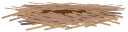


Hello, I’m Henry David Thoreau, but you can call me Thoreau. The evening weather today is wonderful, so let’s go on a walk, just you and me.



Look! A beautiful pine tree! If you look very closely, you’ll see each pine needle is like a little world! Nature is full of life. It is only when you are alone that you can truly see each of nature's little world.

“Every little pine needle expanded and swelled with sympathy and befriended me” (Thoreau).
Try it yourself! Close your eyes and imagine yourself in another world.
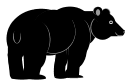





And look! Now we’re in space with our very own dazzling stars, shining moon, and the hot sun! You've got the colorful planets of our solar system too! And the thousands of twinkling stars are your friends!

“I have, as it were, my own sun and moon and stars, and a little world all to myself” (Thoreau).



- Full access to our public library
- Save favorite books
- Interact with authors
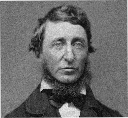
Henry David Thoreau
- Born on July 12, 1817, in Concord, MA
- Died on May 6, 1862, in Concord, MA
- a famous American naturalist, essayist, and Transcendentalist
- Attended Harvard University and graduated at the top half of his class in 1837
- His mentor, Ralph Waldo Emerson, introduced Transcendentalism to Thoreau and supported his literary works
- Spent nearly two years living a solitary and simple life at Walden Pond where he defied society's standard of living and encouraged nonviolent civil disobedience
- Published his experiment at the Walden Pond in Walden; or, Life in the Woods in 1854
- His works focusing on nature and the government remains relevant in contemporary society
- < BEGINNING
- END >
-
DOWNLOAD
-
LIKE(1)
-
COMMENT()
-
SHARE
-
SAVE
-
BUY THIS BOOK
(from $3.99+) -
BUY THIS BOOK
(from $3.99+) - DOWNLOAD
- LIKE (1)
- COMMENT ()
- SHARE
- SAVE
- Report
-
BUY
-
LIKE(1)
-
COMMENT()
-
SHARE
- Excessive Violence
- Harassment
- Offensive Pictures
- Spelling & Grammar Errors
- Unfinished
- Other Problem





COMMENTS
Click 'X' to report any negative comments. Thanks!