
is for Automic Nervous System
The autonomic nervous system regulates certain body processes, such as blood pressure and the rate of breathing. This system works automatically, without a person's conscious effort. For example, your heartbeat happens on its own, you don’t have to consciously think about it. Blinking too is something you do that is just second nature.

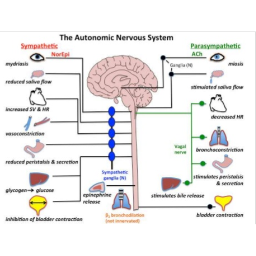
is for Brain
The nervous system is like a network that carries messages back and forth from the brain to the body. It does this by using the spinal cord to transport electrical impulses, which runs from the brain down through the back. Simply put, the brain is the most important part of the nervous system because it is the one that relays the messages

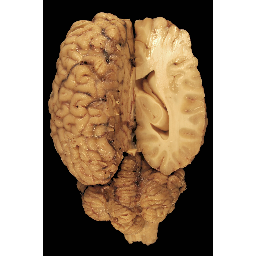
is for Central Nervous System (CNS)

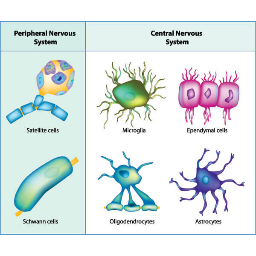
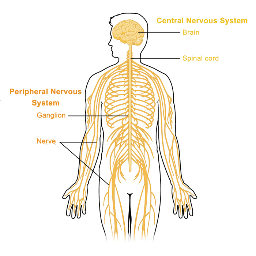
The CNS is made up of the brain and the spinal cord. The CNS controls most functions of the body and mind. It consists of two parts: the brain and the spinal cord. The brain is the center of our thoughts, the interpreter of our external environment, and the origin of control over body movement. The CNS is also where the 4 (astrocytes, microglial, ependymal, oligodendrocytes) cells are found.
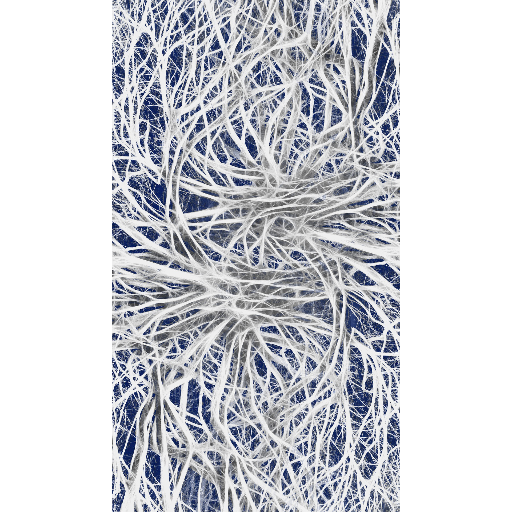
is for Dendrite

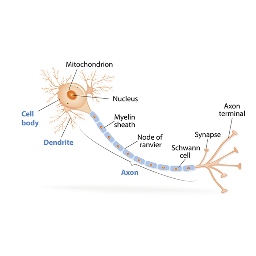
Dendrites are the tree-like things that are at the top of a neuron. They are the part that takes in information to send it off down the axon.
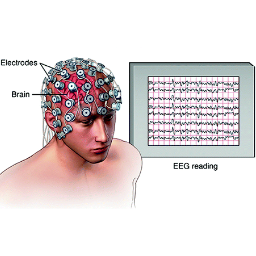
is for EEG (electroencephalogram)

The EEG is a record
of electrical activity of the brain
obtained from scalp electrodes. The brian acivity is created by your nervous system.
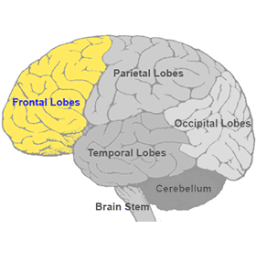
is for Frontal Lobe

The frontal lobe is (at the front of the brain) helps with reasoning, planning, speech, movement, and emotions.
is for Glial Cells

Glial cells are cells in the central nervous system and the peripheral nervous system that maintain homeostasis, form myelin, and provide support and protection for neurons.
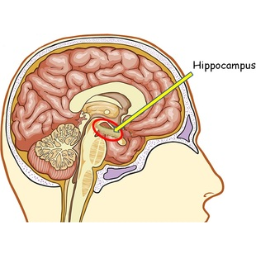
is for Hippocampus

Hippocampus is a brain structure in the temporal lobe. It plays a huge role in learning and memory, it also has a very vulnerable structure that gets damaged by a variety of stimuli. Studies have shown that it also gets affected in a variety of neurological and psychiatric disorders.
is for Involunary Movements

Involuntary movements are part of the Autonomic Nervous System. These are things like your heartbeat, inflation and deflation of your lungs, blinking, and more.
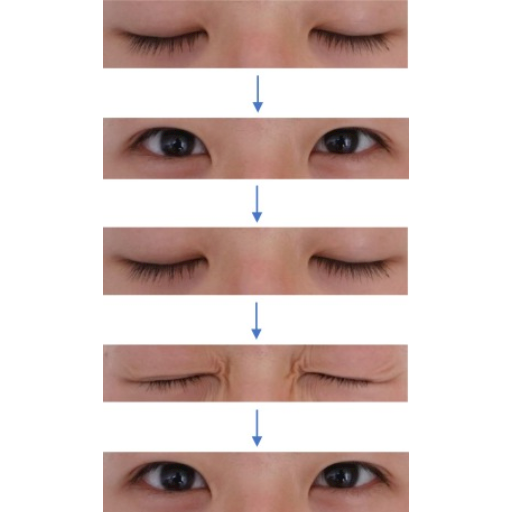
is for Jitter

Jitters are a measure of the variability of potentials of two muscle fibers innervated by an individual axon as measured by single-fiber electromyography
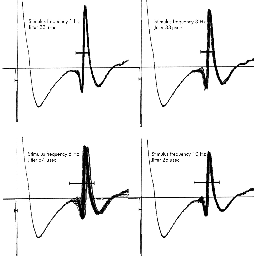
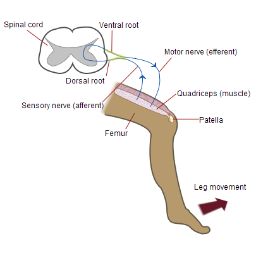
is for Knee-Jerk Reflex

The knee-jerk reflex is a reflex that makes you kick when hit just below the knee. It tests the L2, L3, and L4 nerves, and the spinal cord. It could also be an expression, meaning you respond to something in an equally unthinking way. If you instinctively assume that someone who loves clowns wouldn't have much in common with you, that's a "knee-jerk" reflex.
is for Limbic System

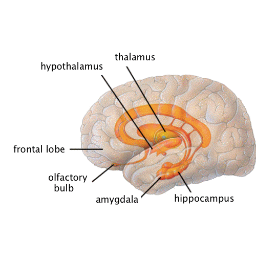
The limbic system is the part of the brain involved in our behavioral and emotional responses, especially when it comes to behaviors we need for survival. These include feeding, reproducing, and fight or flight responses.
is for Meninges

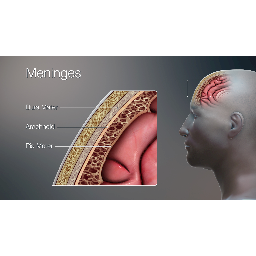
Meninges are the layers surrounding your skull and vertebral canal as well as your spinal cord. These three layers of liquid, dura mater, arachnoid, and pia matter, protect the CNS. The dura matter is the tough outer layer, the arachnoid cushions the brain, and the pia matter acts as an adhesive on the surface of the brain and spinal cord.
is for Neuron

The neuron is the basic working unit of the brain, a specialized cell designed to transmit information to other nerve cells, muscle, or gland cells. Axons allow neurons to transmit electrical and chemical signals to other cells.
is for OlFactory Bulb

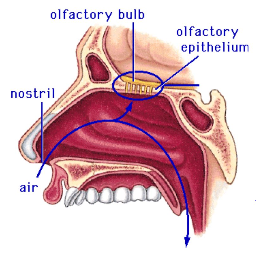
The olfactory bulb is a structure involved in olfaction, the sense of smell. It sends olfactory information to be further processed in the amygdala, the orbitofrontal cortex (OFC), and the hippocampus where it plays a role in emotion, memory, and learning.
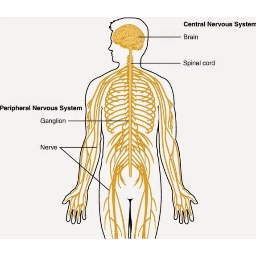
is for Peripheral Nervous System

The PNS includes cranial nerves, spinal nerves, peripheral nerves, and neuromatic junctions. The primary role of the PNS is to connect the CNS to the organs, limbs, and skin. Under this is the somatic nervous system. It is the part of the PNS associated with the voluntary control of body movements by skeletal muscles. The somatic nervous system consists of afferent nerves or sensory nerves, and efferent nerves or motor nerves.
- Full access to our public library
- Save favorite books
- Interact with authors
- < BEGINNING
- END >
-
DOWNLOAD
-
LIKE
-
COMMENT()
-
SHARE
-
SAVE
-
BUY THIS BOOK
(from $5.39+) -
BUY THIS BOOK
(from $5.39+) - DOWNLOAD
- LIKE
- COMMENT ()
- SHARE
- SAVE
- Report
-
BUY
-
LIKE
-
COMMENT()
-
SHARE
- Excessive Violence
- Harassment
- Offensive Pictures
- Spelling & Grammar Errors
- Unfinished
- Other Problem






COMMENTS
Click 'X' to report any negative comments. Thanks!