Over the years, women have fought against all the odds to make a significant contribution to various historical courses. The pioneers of the fight for equality for women in society endured a severe environment to make gains that modern women can enjoy.

QAUSERE (VERZIVOLLI) AXHIREXHA - 1951
NORTH MACEDONIA
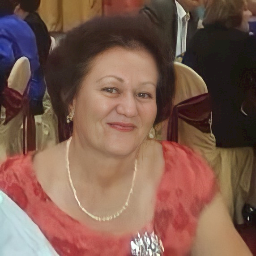
Qausere Axhirexha was born in 1951 in Diber, Macedonia. She comes from a commercial and intellectual family. She finished primary school in her hometown with great success, she also finished high school in her hometown. After graduating from high school she enrolled in the philosophical university of Prishtina, branch pedagogy. She was one of the first Albanian students from Dibra and she graduated from this university with excellent success. Is one of the first generations of the high school "Edravko Cockovski" in Diber, employed as the first woman, professor and later as a lecturer at this high school. Her work and contribution in the field of education and upbringing of the new generations, has been excellent and as a result has had a special commodity from the students, colleagues, parents and leaders of this institution. Her tireless work in the emancipation of Albanian women has always been an inspiration for her activities carried out inside and outside the high school. It should be noted that our high school was not only a hearth of knowledge but also something more special, where the love for the country (homeland), traditions, culture, professor-student relations were cultivated and this for us has been the greatest pleasure, that from students to form educated generations that tomorrow in life become worthy citizens.
The work of students with professors has always been satisfying, especially when we have participated in various activities, sports, drama organization, group work, participation in seminars."The main goal of all activities carried out in our center has been that Albanian women and girls walk alongside men and insist on achieving full equality so that it always moves forward and is where it needs to be" - says Mrs. Qausere in the full sense of the word.
In addition to the activities of the school, Mrs. Qausere has been distinguished as an activist in the social, political and economic sphere in the city of Dibra, since 1993 she has been the president of the Albanian Women's Association in Diber and within this non-profit social organization, has realized a range of activities related to the role of women, their rights, and gender equality in society. The rallies held by this association for the opening of the University of Tetova, to protest the issue of the Radika River, for the political imprisonment of Flora Brovina, Ukshin Hoti, the unjust killings on the Albanian border, etc. are well known. An important role was played during the Kosovo crisis (1999) where 7000 citizens from Kosovo came to the city of Dibra and all the management of these citizens and the connection of the Albanian woman, headed by Mrs. Qausere. it was a very great sacrifice of the activists of the association in accepting, distributing, feeding and managing this extremely difficult situation.
In addition to social, societal and school activities, she has also contributed to the music culture as a regular member of the "Aki Stermili" society and participant of the ensemble group "Penestia" with her active participation in concerts, organized festivals. She was also distinguished in the drama group near the center of the palace of culture where she participated in the realization of the drama "Nita" by Josip Rela, with which drama received the first prizes in Gostivar, Kocan and second place in Prizren.
The main wish of the professor is the active participation of high school students in all activities that take place within this institution, especially Albanian girls to be participants and leaders in these activities.
MOTHER THERESA
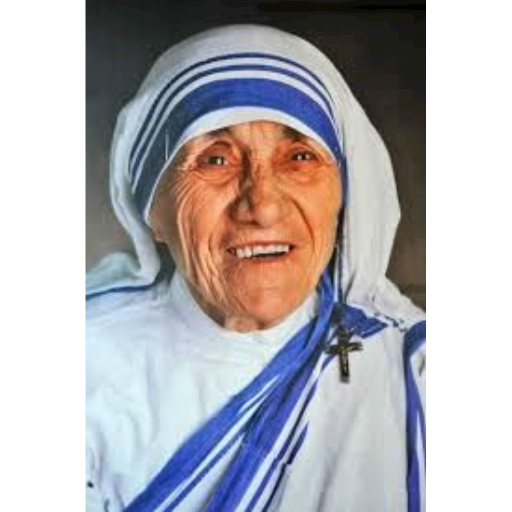
njezë Gonxhe Bojaxhiu known as Mother Teresa was born in Skopje on August 26, 1910 and died on September 5, 1997 in Calcutta, (India), was a well-known Albanian humanist, winner of the Nobel Peace Prize.
Gonxhja was the third child of Kole Bojaxhiu (Nikolle Bojaxhiu) originally from Mirdita and Drane Bojaxhiu from Novo Sella of Gjakova. He was born in Skopje, Albania, occupied by the Ottoman Empire, today the Republic of Macedonia, on August 26, 1910. Skopje was taken from Albania by Macedonia on January 1, 1918, based on the Treaty of Versailles. One day after his birth he was baptized in the church of the Heart of Christ by the then parish priest Dom Zef Ramaj. Kola and Drania had 5 children, two died in early childhood. Mother Drania was very afraid that Gonxhja would die immediately after giving birth, because she looked weak and healthy. Gonxhja had a brother and a sister. His brother was called Lazër Bojaxhiu and he studied at the Military Academy in Graz, Austria, but for political reasons he emigrated to Italy early on. The sister was called Age Bojaxhiu. Her father engaged in trade and gathered Albanian artists and patriots in his house. Gonxhja received his first education in an Albanian school in Skopje, where he also completed high school, but in the Serbo-Croatian language. Gonxhe's youthful passions were three: becoming a teacher, writing and reciting poetry, and composing and playing music. She took the name "Teresa" when she was 18 years old and became a nun. Mother Teresa left Skopje on September 26, 1928 for Dublin, Ireland. From that day on, mother, daughter and sister would never be seen again. On September 12, 1928, Gonxhja wrote this letter to her aunt: “Skopje 12. 09. 28 Dear Aunt Lis! On the 26th of this month I am leaving Skopje. I can not write two or three lines to you. Goodbye, I want God to give you everything your heart desires. I want to forgive you the most cordial things, Gonxhja ".
This was the moment when she finally broke up with the family and only after 30 years, would she meet her brother, Lazri. Mother Drania and sister Age went to their homeland, Albania, before the Second World War. Mother Teresa settled in Calcutta (India) where she initially became a teacher and soon the director of a girls' school. Called "Mother Teresa of Calcutta" when she founded the "Missionaries of Charity" order (1951) to serve the poorest and most hopeless in Calcutta, India and around the world. In 1979, when she received the Nobel Peace Prize, the whole world learned that Mother Teresa was Albanian. But Albania is not silent. The Socialist People's Republic of Albania had not given a visa to the future Nobel laureate either to see her mother living in Tirana, or to attend her funeral in 1974, or to see the grave. They did not even give her this visa even when her fame had spread in all four corners of the world until the early 1990s. The small Albanian woman had become a living legend. She was the caregiver of 7,500 children in 60 schools, the mother who treated 960,000 patients in 213 dispensaries, the only one in the world to treat 47,000 leprosy victims in 54 clinics, the care of 3,400 abandoned elderly people in the streets, in 20 nursing homes, had adopted 160 illegitimate and orphaned children. These are the mid-80s figures. As long as Mother Teresa was alive and to this day the numbers have changed a lot. was a mother who treated 960,000 patients in 213 dispensaries, was the only one in the world to treat 47,000 leprosy victims in 54 clinics, cared for 3,400 abandoned and left-handed elderly people, in 20 nursing homes, had adopted 160 illegitimate and orphaned children . These are the mid-80s figures. As long as Mother Teresa was alive and to this day the numbers have changed a lot. was a mother who treated 960,000 patients in 213 dispensaries, was the only one in the world to treat 47,000 leprosy victims in 54 clinics, cared for 3,400 abandoned and left-handed elderly people, in 20 nursing homes, had adopted 160 illegitimate and orphaned children . These are the mid-80s figures.
As long as Mother Teresa was alive and to this day the numbers have changed a lot.
Mother Teresa was not a goddess and anyone could talk to her. It even had the exact address: a gray building on Bose Road, built in a noisy, crowded neighborhood crowded with tea-makers, vendors, and other traders of various spare parts, as well as juicers. Here, in the very center of Calcutta, lay the general headquarters of the Order, the "Mother's House," near the gate of which was placed a wooden sign that read: "Mother Teresa." The house of Mother Teresa has been visited by personalities such as: the Queen of Britain, former presidents of the United States George Bush and Jimmy Carter, Yasser Arafati, Princess Diana and many others. Mother Teresa has been very generous.
Some award given in mother Theresa years:
Damian Dutton prize
1962-Ramon magaysays prize 1996-Honorary citizen of the USA
1973-Templeton prize 1997-Honorary decoration Kosovo
1968-Balzan prize 1980-Bharat ratna
1979-Nobel peace price 1985-Medal of freedom
1980-Bharat ratna 1985-Medal of freedom
In 2003, Tirana Airport, Albania was named "Mother Teresa". Her bust was inaugurated at the entrance of this airport in 2007.
IBE PALIKUQE
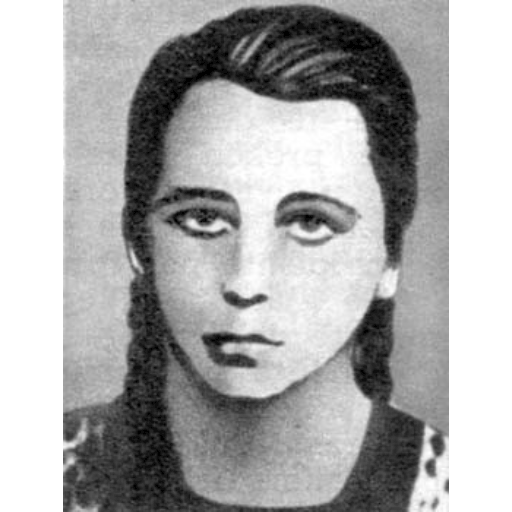
Ibe Palikuqe was born in Diber in 1927. She had a middle class family.She had a brother called Eshtref. Her father was an imam. After finishing primary school, she stayed at home, like most albanian girls at her age and she was preparing for a life of housewives. Since 1942 her house became a base of illegal comrades and she herself a brave propagandist of the ideas of the liberation war. She was arrested along with her mother and imprisoned (1943) from her illegaly work. After her release from prison, she continued her revolutionary activity. She enlisted in the partisan battalion of Dibra and with the organization of the XVIII S Brigade (1944) was appointed deputy commissioner of the company.
But when she started to grow a little, she could not stay home like that and started to engaging. She received her first assignment as a courier to carry letters and transmit illegally. Since then she moves easily through the city because the invaders of her city and of her place was not suspect that she was a communist, because her father was an imam. Ibe's activity was highly appreciated by others in the area of Dibra, but this activity was not only in Diber, but also in other villages around it. When the partisans withdrew from Dibra, Ibe left with them and joined the units of the National Liberation Army and the POM. However, they returned her to Diber, illegally, as a member of the CPY Local Committee for Diber. Her political work then took place among young women. After the successive fights she did and the gains, no one could stop her, she fought for her homeland and wanted to die for it too, if it was necessary. In a war on the outskirts of Kichevo on September 20, 1944, during the advance of the partisans, she was in the last group.
In the war between the villages of Premka and Shutovo, Ibe was seriously wounded and two days later, she succumbed to wounds in the village of Shutovo, Kichevo region. But because she could not survive those wounds she died for her homeland as a real brave woman. Ibe died in 1944 at a very young age in Kichevo and in her honor the primary school in the village of Bojane, Skopje, bears her name. As well as a road in the settlement Hrom, Municipality of Gjorce Petrov, Skopje. Also in Diber there is a road with her name IBE PALIKUQJA. She was and will remain a heroine for all Albanians
MARIA MONTESSORI (ITALY 1870-1952)
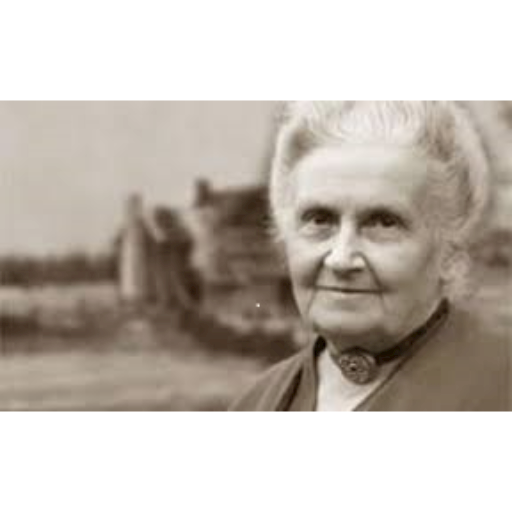
Doctor, philosopher and pedagogist Maria Montessori was one of the first women to graduate in Medicine in Italy in 1896. She became assistant doctor at the psychiatric clinic of the University of Rome where she developed a new teaching method to support the education of children with mental disabilities. In 1907 she opened her first school in a poor neighborhood dedicating her work and researches to the children of working families; in that school – called Casa dei Bambini (House of Children) – she applied her method to mentally normal children between the ages of 3 and 6. The school was a huge success and Montessori’s method – based on building a favorable environment, both physical and spiritual, to follow the children’s needs, and on specifically designed materials – became immediately famous worldwide; in less than 10 years, schools based on her method opened in more than 10 countries.
The popularity of the child-centered Montessori approach never decreased and is still very popular more than a century later.
GRAZIA DELEDDA (ITALY 1871-1936)
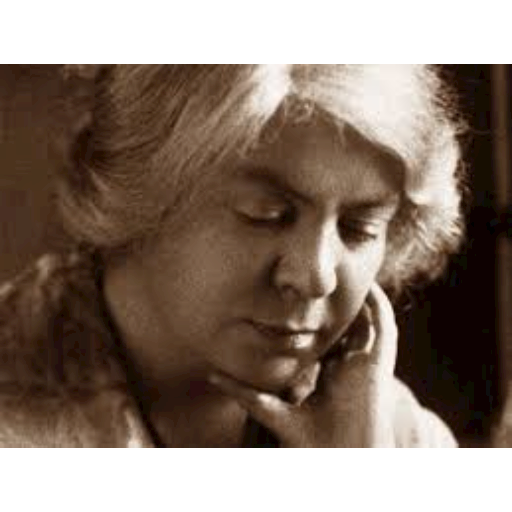
First Italian woman to be awarded with the Noble prize for literature (1926), she was also the second woman to win it after Selma Largerlöf. Born on the island of Sardinia, in 1871 she died in Rome in 1936. She came from a wealthy, middle-class, well educated family who taught her to read and write even before she was of school age. Nonetheless her formal education ended after the fourth grade and she was mainly a self-taught kind of intellectual. When she published her first short story – Sangue Sardo (Sardinian blood) – the plot about a love triangle involving a teenage girl was not well received by the very traditional social environment of her town but, despite that, she went on writing under a nom de plume.
When she moved to Rome with her husband she found success as a writer; her books translated into many languages and adapted for the screen. Normally labelled as a representative of the verismo (realism) literary movement, Deledda was quite an original voice within her contemporaries; rooted in her native island’s stories and traditions, her writing was deeply autobiographical and focused on important concepts like love, sin, death and pain.
RITA LEVI MONTALCINI (ITALY 1909-2012)
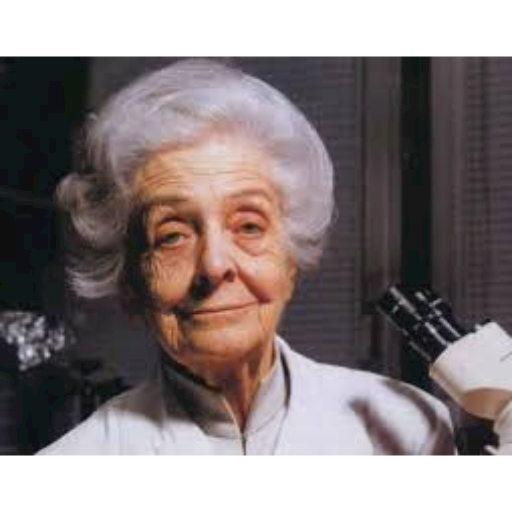
Born in 1909 in Turin she died in Rome in 2012. Neurobiologist, she was awarded with the Nobel Prize for medicine in 1986 for the discovery of nerve growth factor. In 1938, due to the publication of the Manifesto of Race and the subsequent introduction of laws barring Jews from academic and professional life, Rita, coming from a Jewish family, was banned from the university. She and her family fled to Florence where they could survive the holocaust, hiding under false identities. They went back to Turin only in 1945 after the end of the war. During the whole period of the war, even when hiding in Florence, she went on doing scientific experiments, setting up laboratories in her family’s apartment. She was a Senator of the Italian Republic and was still regularly attending the parliament activities the year she died. She was 103 years old.
MARGHERITA HACK (ITALY 1922-2013)
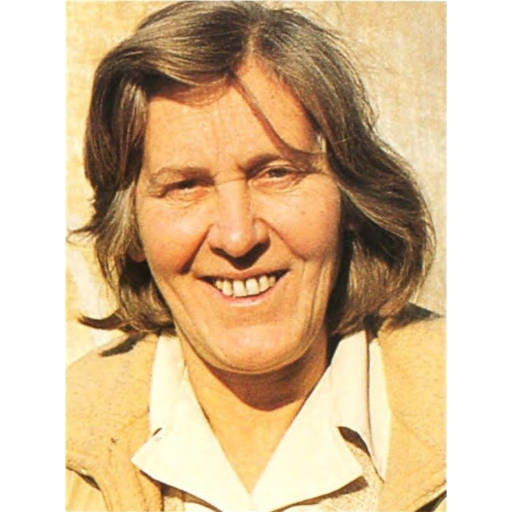
Born in Florence in 1922, she was the first woman in Italy, to head of an Observatory. Margherita Hack, had a very long, successful life and was one of the most brilliant minds of the XX century. Astrophysicist and scientific disseminator she was a Professor at the University of Trieste for a much of her life and brought the University’s observatory to international fame.
She became an iconic personality. Not just for her scientific talent – which was outstanding – but also for her personal choices and her nonconformist lifestyle. She was a vegetarian for her whole life – she said that she never ate meat in her life – and also wrote a book on vegetarianism that became immediately very popular. She was also a firm atheist, critical toward the Catholic Church hierarchy. Her strong Florentine – that she proudly maintained even if she lived most of her life in Trieste – accent and very straightforward “no-frills” way of talking became iconic too. Her most popular quote is that “we are made of star matter”.
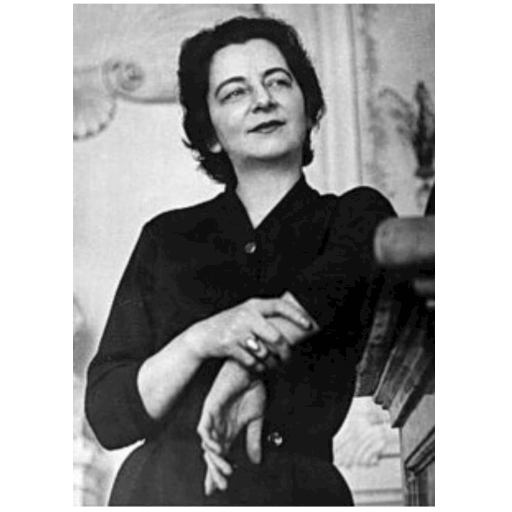
Grażyna Bacewicz (POLAND1909-1969)
She was a Polish composer and violinist with worldwide recognition. She was the first woman in the world to compose a concerto. Her works include concertos, sonatas, symphonies etc., but also ballets, operas and film scores. Her style is considered to be neoclassical, but she also drawed on polish folklore. Letters to her often started with 'Dear Sir' , since it was so unusual for a woman to compose.
Thanks to another Polish composer - I. J. Paderewski, she was able to study in Paris.
Bacewicz was very confident and had a great sense of humour.One of her songs is entitled '' I had a headache.''Łódź Conservatory of Music, which she attended,is now named after her and her brother.Besides music pieces, Bacewicz published a crime novel and a collection of short stories.
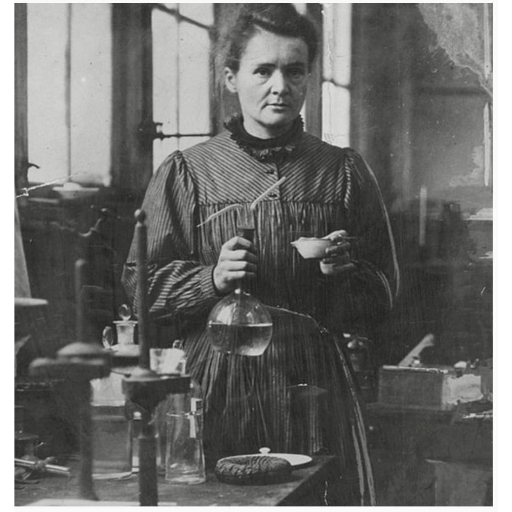
Marie Skłodowska Curie (POLAND 1867-1934)
She was a Polish and naturalized-French physicist and chemist who conducted pioneering research on radioactivity. Marie Curie died in 1934, aged 66 at the Sancellemoz sanatorium in Passy (Haute-Savoie), France, of aplastic anaemia from exposure to radiation in the course of her scientific research and in the course of her radiological work at field hospitals during World War I.She was the first woman to become a professor at the University of Paris in 1906.
Love and polish culture
Mutual passion for science broughtMarie and her husband Pierre Curie increasingly closer, and they began to develop feelings for one another. In Pierre, Marie had found a new love, a partner, and a scientific collaborator on whom she could depend. While a French citizen, Marie Skłodowska Curie, who used both surnames, never lost her sense of Polish identity. She taught her daughters the Polish language and took them on visits to Poland. She named the first chemical element she discovered polonium, after her native country.
Nobel Prize
As the first of the Curie family legacy of five Nobel Prizes, she was the first woman to win a Nobel Prize, the first and the only woman to win the Nobel Prize twice, and the only person to win the Nobel Prize in two scientific fields. She received the Physics Prize in 1903 for her work on radioactivity and the Chemistry Prize in 1911 for the isolation of pure radium.
Wanda Rutkiewicz (POLAND 1943-1992)
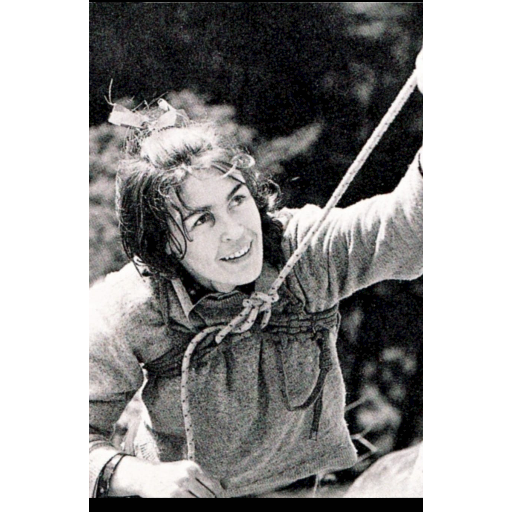
She was born into a Polish family in today's Lithuania in 1943.Later she moved with her family to Wroclaw.She began her mountain climbing journey in the Tatra Mountains located in the south of Poland.Wanda Rutkiewicz was the first woman to reach the summit of K2 and the third woman to climb Mount Everest.She had liked climbing since she was a child.She often climbed trees,ruins and even her own door.Wanda played lots of sports.
She really enjoyed volleyball and competed in that sport several times.
UNUSUAL TRANING
Wanda used to run to work with a backpack full of rocks as a part of her training.Even in Winter, (which can be very cold in Poland) she used to sleep in cold to build up her immunity to the cold.
POLISH GEM
She was a mountain climber in PRL when climbing equipment was incredibly hard to find.She was very determined and didn't see that as much of an issue to pursue her dreams.
P A S S I O N
Mountain climbing was Wanda's passion.She always felt the urge to go up.She didn't feel satisfied living the urban lifestyle.She loved the mountains.She pursued her dreams and has incredible achievements in that field.Wanda Rutkiewicz is an enormous inspiration to many people,especially women.
- Full access to our public library
- Save favorite books
- Interact with authors
- < BEGINNING
- END >
-
DOWNLOAD
-
LIKE
-
COMMENT()
-
SHARE
-
SAVE
-
BUY THIS BOOK
(from $8.59+) -
BUY THIS BOOK
(from $8.59+) - DOWNLOAD
- LIKE
- COMMENT ()
- SHARE
- SAVE
- Report
-
BUY
-
LIKE
-
COMMENT()
-
SHARE
- Excessive Violence
- Harassment
- Offensive Pictures
- Spelling & Grammar Errors
- Unfinished
- Other Problem





COMMENTS
Click 'X' to report any negative comments. Thanks!