This book is dedicated to the past, present, and future historians that continue to increase our understanding of our past. As well as those who use that knowledge to better understand the world around them.

Throughout the colonies, there was a chance for a new life, however Britain still wanted them to know who was in control. To make sure the colonies understood this, they created the Navigation Act. These acts were made to make sure that the colonies could not trade resources (Resources = Money) with countries like France.
Though Britain wasn't hurting the colonies much at first, soon a war would begin between France and Britain. While it was between these two, the colonies both France and Britain had, as well as their Native American allies would be brought into the war.


After nine years of fighting, the British would win against the French, gaining the colonies France had owned. However, they didn't want the colonists to move into this new land, so the created the Proclamation Line of 1763. An imaginary line that forced the colonists to remain on the east side of the Appalachian Mountains. The Native Americans were forced to move westward, across the Appalachian Mountains.
However, Britain was broke and they needed some way of paying back the debt they made from the war. They looked to the colonies, where they would go and lower the price of the tax on sugar. This Sugar Act was suppose to make sure that the colonies, who had been illegally taking sugar, brought in sugar and molasses the correct way.


Even though Britain lowered the tax of sugar, they would begin to tax other items as well. The Stamp Act was created in 1765 and it was making the colonists pay money just to get paper, playing cards, and newspapers. Anything that had a stamp was taxed.

The Stamp Act wouldn't be the only act passed in 1765. The Quartering Act was made to allow British soldiers to stay in the homes of the colonists, even if the colonists didn't want the soldiers in their homes.
These Acts brought the colonies to anger and they got together to tell England that they shouldn't be taxed without being given a voice in Parliament. This Stamp Act Congress was the first action the colonists made against the British.
The colonists were able to have the British Parliament get rid of the Stamp Act. However the British weren't going to let this happen again, passing the Declaratory Act, saying that Britain could make any decision it wanted to either British citizens or American colonists.
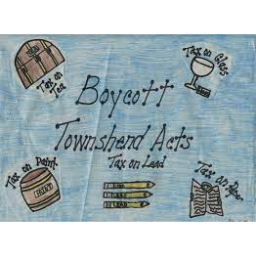
With the power of England enforced (enforced=accepted by force) in the colonies, England would create the Townshend Acts. These acts would create even more taxes for the colonies, angering them even more than before.
OUTRAGEOUS!
The colonies would boycott (boycott=not buy) the taxed items and would force Britain into the Repealing of the Townshend Acts. However, Britain would keep the Tea Act to continue to tax the colonies.

The relationship between the colonists and Britain would continue to get worse and the British would fire on an unarmed crowd of colonists in what would be called the Boston Massacre.
- Full access to our public library
- Save favorite books
- Interact with authors
- < BEGINNING
- END >
-
DOWNLOAD
-
LIKE
-
COMMENT()
-
SHARE
-
SAVE
-
BUY THIS BOOK
(from $3.79+) -
BUY THIS BOOK
(from $3.79+) - DOWNLOAD
- LIKE
- COMMENT ()
- SHARE
- SAVE
- Report
-
BUY
-
LIKE
-
COMMENT()
-
SHARE
- Excessive Violence
- Harassment
- Offensive Pictures
- Spelling & Grammar Errors
- Unfinished
- Other Problem





COMMENTS
Click 'X' to report any negative comments. Thanks!