
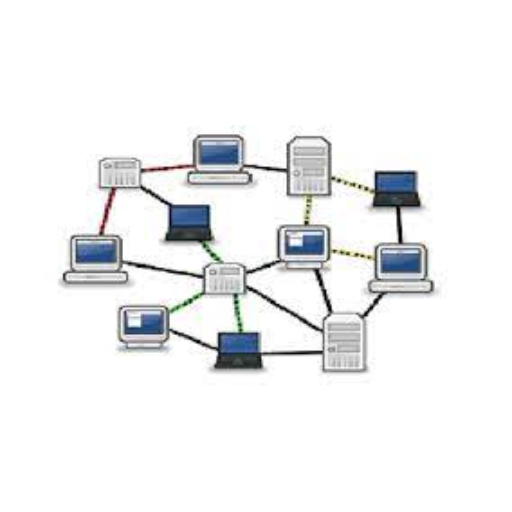
computer network: A network is a group of computers connected together in a way that allows information to be exchanged between the computers.
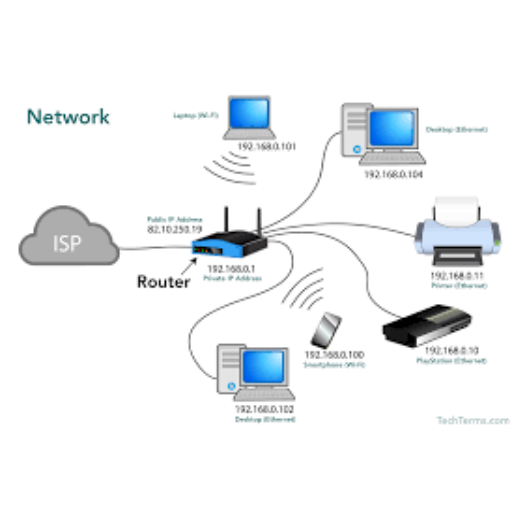
packet: A piece of a message transmitted over a packet-switching network. See under packet switching. One of the key features of a packet is that it contains the destination address in addition to the data. In IP networks, packets are often called datagrams.
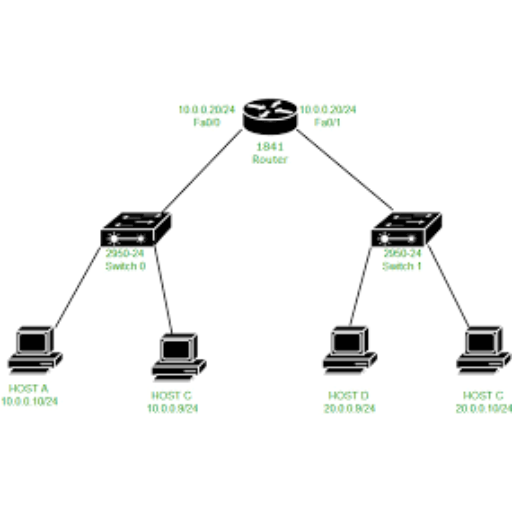
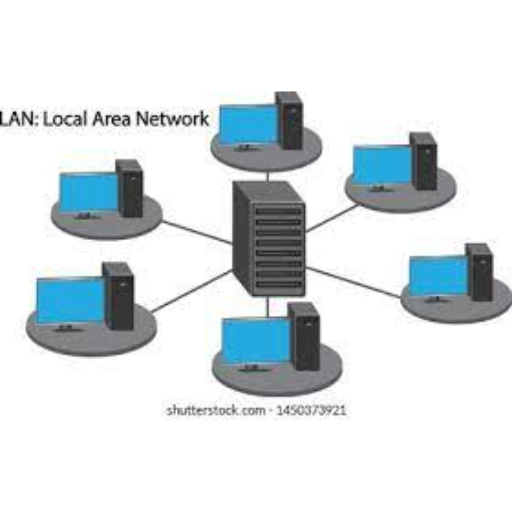
Local Area Network (LAN):technologies connect many devices that are relatively close to each other, usually in the same building. The library terminals that display book information would connect over a local area network.
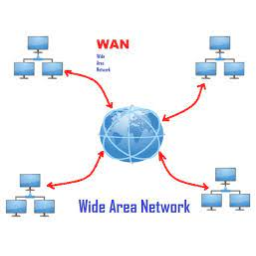
Wide Area Network (WAN):technologies connect a smaller number of devices that can be many kilometers apart. For example, if two libraries at the opposite ends of a city wanted to share their book catalog information, they would most likely make use of a wide area network technology, which could be a dedicated line leased from the local telephone company, intended solely to carry their data.
Node: A node is anything that is connected to the network. While a node is typically a computer, it can also be something like a printer or CD-ROM tower.
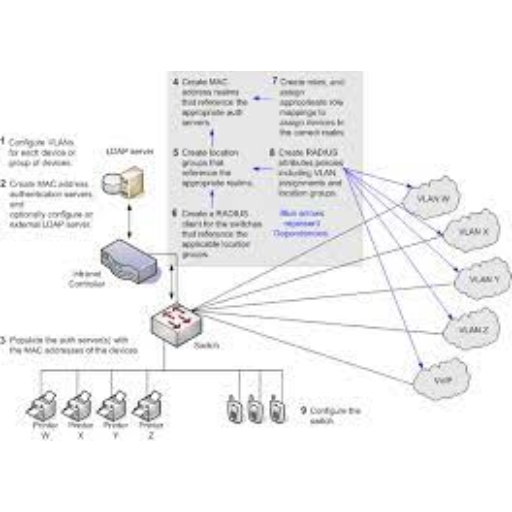
Media Access Control (MSC): This is the physical address of any device -- such as the NIC in a computer -- on the network. The MAC address, which is made up of two equal parts, is 6 bytes long. The first 3 bytes identify the company that made the NIC. The second 3 bytes are the serial number of the NIC itself.
IP Address: is an alphanumeric label assigned to computers and other devices that connect to a network using an internet protocol. This address allows these devices to send and receive data over the internet. Every device that is capable of connecting to the internet has a unique IP address.
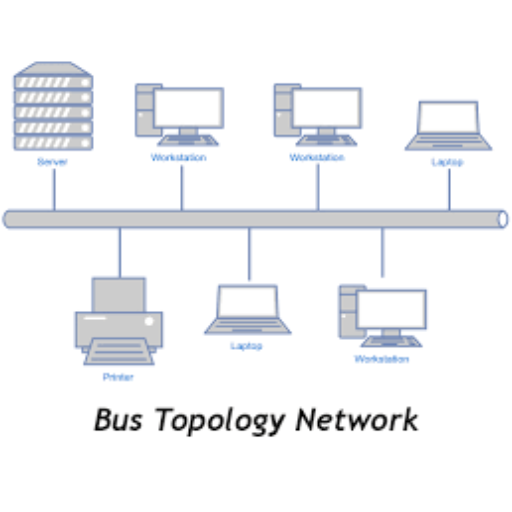
Bus Topology: is daisy-chained (connected one right after the other) along the same backbone, similar to Christmas lights. Information sent from a node travels along the backbone until it reaches its destination node.
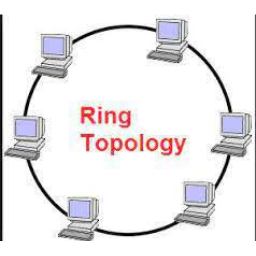
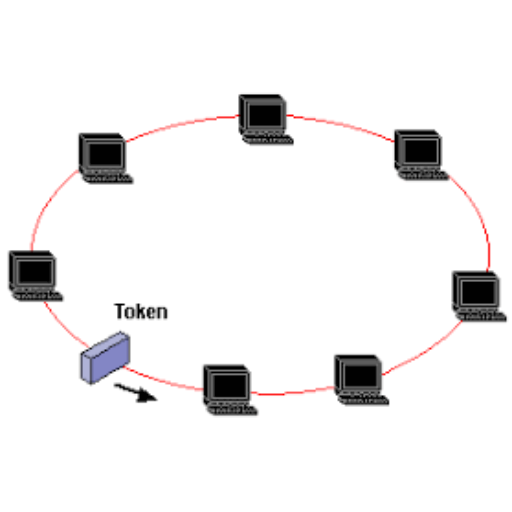
Ring Topology: Like a bus network, rings have the nodes daisy-chained. The difference is that the end of the network comes back around to the first node, creating a complete circuit. In a ring network, each node takes a turn sending and receiving information through the use of a token.
Network Token: is a special series of bits that travels around a token-ring network. As the token circulates, computers attached to the network can capture it. The token acts like a ticket, enabling its owner to send a message across the network. There is only one token for each network, so there is no possibility that two computers will attempt to transmit messages at the same time.
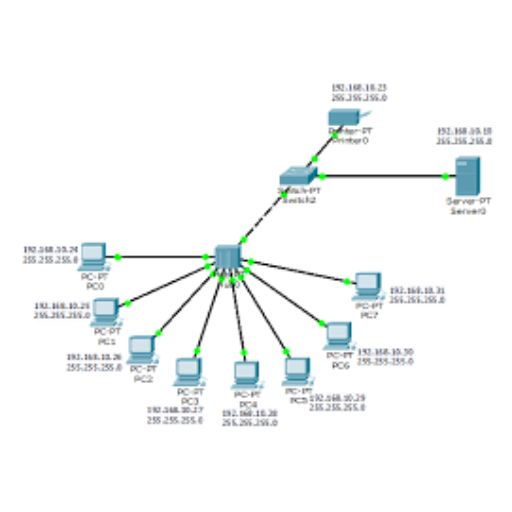
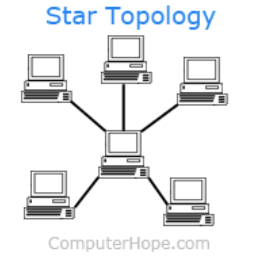
Star Topology: In a star network, each node is connected to a central device called a hub. The hub takes a signal that comes from any node and passes it along to all the other nodes in the network. A hub does not perform any type of filtering or routing of the data. It is simply a junction that joins all the different nodes together.
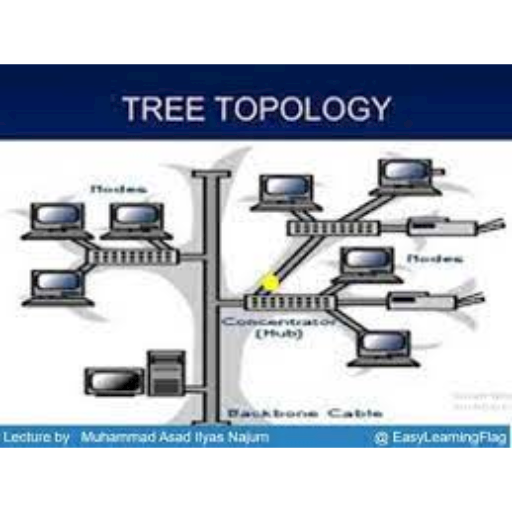
Tree Topology: A tree topology combines characteristics of linear bus and star topologies. It consists of groups of star-configured workstations connected to a linear bus backbone cable.
Protocol: There are a variety of standard protocols from which programmers can choose. Each has particular advantages and disadvantages; for example, some are simpler than others, some are more reliable, and some are faster.
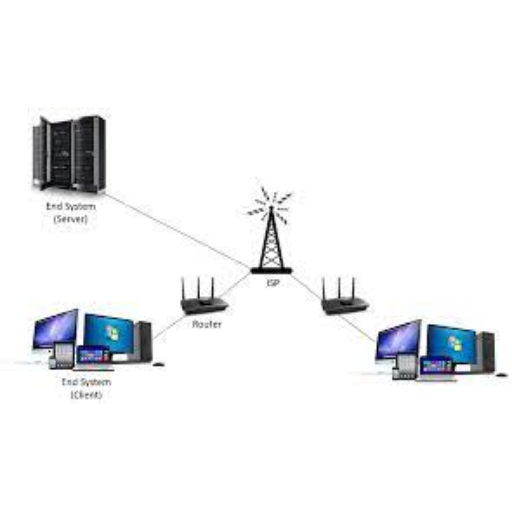
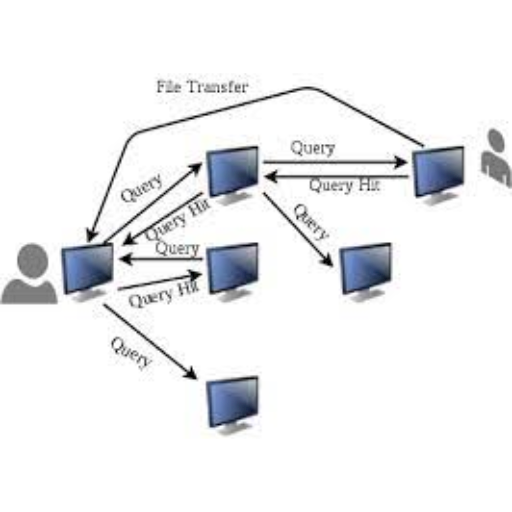
Peer-Peer Architecture: a type of network in which each workstation has equivalent capabilities and responsibilities. This differs from client/server architectures, in which some computers are dedicated to serving the other machines in the system. Peer-to-peer networks are generally simpler, but they usually do not offer the same performance under heavy loads.
- Full access to our public library
- Save favorite books
- Interact with authors
- < BEGINNING
- END >
-
DOWNLOAD
-
LIKE
-
COMMENT()
-
SHARE
-
SAVE
-
BUY THIS BOOK
(from $4.79+) -
BUY THIS BOOK
(from $4.79+) - DOWNLOAD
- LIKE
- COMMENT ()
- SHARE
- SAVE
- Report
-
BUY
-
LIKE
-
COMMENT()
-
SHARE
- Excessive Violence
- Harassment
- Offensive Pictures
- Spelling & Grammar Errors
- Unfinished
- Other Problem






COMMENTS
Click 'X' to report any negative comments. Thanks!