
Strategy #1
Cues
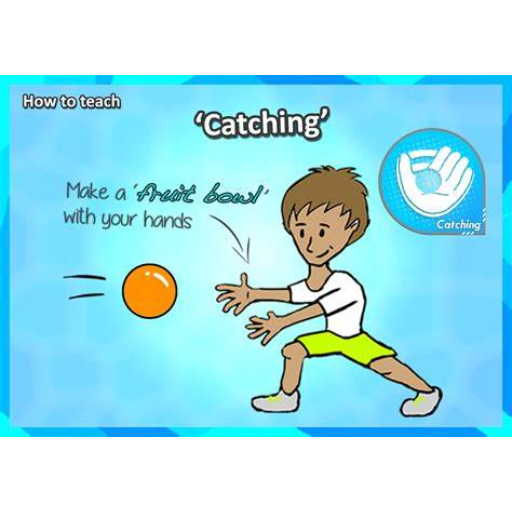
Cues are a key component of a lesson plan. Introduced in chapter 4 of Teaching Children and Adolescents Physical Education, cues are defined as being elements needed to properly execute a skill. Cues are told to the students to remind them of a technique, strategy, etc to execute a skill. Cues you may have heard during physical education include:
"Keep your eyes up"
"Lift from the knees"
"Pass from the chest"
Example of Cues Used During a Lesson:
Students are practicing lay-ups. The teacher uses two cues to remind them of two key points to make a lay-up: "pizza slice" and "aim for the square on the backboard (pizza slice refers to the way the basketball is held up in preparation for the shot-like a pizza being held with one hand)."
Strategy #2
Vistor Observation
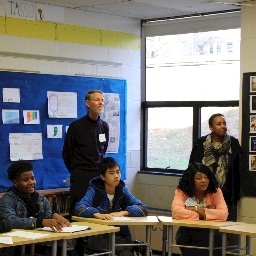
Visitor observation is a helpful observation tactic found in chapter 5 of the textbook. Visitor observation is simply imagining what an observer of the class would see and think at that very moment, whether it be a principle, fellow teacher, or parent. This mindset helps teachers focus on the class as a whole rather than individuals.
Example Of the Visitor Observation Tactic Used in a Lesson:
While practicing bounce passes, you are helping a pair of students with their passing. You pause to consider how the scene would look to an observer, say the principle. You realize that the principle would see that while you are focusing on only two students, several pairs have gotten of task and one student left their partner to form a group of three with their friends. You remember that you always need to be cognizant of the whole class, even if you are helping individual students. You stop the lesson and fix the problems.
Adjusting Game Rules
Strategy #3
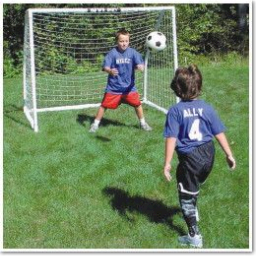
Adjusting game rules is found in chapter 5. Having students who don't have the necessary skills to play a sport play by the official rules is not helpful to them. Having students who are not ready play full regulation sports (basketball, badminton, or volleyball, for instance) leads to discouragement, unequal action time(time with the ball, puck, etc), frequent pausing, and no growth in the skill area. It is important to modify rules to where the students are improving the skill(s) they are learning. Adjusting game rules is an example of a student centered teaching (strategy #5).
Example of Adjusting Game Rules during a Lesson:
As opposed to an game of basketball played by the whole class with official rules, a teacher splits their students into six equal groups and sends each group to a basketball hoop. Each group has six students. Three students will be a team trying to make a basket while the other team is on defense. The teacher will signal when to switch. The area the groups are playing in is smaller so the groups don't have to dribble, shoot or pass too far, and students get the same amount of time with the ball.
One Component at a Time Observation
Strategy #4
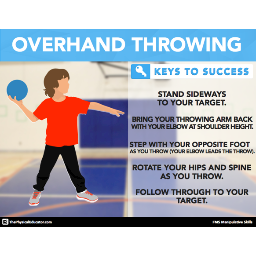
The one component at a time observation tactic is another observation strategy found in chapter 5. As opposed for assessing accuracy across all cues of a skill, the teacher can scan the entire class checking for accuracy in one specific element. It is important to have the lesson plan you've written on hand so you can refer to the lists of cues you made.
Example of the One Component at a Time Observation Tactic Being Used During a Lesson:
During a lesson over catching, students are passing the balls at a set distance in pairs. Two of the cues the teacher have in her lesson plan are "keep your eyes on the ball" and "make a diamond. " First, she scans keeping the eyes on the ball cue. After she assesses the students' accuracy regarding that cue, she then scans again for students making a target with their hands. See writes small notes next to each cue so she can remember her informal assessments for that particular class.
Setting Lesson Objectives

Strategy #5
Objectives are an essential component to writing lesson plans. The objective is the goal for the students to learn for that lesson. In other words, the objective is the skill that the lesson plans to teach the students. The entire lesson is centered around the objective for that lesson. Lesson objectives are introduced in chapter 3. An important note is that objectives should be realistic--the students should be able to attain the objective by the end of class time. To find objectives, a teacher can refer to the grade level outcomes within SHAPE America's 5 standards. Some states have their own standards. Teachers in Texas can refer to the TEKS for objectives.
- Full access to our public library
- Save favorite books
- Interact with authors
- < BEGINNING
- END >
-
DOWNLOAD
-
LIKE
-
COMMENT()
-
SHARE
-
SAVE
-
BUY THIS BOOK
(from $4.79+) -
BUY THIS BOOK
(from $4.79+) - DOWNLOAD
- LIKE
- COMMENT ()
- SHARE
- SAVE
- Report
-
BUY
-
LIKE
-
COMMENT()
-
SHARE
- Excessive Violence
- Harassment
- Offensive Pictures
- Spelling & Grammar Errors
- Unfinished
- Other Problem






COMMENTS
Click 'X' to report any negative comments. Thanks!