To Ms. Yarnik,
Thank you for being such an amazing teacher, and I hope I will receive a 100 on this project. Thank you so much!

Families and Periods
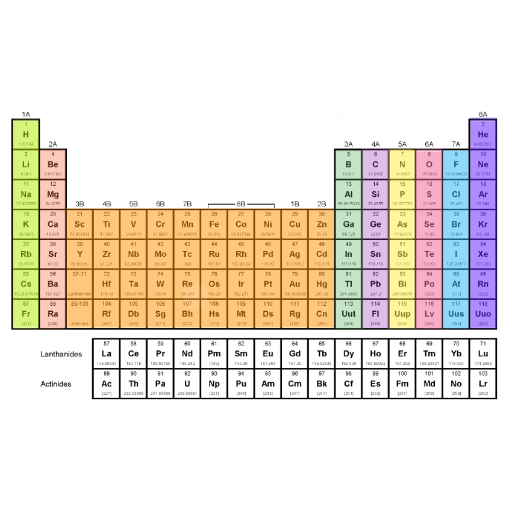
In the periodic table, there are multiple rows and columns. These are called periods and families. Families, which can also be called groups, go from top to bottom. Elements in the same family have the same number of valence electrons. Periods go from left to right, and elements in the same period have the same number of energy shells.
Roles Of a proton
A proton is a very important part of an element because it's what determines the elements. Protons are subatomic particles in an atom, which have a positive electrical charge. Depending on how many protons there are, and elements atomic number changes. For example, if you remove a proton from Carbon, it becomes Boron. Depending on the atomic number the elements are placed in order.
Elemental Properties
The elements in the periodic table are separated into three groups, metals, metalloids, and nonmetals. A majority of the periodic table is filled with metals, which are found on the left side. On the staircase, you can find the metalloids, and on the right is the nonmetals. Metals are usually, malleable, ductile, conductive, and luster. Non-metals, are dull, crumble easily, are brittle, and are good insulators. On the other hand, metalloids are properties of both or 'semi'.
Valence Electrons
Valence electrons are the electrons that fill the outermost shell of an atom in a bhor model. Elements with the same number of valence electrons are always in the same group/family. Reactivity is based on the number of valence electrons. An atom needs 2 electrons in the first shell, and 8 electrons in the second and third shell. If the outermost shell is full, then the element is non-reactive, but if it's not, then the element would be reactive.
Family Names
In the periodic table, each group or family has a different name. The names of the 9 families are Alkali Metals, Alkaline Earth Metals, Transition Metals, Boron Family, Carbon Family, Nitrogen Family, Oxygen Family, Halogens, and Noble Gases. Alkali metals are found on the outermost side on the left. Noble gasses are found on the outermost side on the right. The rest fall in between the two groups.
Alkali Family Properties
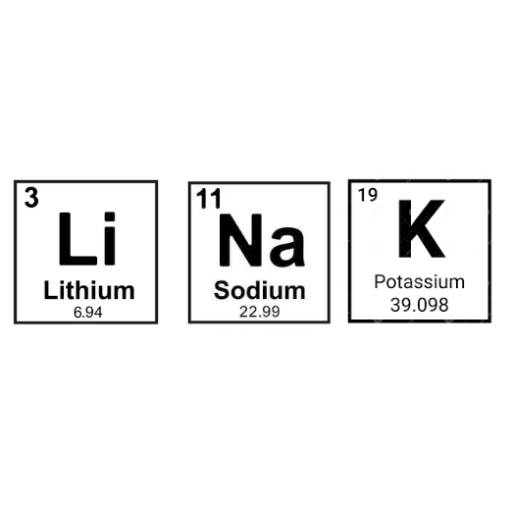
Alkali metals have high thermal and electrical conductivity, luster, ductility, and malleability. Each alkali metal atom has a single electron in its outermost shell, causing it to be very reactive. Three elements from this family are lithium, sodium, and potassium. Lithium is often used for batteries, and sodium is used for the luster in metals.
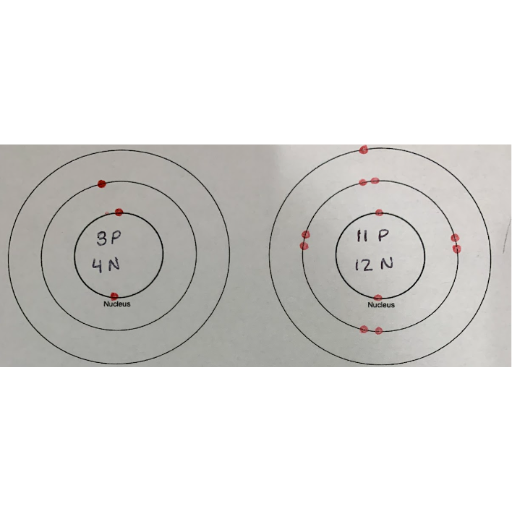
Lithium and Sodium Bhor Models

Alkaline Earth Metals Family Properties
Elements in this family tend to be more malleable. Because they have two valence electrons, alkaline earth metals are very reactive. Some elements in this family are Beryllium, Magnesium, and Calcium. Magnesium is used for metal alloys and strontium is used in television tubes.
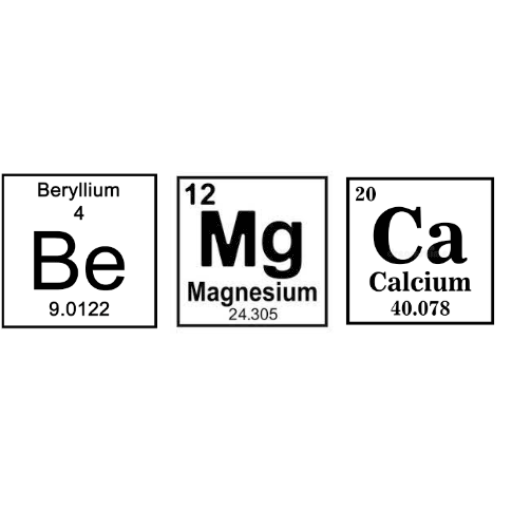
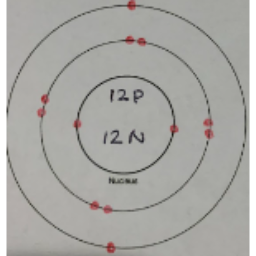
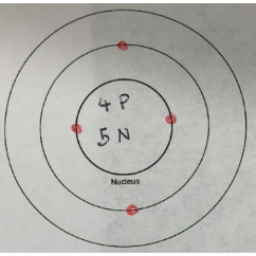
Magnesium and Beryllium Bhor models


Transition Metals Family Properties
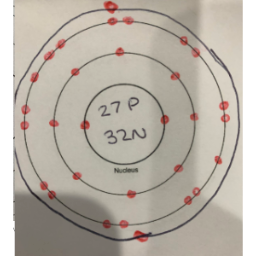
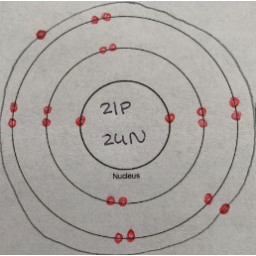
Elements in the group are good conductors, malleable, have high melting points, hard, and have high densities. This group stretches across most of the periodic table. Elements in this group include Scandium, Cobalt, and Zinc. Titanium is used in the construction of aircraft and nickel is in the production of stainless steel.
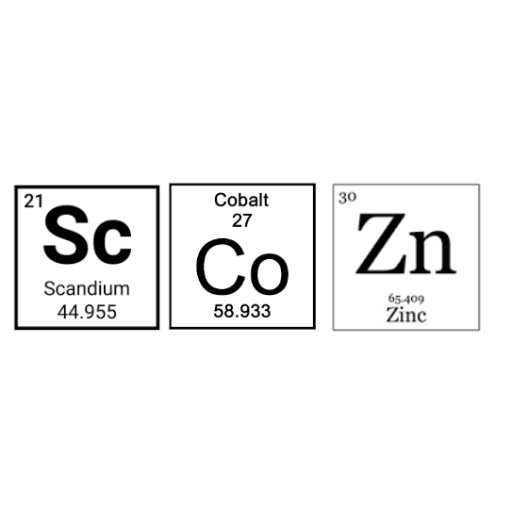
Scandium and Cobalt Bhor Models

Boron Family
Another group in the periodic table is the Boron family which has 3 valence electrons. While Boron is the only metalloid in the group, the rest are all metals. All elements are soft and malleable but boron is the only one that is hard and brittle. Some elements in this group are Boron, Aluminum, and Gallium. Boron is found in many household chemicals and, aluminum is used for foil, and kitchen utensils.
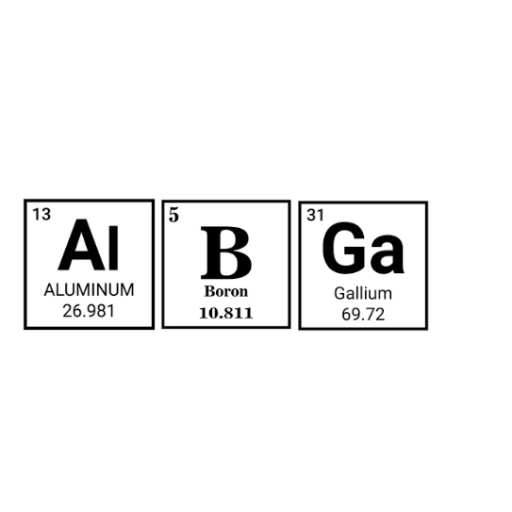
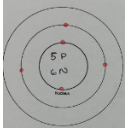
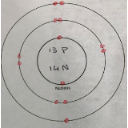
Boron and Aluminum
Bhor Models

Carbon Family
Sn and Pb are soft metals with low melting points, while C and Si are nonmetals and Ge is a metalloid and has high melting points. This family needs 4 valence electrons for the energy shell to be full. Elements in this family include Carbon, Silicone, and Tin. Tin is used to manufacture other alloys like bronze and copper and lead is used for car batteries and pigment.
- Full access to our public library
- Save favorite books
- Interact with authors
- < BEGINNING
- END >
-
DOWNLOAD
-
LIKE
-
COMMENT()
-
SHARE
-
SAVE
-
BUY THIS BOOK
(from $4.99+) -
BUY THIS BOOK
(from $4.99+) - DOWNLOAD
- LIKE
- COMMENT ()
- SHARE
- SAVE
- Report
-
BUY
-
LIKE
-
COMMENT()
-
SHARE
- Excessive Violence
- Harassment
- Offensive Pictures
- Spelling & Grammar Errors
- Unfinished
- Other Problem






COMMENTS
Click 'X' to report any negative comments. Thanks!