What are the families in the periodic Table?
We are the families of the periodic table. We are the columns and there are 17 of us. If you are in the same family then you have the same amount of valence electrons as the rest of us. We also share the same reactivity as the rest of the elements in our family.


What are the periods in the periodic table?

We are the periods in the periodic table. We are the rows and there is 7 of us. We determine the energy shells in each element. If you are in the same period as another element then you have the same amount of energy shells as them.
What is the Protons Job?
What do we do? Well, we are very important, and some might call us the center of it all, because we are. We are located at the center of an atom most known as the nucleus. Are brothers are the Electrons and the Atomic Number as we all share the same number no matter which atom we are. The number of protons also determine the placement of the atom periodic table. If I am lonely and am one lone proton I am at the top of the periodic table and also known as hydrogen. If I have many friends like 86 I am near the bottom of the table.

+
Proton
Where are the metals, metalloids, and nonmetals located on the periodic table?
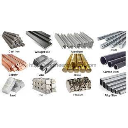
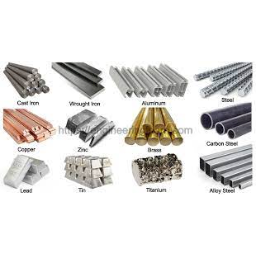
We are the metals. We take up most of the periodic table including the middle and the left side excluding hydrogen.
We are the nonmetals and we take up the space on the top of the staircase. Typically found in the right hand corner except for hydrogen which is in the left corner.

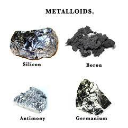
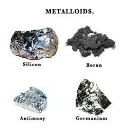
We are the metalloids and we are the staircase of the periodic table. We are found on the right and underneath the non metals and above the metals.
What are the properties of the metals, metalloids, and nonmetals located on the periodic table?
The Metals are usually shiny except mercury, very shiny, have a metallic appearance, good conductors of both heat and electricity and are malleable and ductile.
The non metals are dull in appearance, usually brittle, poor conductors of both head and electricity, and usually less dense compared to metals.
The Metalloids have both the properties of Metals and non metals. They usually look like metals but behave and react like the non metals,
What is the purpose of the Valence Electrons?
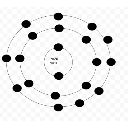
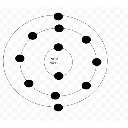
The Valence Electrons main role is to determine the reactivity of an element. If an element has one electron then they are highly reactive but if they have a full shell or 8 valence electrons then they are considered a "happy atom" and non-reactive like Neon. It relates the reactivity because it is the first thing that touches another atom because they are on the outer shell and not in the nucleus like the protons and neutrons. In the periodic table to find the same elements with the same number of valence electrons look at the groups. Each group has the same number of valence electrons and can be used to find elements with the same reactivity.
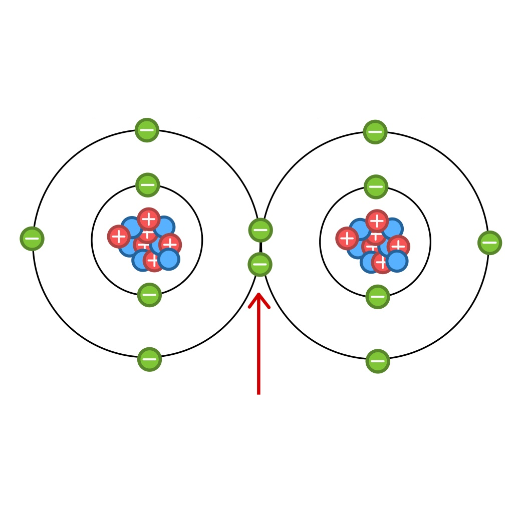
This image shows how the outer most shell which consists of the valence electrons is the one reacting with other elements.
Alkali Metals
Physical Properties- High Luster, Ductility and Malleability
Chemical Properties- High thermal and electrical conductivity and highly reactive because there is one valence electron.
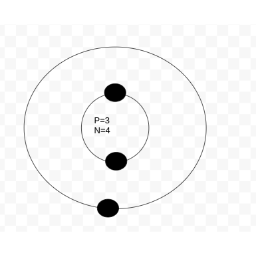
Lithium, Sodium, and Potassium
Lithium is used commonly in rechargeable batteries, mobile phones, laptops and electrical vehicles.
Sodium is commonly used in adding flavor to food in the form of salt and is also used as a heat exchanger.


Alkaline Earth Metals
Physical Properties- Highly Metallic and good conductors of electricity
Chemical properties- Two valence electrons and highly reactive.
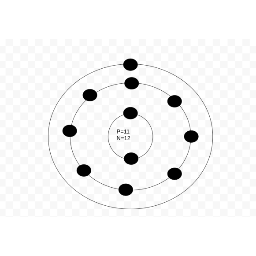
Beryllium, Calcium and Magnesium.
Calcium is used to strengthen the human body because your body needs it for your brain to function normally.
Magnesium is used in luggage, laptops and also largely used in medicine


- Full access to our public library
- Save favorite books
- Interact with authors
- < BEGINNING
- END >
-
DOWNLOAD
-
LIKE(1)
-
COMMENT()
-
SHARE
-
SAVE
-
BUY THIS BOOK
(from $2.99+) -
BUY THIS BOOK
(from $2.99+) - DOWNLOAD
- LIKE (1)
- COMMENT ()
- SHARE
- SAVE
- Report
-
BUY
-
LIKE(1)
-
COMMENT()
-
SHARE
- Excessive Violence
- Harassment
- Offensive Pictures
- Spelling & Grammar Errors
- Unfinished
- Other Problem






COMMENTS
Click 'X' to report any negative comments. Thanks!