




“Is it a fact – or have I dreamt it – that, by means of electricity, the world of matter has become a great nerve, vibrating thousands of miles in a breathless point of time?”
― Nathaniel Hawthorne

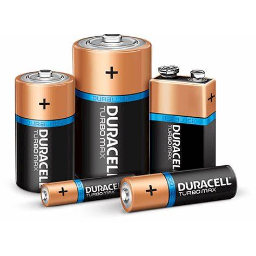
Definition: A battery is an energy source consisting of one or more electrochemical cells and terminals on both ends called an anode (-) and a cathode (+).
BATTERY
* When a battery is disconnected, the charge at the positive and negative ends is equal, meaning there is no electric current.


CONDUCTORS OF ELECTRICITY
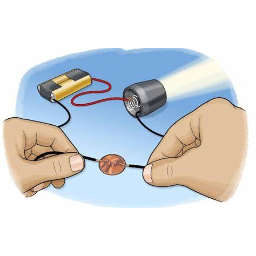
Definition: The conductor of electricity is the metal that allows the electrical current to flow through it. The electrical conductor generally comprises metals like copper, aluminum, and their alloys. When the potential difference is applied, an electrical conductor's charges move from atom to atom.
Some examples of conductors of electricity are Copper, Silver, Gold, Graphite, Platinum, Water, Human Body.
* Copper and Silver are one of the most common and best conductors of electricity.

COMPLETE CIRCUIT
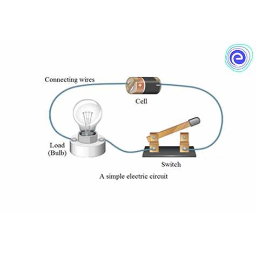
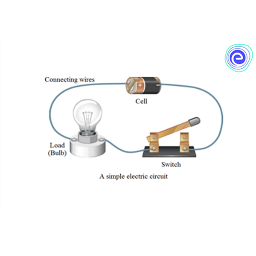
Definition: A complete circuit is an uninterrupted path for electrons to flow from an energy source (i.e., battery or household power) through a device and back to the source. If we break that path, the flow of electrons stops, we no longer get energy from our circuit, and the device no longer has power.
* For a circuit to work, it has to be complete.

ELECTRICAL CHARGE
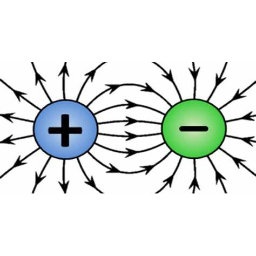
Definition: Electrical charge is the property of subatomic particles that causes them to experience a force when placed in an electric and magnetic field. In an isolated system, Electric charge is conserved, which means the net electric charge of the system is constant. The algebraic sum of the fundamental charges in any isolated system remains the same.
* In the electric charges, like charges repel each other, and unlike charges attract each other.

ELECTRICAL CURRENT
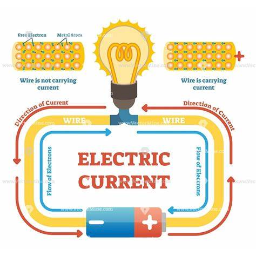
Definition: Electrical current is the rate of flow of electrons in a conductor. Electrons are negatively charged particles hence when they move, several charges move, and we call this movement of electrons electric current.
* The electric current is an essential resource we depend highly on.


ELECTRICAL CIRCUIT
Definition: Electrical circuit is an interconnection of electrical components. An electrical circuit consists of batteries, resistors, inductors, capacitors, switches, or transistors. An electrical network consists of a closed loop.
* All electric circuits have a voltage source like a battery and a conductor like a wire.

ELECTRICAL INSULATORS
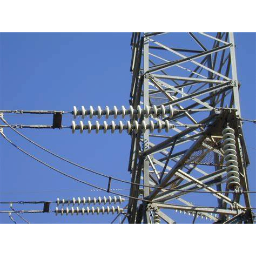
Definition: Electrical insulators are materials with high resistivity so that they can make objects with high resistance. This allows insulators to prevent electric current from flowing where it's not wanted.
The following is a list of Electrical Insulator examples: Styrofoam, Plastic, Wax, Rubber, Dry air, Glass, Ceramics, Porcelain, and Asphalt.
* You must have observed that the outer covering of your phone charger plug is made from plastic, a kind of electrical insulator.
- Full access to our public library
- Save favorite books
- Interact with authors


"Hope you will love science even more"

- < BEGINNING
- END >
-
DOWNLOAD
-
LIKE
-
COMMENT()
-
SHARE
-
SAVE
-
BUY THIS BOOK
(from $2.99+) -
BUY THIS BOOK
(from $2.99+) - DOWNLOAD
- LIKE
- COMMENT ()
- SHARE
- SAVE
- Report
-
BUY
-
LIKE
-
COMMENT()
-
SHARE
- Excessive Violence
- Harassment
- Offensive Pictures
- Spelling & Grammar Errors
- Unfinished
- Other Problem

COMMENTS
Click 'X' to report any negative comments. Thanks!