
Background/facts
majority opinion
constitutional legacy
1-2 pages

McCulloch V. Maryland
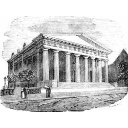
In 1816, Congress hired The Second Bank of the United States. In 1818, the state of Maryland imposed taxes on the bank. Little James W. McCulloch, who worked at the bank didn't want to pay the tax. Then they went to court to talk about the taxes. In a unanimous decision, the Court said to Maryland that they could not tax government buildings. So little James didn't have to pay the tax.
United States V. Lopez
one day Alfonzo Lopez, a 12th grade high school student, brought a concealed weapon into his high school. He was in big trouble under Texas law with gun custody on school premises. The next day, the state charges were dismissed after federal agents charged Lopez with violating a federal criminal statute, the Gun-Free School Zones Act of 1990. The act bans "any individual knowingly to possess a firearm at a place that [he] knows...is a school zone." little Lopez was found guilty following a court trial and punished to six months' detention and two years' supervised release.
Engel V. Vitale
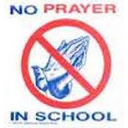
The New York State Board of Regents approved the recitation of a brief, voluntary prayer at the beginning of each academic day. A number of organizations banded together to protest the prayer, arguing that it was unconstitutional under the First Amendment's Establishment Clause. Their arguments were rejected by the New York Court of Appeals. Even if attendance is not compulsory and the prayer is not connected to a specific faith, the state is not allowed to hold prayers in public schools.
MAJORITY OPINION BY HUGO L. BLACK
A Wisconsin legislation requiring all children to attend public schools until the age of sixteen led to the prosecution of Jonas Yoder, Wallace Miller, and Adin Yutzy, all followers of the Old Order Amish faith. After the eighth grade, the three parents refused to enroll their kids in these institutions, claiming that doing so went against their religious convictions.
MAJORITY OPINION BY WARREN E. BURGER
In order to organize a public demonstration of their support for a cease-fire in the Vietnam War, a group of Des Moines students met in the home of Christopher Eckhardt, then 16 years old, in December 1965. They made the decision to fast on December 16 and New Year's Eve, as well as to wear black armbands during the holiday season. When the Des Moines school's principals learned about the scheme, they convened on December 14 to establish a policy stating that any student sporting an armband would be requested to take it off; failure to comply would result in punishment. Mary Beth Tinker and Christopher Eckhardt were expelled from school on December 16 after sporting their armbands. John Tinker repeated the action the following day and got the same outcome.
New York Times Co. v United States
The Nixon Administration made an effort to stop the New York Times and Washington Post from releasing documents from a secret Defense Department investigation about the history of American involvement in Vietnam, a case that came to be known as the "Pentagon Papers Case." According to the President, previous restraint was required to safeguard national security. Together with United States v. Washington Post Co., this case was decided.
Schenck v United States
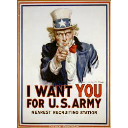
Socialists Charles Schenck and Elizabeth Baer circulated pamphlets during World War I claiming that the draft broke the Thirteenth Amendment's ban on involuntary servitude. The pamphlets urged the populace to reject the draft but solely advocated nonviolent protest. Schenck was accused of conspiring to break the 1917 Espionage Act by trying to undermine recruitment and undermine military discipline. After being found guilty of breaking this legislation, Schenck and Baer filed an appeal, arguing that the statute contravened the First Amendment.
Gideon v. Wainwright
In Florida state court, felony breaking and entering charges were brought against Clarence Earl Gideon. Gideon asked the court to appoint a representative for him when he showed up in court without one. The trial court did not assign an attorney, however, since under Florida state law, an attorney may only be appointed to an indigent defendant in capital trials. In court, Gideon represented himself. He received a five-year prison term after being proven guilty. Gideon argued that the trial court's judgment violated his constitutional right to legal representation in a habeas corpus petition to the Florida Supreme Court. Habeas corpus remedy was rejected by the Florida Supreme Court.
Roe v Wade
In 1970, Jane Roe (a fictitious name used in court documents to protect the plaintiff's identity) sued Henry Wade, the district attorney of Dallas County, Texas, where she lived, to overturn a state statute that made abortions prohibited unless performed on a woman's life-saving instruction. Roe claimed in her case that the state statutes violated her right to personal privacy, which is guaranteed by the First, Fourth, Fifth, Ninth, and Fourteenth Amendments, and were unconstitutionally vague.
- Full access to our public library
- Save favorite books
- Interact with authors
- < BEGINNING
- END >
-
DOWNLOAD
-
LIKE
-
COMMENT()
-
SHARE
-
SAVE
-
BUY THIS BOOK
(from $5.99+) -
BUY THIS BOOK
(from $5.99+) - DOWNLOAD
- LIKE
- COMMENT ()
- SHARE
- SAVE
- Report
-
BUY
-
LIKE
-
COMMENT()
-
SHARE
- Excessive Violence
- Harassment
- Offensive Pictures
- Spelling & Grammar Errors
- Unfinished
- Other Problem






COMMENTS
Click 'X' to report any negative comments. Thanks!