
What are the states of matter?
You'll see in this book.


No. 1: Solid: Solids are objects that you cannot pass through. All atoms in a solid have no freedom or flow. Soft objects are still solid, though.
No. 2: Liquid: You can pass through these objects.
A liquid's atoms can flow, but not everywhere. Liquids mostly consist of 2 atoms bonded together,
For example: Water. Water consists of 2 Hydrogen atoms and 1 Oxygen atom.
No. 3: Gas: Gases are everywhere. You breathe in gas, you breathe out gas. Gases are moslty single atoms that can flow anywhere. The gases we breathe are Oxygen, Nitrogen, and Hydrogen. When you breathe out, you release Carbon Dioxide.
No. 4: Plasma: Plasma is gas heated up to over 10,000 degrees celcius(18,032 Fahrenheit) Electrons break free from the atoms, letting the electrons go everywhere, but the plasma dosen't go everywhere because the atoms went back to the liquid way. Fire is also a plasma.

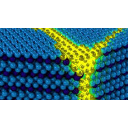
No. 5: Excitonium: Excitonium is a condensate-it exhibits macroscopic quantum phenomena, or insulates electronic crystal. It's made up of Excitons, particles that are in a very strange quantum mechanical pairing, mainly that of an escaped electron and the hole it left behind.
No. 6: Degenerate matter: Degenerate matter is a highly dense state of fermionic matter in which the Pauli exclusion principle exerts significant pressure in addition to, or lieu of, thermal pressure. The description applies to matter composed of electrons, protons, neutrons, and fermions.
No. 7: Strange matter: Strange matter is a hypothetical, extremely dense form of matter composed entirely of strange quarks. These quarks are not grouped into seperate particles(Like the quarks bundled into protons and neutrons in atomic nuclei) but form a single undifferentiated mass.
No. 8: Photonic Matter/molecules: Photonic Matter, otherwise known as Photonic Molecules are a theoretical natural form of matter which can also be manmade in which photons come together to form molecules.
No. 9: Quantum spin Hall state: The quantum spin Hall state is a state of matter proposed to exist in special, two-dimensional semiconductors with spin-orbit coupling. The quantum spin Hall state of matter is the cousin of the integer Quantum hall state, unlike the latter, it does not require the application of a large magnetic field.
No. 10: Bose-Einstein Condensate: Bose-Einstein Condensate (BEC) is a state of matter in which separate atoms or subatomic particles cool to near absolute zero, -273.15 Celcius/-473.67 Farenheit/0 Kelvin coalesce into a single quantum mechanical entity -- that is, one that can be described as a wave function -- on a near-macroscopic scale.
No. 11: Fermionic Condensate: A fermionic condensate is a superfluid(Explained later)
phase formed by fermionic particles at low temperatures. It is closely related to the Bose-Einstein Condensate, a superfluid state formed by bosonic atoms under similar conditions.
No. 12: Supercoductivity: Superconductivity is the property of certain materials to conduct direct current (DC) electricity without energy loss when they are cooled below a critical temperature. These materials also expel magnetic fields as they transform into the superconducting state.
No. 13: Superfluid: Superfluids are liquids with the ability to flow through narrow channels without apparent friction.
No. 14: Supersolid: A supersolid is a special quantum state of matter where particles form a rigid, spatially ordered structure, but also flow with zero viscosity.
No. 15: Quantum Spin Liquid: In condensed matter physics, a quantum spin liquid is a phase of matter that can be formed by interacting quantum spins in certain magnetic materials. Quantum Spin Liquids(QSL) are generally characterized by their long-range quantum entanglement, fractionalized excitations, and absence of ordinary matter.
No. 16: String-net liquid: String-net liquids are a distinct type of material state in condensed matter physics. It is a state of matter where atoms are arranged in a more chaotic order rather than opposing spin alignments.
No. 17: Dropleton: The dropleton is a collection of electrons and "holes" (places where electrons are missing) inside a semiconductor. A dropleton has handy properties for studying quantum mechanics. The new entity is termed a quasiparticle because it is not an elementary particle, like the quarks and electrons that make up atoms.
No. 18: Time Crystals: A time crystal is a state of matter that consists of atoms that repeat in time rather than in space, oscillating back and forth, or spinning, even in their ground state. They can maintain this motion perpetually, without requiring an input of energy or losing energy in the process.
No. 19: Rydberg Polarons: A Rydberg Polaron is an exotic state of matter created at low temperatures, in which a very large atom contains other ordinary atoms in the space between the nucleus and the electrons. For the formation of this atom, scientists had to combine two fields of atomic physics: Bose–Einstein condensates and Rydberg atoms. Rydberg atoms are formed by exciting a single atom into a high-energy state, in which the electron is very far from the nucleus.
- Full access to our public library
- Save favorite books
- Interact with authors
- < BEGINNING
- END >
-
DOWNLOAD
-
LIKE
-
COMMENT()
-
SHARE
-
SAVE
-
BUY THIS BOOK
(from $6.39+) -
BUY THIS BOOK
(from $6.39+) - DOWNLOAD
- LIKE
- COMMENT ()
- SHARE
- SAVE
- Report
-
BUY
-
LIKE
-
COMMENT()
-
SHARE
- Excessive Violence
- Harassment
- Offensive Pictures
- Spelling & Grammar Errors
- Unfinished
- Other Problem





COMMENTS
Click 'X' to report any negative comments. Thanks!