
Confucianism
Who founded Confucianism?
A Chinese Philosopher named Confucius founded Confucianism.
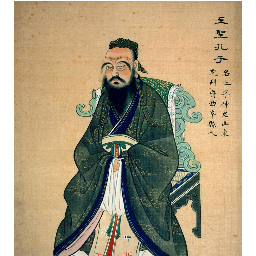
Confucius loved learning and was a philosopher and teacher. Confucius believed that education was the key to a peaceful society.

Confucius
What did they believe?
People who worship Confucianism honor and worship their ancestors. They also believe in living peaceful lives.


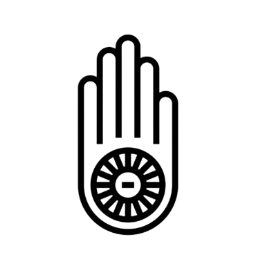
Symbols of Confucianism
What is their holy book?
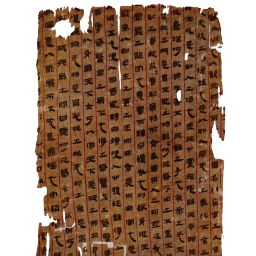
The holy book of Confucianism is The Doctrine of The Mean.
The Doctrine of the Mean is a text written by Confucius's grandson Zisi and part of a larger book of all Confucian writing called Liji.


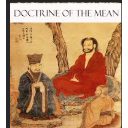
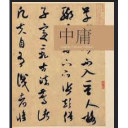
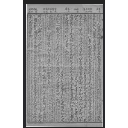
Pictures of The Doctrine of The Mean.
What Afterlife beliefs did they have?
Confucianism has no recorded afterlife beliefs.
What special beliefs do they have?
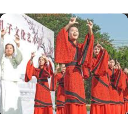
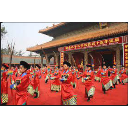
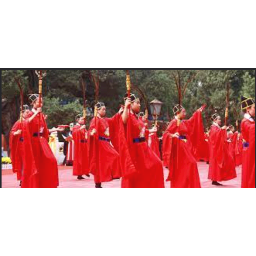
People who follow Confucianism celebrate Confucius's birthday and national day of purification.


People celebrate Confucius birthday.
How many Confucianism followers are there today?
There are currently 6.1 million followers of Confucianism today.
What are the major geographical areas of Confucianism?
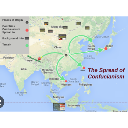
The major geographical areas of Confucianism are Vietnam, Korea, Japan, and China

The geographical areas of Confucianism.
Daoism
Who founded Daoism?
Loazi is the founder of Daoism.
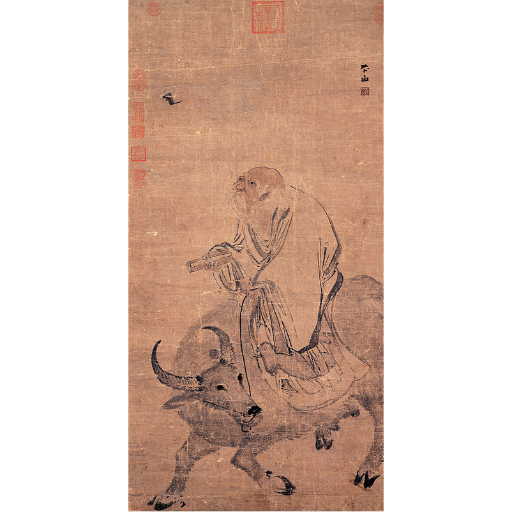
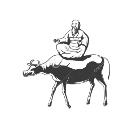
Laozi was born in the 6th Century and composed the book of Dao Te Ching. Laozi is sometimes regared as a fictional character but he is still honored in Chinese society today.

Laozi
What are Their Beliefs?
People following Daoism believe in living without conflicting Dao. To lead peaceful lives without conflict and finally, nature and humans should live in balance.


Symbols for Confucianism.
What is their holy book?
Their holy book is called Dao Te Ching.
Dao Te Chiang was written by Laozi and is translated as The Way and Its Power.


The Dao Te Ching
What are their afterlife beliefs?
Followers of Daoism believe in reincarnation based on previous lives.
What are their special beliefs?
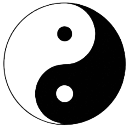
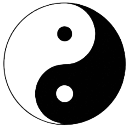
Followers of Daoism believe in Yin and Yang.
They also believe that nature changes things not people.

The symbol for Yin and Yang.
- Full access to our public library
- Save favorite books
- Interact with authors

- < BEGINNING
- END >
-
DOWNLOAD
-
LIKE
-
COMMENT()
-
SHARE
-
SAVE
-
BUY THIS BOOK
(from $3.19+) -
BUY THIS BOOK
(from $3.19+) - DOWNLOAD
- LIKE
- COMMENT ()
- SHARE
- SAVE
- Report
-
BUY
-
LIKE
-
COMMENT()
-
SHARE
- Excessive Violence
- Harassment
- Offensive Pictures
- Spelling & Grammar Errors
- Unfinished
- Other Problem

COMMENTS
Click 'X' to report any negative comments. Thanks!