 Amy Tan
 This book was created and published on StoryJumper™
©2014 StoryJumper, Inc. All rights reserved.
Publish your own children's book:
www.storyjumper.com


My mother believed you could be anything you wanted to be in
America. You could become rich. You could become instantly
famous. “Of course, you can be prodigy, too,” my mother told
me when I was nine. “You can be best at anything.” America
was where my mothers’ hopes lay. She moved to San Francisco
from China after she lost everything. Things could get better in
so many ways.
We proceeded with me becoming a prodigy. Now, we
didn’t choose the right kind at first. My mother thought I could
be a Chinese Shirley Temple, and with that came a horrible trip
to a beauty school where a curling fiasco resulted in my new
peter pan style haircut. I liked it, though. It made me look
forward to my future fame.
In the beginning, I was just as excited as my mother, maybe
even more so. I tried many different prodigy ideas on for size.
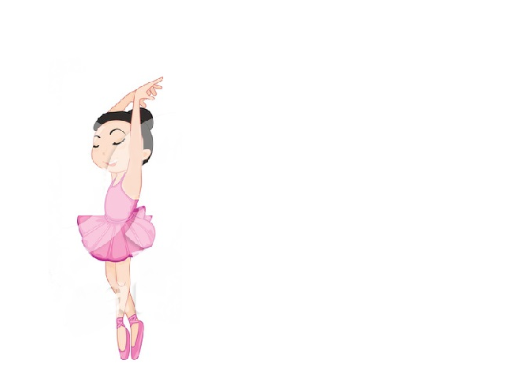
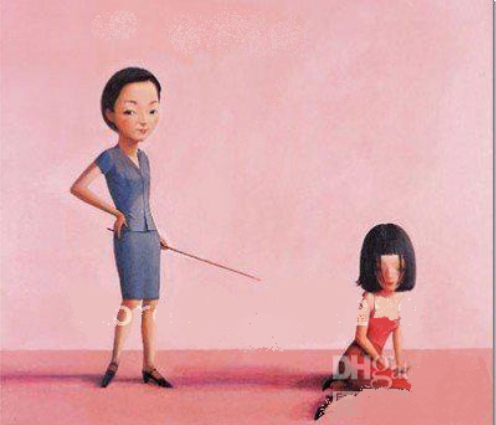
I was once a dainty ballerina girl. My mother got all her ideas
from magazines she got from people whose houses she
cleaned.
Every night her and I would sit down after dinner and
she would give me tests form the magazines. She once read a
story about a 3-year-old who knew the states and most of the
European countries. After this she asked, “What’s the capital
of Finland?” All I knew was the capital of California, because
we lived on a street named Sacramento in Chinatown. I
guessed the most foreign word I knew, and it, of course, was
wrong. I hated these tests and they made my motivation
inside start to die.
That night I looked in the mirror and cried at the ugly
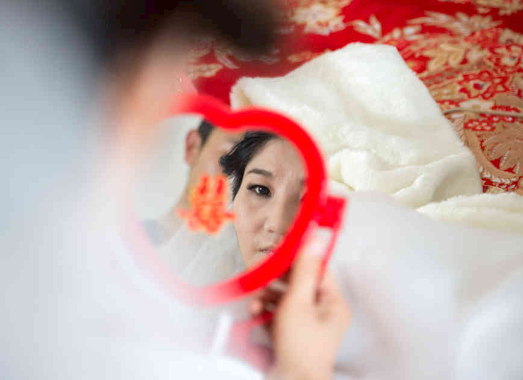
ordinary girl I saw. Then I saw the prodigy. The angry girl that
was staring back at me, that WAS me! New thoughts filled my
brain. My mother wasn’t going to change me; I wasn’t going to
let her! Now, when she gave me the tests, I tried my hardest to
look bored, and I was. I didn’t try on them anymore. After a
while, she gave up after a few moments of trying to test me.
One day, my mother made me watch what was on the TV; a
little Chinese girl with a peter pan haircut playing the piano. I
wasn’t worried by these warning signs, though. The family didn’t
have a piano and we couldn’t afford one. Then my mother started
criticizing the girl, so I defended her even though I knew I would
regret what I said. “Just like you,” my mother said. “Not the best,
because you not trying.”

Three days after watching that little girl play my mother told me
my piano lesson schedule. She had talked to Mr. Chong, who lived
on the first floor and was a retired piano teacher. “Why don’t you
like me the way I am?” I cried.
Mr. Chong, whom I secretly nicknamed Old Chong, was very
strange, always tapping his fingers to the silent music of an
invisible orchestra. I soon found out why Old Chong had retired
from teaching piano. He was deaf. "Like Beethoven!" he shouted to
me: We're both listening only in our head!" And he would start to
conduct his frantic silent sonatas.
He would play the C scale a few times, a simple cord, and then, as
if inspired by an old unreachable itch, he would gradually add more
notes and running trills and a pounding bass until the music was
really something quite grand. I would play after him,

the simple scale, the simple chord, and then just play some
nonsense that sounded like a cat running up and down on top of
garbage cans. Old Chong would smile and applaud and say “Very
good! But now you must learn to keep time!"
He taught me all these things and that was how I also learned I
could be lazy and get away with mistakes, lots of mistakes. If I hit
the wrong notes because I hadn't practiced enough, I never
corrected myself; I just kept playing in rhythm. Maybe I never gave
myself a fair chance. I did pick up the basics pretty quickly, and I
might have become a good pianist at the young age. But I was so
determined not to try, not to be anybody different, and I learned to
play only the most ear-splitting preludes, the most discordant
hymns.
Over the next year I practiced like this, dutifully in my own way.
And then one day I heard my mother and her friend Lindo

Jong both after church, and I was leaning against a brick wall,
wearing a dress with stiff white petticoats. Auntie Lindo’s
daughter, Waverly, who was my age, was standing farther down
the wall, about five feet away. We had grown up together and
shared all the closeness of two sisters, squabbling over crayons
and dolls. In other words, for the most part, we hated each other. I
thought she was snotty. Waverly Jong had gained a certain amount
of fame as "Chinatown's Littlest Chinese Chess Champion."
"She bring home too many trophy." Auntie Lindo lamented
that Sunday. "All day she play chess. All day I have no time do
nothing but dust off her winnings." She threw a scolding look at
Waverly, who pretended not to see her. "You lucky you don't have
this problem," Auntie Lindo said with a sigh to my mother.
You've previewed 7 of 11 pages.
To read more:
Click Sign Up (Free)- Full access to our public library
- Save favorite books
- Interact with authors

- < BEGINNING
- END >
-
DOWNLOAD
-
LIKE(2)
-
COMMENT()
-
SHARE
-
SAVE
-
BUY THIS BOOK
(from $2.99+) -
BUY THIS BOOK
(from $2.99+) - DOWNLOAD
- LIKE (2)
- COMMENT ()
- SHARE
- SAVE
- Report
-
BUY
-
LIKE(2)
-
COMMENT()
-
SHARE
- Excessive Violence
- Harassment
- Offensive Pictures
- Spelling & Grammar Errors
- Unfinished
- Other Problem





COMMENTS
Click 'X' to report any negative comments. Thanks!