




Abkhazia
The page was prepared by: Keso Bablishvili
Giorgi Teteloshvili
Lika Ilashvili
Lizi Terterashvili


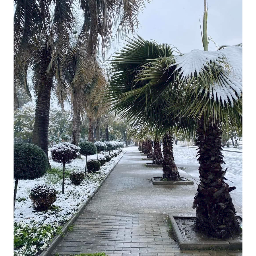
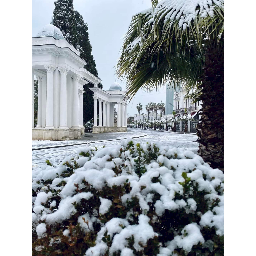
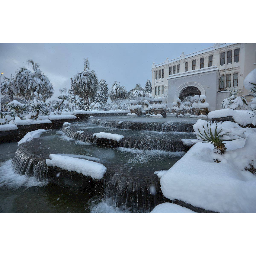


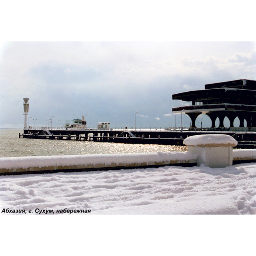

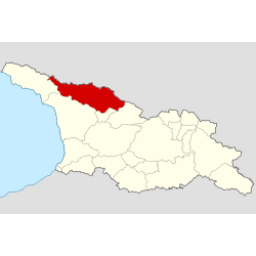
ABKHAZIA
New Year's Day in Abkhazia is known as Khechkhuama or Ajirnikhua, and it is celebrated on January 13 instead of December 31. This day symbolizes the renewal and creation of the world.
In the Abkhazian ancestral home, great preparations and feasting take place, where the entire family and relatives gather together. Wine is served from specially opened kvevri for the New Year, and honey and walnut kadis, or Abkhazura bread, are specially baked for this day.
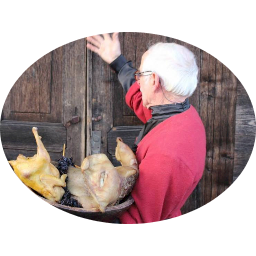
Previously, there was a pagan tradition in this area where one of the family members would kill the cattle and take its liver, lungs, and kidneys to the village shrine. There, after finishing the prayer, he would sprinkle wine on the icons and only then would he return home to congratulate his family members on the New Year.

Samegrelo
The page was prepared by: Tekla Kharabadze, Davit Nemsitsveridze
In Samegrelo, the New Year was known as Kalanda, like Guria, and Chichilak became its inseparable attribute. The history of Chichilak has very deep roots in the past. Holy to him They were associated with the name of Basil the Great. however, In the pre-Christian era, Basila was a pagan solar deity and a new one The celebration of the year was perceived as a symbol of his worship.
Basil was also baked in Samegrelo. At the same time, Khachapuri was especially on the New Year's tabla prepared cold food, fruits, sweets, boiled pumpkin, wine, They placed the fellamous and the roasted pig's head there. As you can imagine, Kalanda was not infrequently met with rifle fire. There was also a tradition of kidnapping a guest. As a rule, the whole neighborhood took part in this custom, and people competed with each other, who would attend whom to take away the guest. The host's family gave a big gift to the kidnapped guest.
Svaneti
The page was prepared by:Etiko Deisadze, Nazi Mzhavia
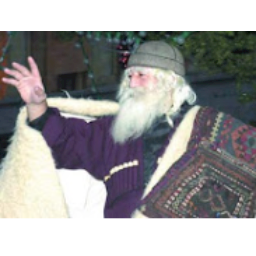
In Svaneti, on the eve of the New Year, many cheese breads were baked, one of them was large and had a cross in the middle. When the butcher would come, he would call, he opened the door, he would bring me the mercy of God and the ruler, he would enter the house, go around three times, pray three times, take a big cross-shaped bread of fortune, arrange it for everyone, meat, honey, bread and apricots, and come down. the coming of the year.
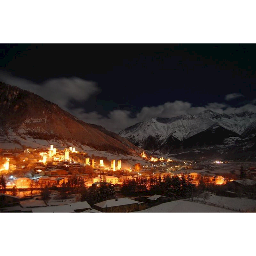
There is a saying in Svaneti, when you cross the threshold of the house, you cannot bring unpleasant thoughts into the family. Well, they could not enter the house when they were angry with each other. There fore they must mingle with the assembled people and enter the holy house beyond the threshold. Mandilos used to bake "lemzir", special breads with a cross on top. In Svan language, Lemzir is prayer bread. Old traditions are weakly preserved in Svaneti.

Racha-lechxumi
The page was prepared by: Dea Deisadze
In Racha, December 31 is known as Kalandob. On this day, one member of the family would go to the forest and bring a log full of firewood. Badzgari - an evergreen thorny and prickly plant - was piled on top of the firewood. The wooden marquee was placed on the hill facing east, and it was supposed to stand like that until the Epiphany. At the Epiphany, a Sakaland pig was examined. The pig's chapel In Racha, on December 31, before the family member woke up, the family's domestic butcher - Mekle - used to come. Mkloviare's doors were opened after he assured the people in the house three times that he would bring blessings, goodness and health to the family.

Bachula
In Lechkhumi, December 31 was called Kalanda. Women used to kill Sakaland pig - Nezv. This pig could have been brought as a dowry. The pig's head hung in the attic until Epiphany. On that day, the head man of the family would ring firewood with a cart. They used to arrange a family table on which bread and sweets were placed. Usually, six shrines should be baked in the family tabla and the seventh larger one - the pig shrine. Sufradze New Year's dishes in Racha-Lechkhumi I will start the list of typical dishes of mountain racha with rachuli khavitsi, which is one of the peculiar and almost daily dishes in the life of the racha people. As you know, erbo is made from butter, and for khavisi we need the part that remains at the bottom during boiling of erbo. When boiling and straining ready erbo, a white sediment remains at the bottom, which is called peri in Racha. A little flour is added to the dough that remains at the bottom of the dish, it is boiled on a low flame, and the dough comes out. Just add a little salt and it is ready to eat. It is eaten with bread. It is nutritious and is often eaten in families.
Imereti
The page was prepared by:Mari Chitaishvili

Imereti in its kitchen has always been distinguished from other parts of Georgia, and this has been the best on the New Year's table. Due to the diversity of lust and the meat, and the Imeretian table, no matter how poor it was, it would still be delicious.

Prior to the arrival of the maid, the head of the family was tasked with a triple -grade -filled manner to the house, and to multiply the Lord, to ask for health, khavi and barracks. Pork head, barbecue, boiled mother, khachapuri, lobster, bread and sweet eggs. After a three -time entrance to the house, the head of the family was included in Carri with the oldest member of the family, who had a stick on the island several times on Mozzi, and would pray for such prayers: so many gold in our family, so many breads and wine, so many salt, so many cows, so many chickens; Let this year be abundant like these sparks.
Kartli
The page was prepared by:Oto Makaradze

Tradition is the customs, rules, norms of behavior handed down from generation to generation, which any nation has and protects them. The essence of tradition is its connection with time, which is so strong that time cannot diminish it. It takes deep roots in the human psyche and then it is almost impossible to eradicate it. Time periodically evaluates traditions along with changes in society, however, what is valuable and endures time remains, and what wears and eats out of use. Traditions have existed since ancient times, and no one cares why or how.
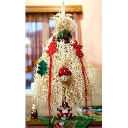
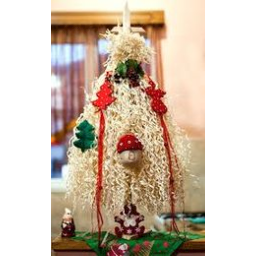
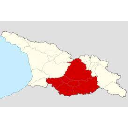
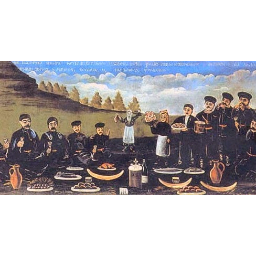
In Kartli, they first bake a statue of Basila, two fortune cubes for each family member and one for pets. At dawn, the head of the family places a pig's head on the khoncha, arranges the stones of fortune around it and places the statue of Basila on top. On one side of the khonchi, he will place pieces of bread dipped in honey in order to "age" them and tie them to lighted candles. This New Year's Khoncha is called "Abramian" in Kartli.
Kaketi
The page was prepared by:Gigi Kepuladze
Wheat or corn were thrown into the house in Kakheti when they arrived at home in Kakheti-we would have a lot of crushing.Khoncha would be prepared for New Year's Eve in Hereti; They would sprinkle breads, lavash, make jams with honey, egg, non-wine, red and white yarns, and go to the vineyard with a house. They will go to one good crop. The Lord of the House first breaks the vines, then builds, and during the crush of the chigos, the soil is mixed with wine; At the foot of the same senior vines slaughter the red wing, the red wings, and with a cotton thread, these wings cling to the chigos and vines and say:
"God, Kurmukh, you do not kill us in the pitchers of red wine."
Each lukewarm bread is poured into honey and Erbo, eaten, pouring a little wine and returning home.
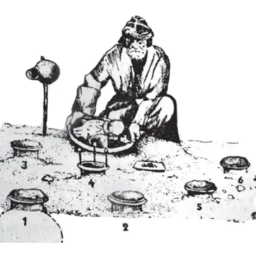
On New Year's Eve, the Ingilos know dinner before. They make more chicken juice and flavors. They expect to have a killer for dinner, who must be a fate of someone, or a relative, or familiar. No one will get home at home.
Adjara
The page was prepared by:Misha Makaradze Megi Qatamadze


In all parts of Georgia, the New Year is mostly celebrated with modern traditions, although each region has preserved its own unique traditions. In the highlands of Adjara, several ancient New Year's traditions have remained unchanged. According to the old Adjara tradition, before the New Year, the family had to return or borrow various things during the year.


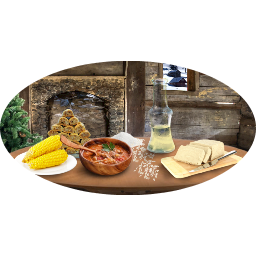

A few hours before the arrival of the New Year, a ram decorated with colorful things was brought into the living room, which was considered a symbol of Khvavi-Barak. At 12 o'clock at night, as a sign of longevity and joy, a man would go outside and throw his gun in the air, and in the morning he would go down to the boss and drag the iron chain. which was equated with the continuity of the abundance of goods. At that time, the housekeeper of the family would go to the yard and bring home a jug full of water, which she would drink in the room.
- Full access to our public library
- Save favorite books
- Interact with authors
- < BEGINNING
- END >
-
DOWNLOAD
-
LIKE
-
COMMENT()
-
SHARE
-
SAVE
-
BUY THIS BOOK
(from $5.19+) -
BUY THIS BOOK
(from $5.19+) - DOWNLOAD
- LIKE
- COMMENT ()
- SHARE
- SAVE
- REMIX
- Report
-
BUY
-
LIKE
-
COMMENT()
-
SHARE
- Excessive Violence
- Harassment
- Offensive Pictures
- Spelling & Grammar Errors
- Unfinished
- Other Problem






COMMENTS
Click 'X' to report any negative comments. Thanks!