submitted to : Derick Millard

How Google Classroom Revolutionized My Learning During the Pandemic Lockdown
When the COVID-19 pandemic started and everything became uncertain, my understanding of education changed quickly. When schools closed, I felt worried and unsure about how I would keep learning. But then, Google Classroom became very important to me, changing my learning experience in ways I didn't expect.
At first, I was unsure. How could an online tool replace the lively feeling of a real classroom? But when I first used Google Classroom, I was happy to find it easy to use. All my work was organized in one place, so I could easily see what I needed to do. I could clearly see when things were due, get resources, and even turn in my work with just a few clicks. No more lost papers or forgotten handouts!
One of the biggest changes was being able to talk to my teachers and classmates directly. By leaving comments and sending messages, I could ask questions and join in on discussions without being in a real classroom. My teachers quickly got used to this, using tools like Google Meet for live online classes. The first time I joined a virtual class, seeing my classmates' faces on the screen felt really good during that time of being apart. It made me remember that we were all going through this together, adjusting to this new way of life.
Google Classroom also made it easy to access lots of helpful materials. My teachers could share videos, articles, and interactive lessons, making our learning more interesting. I started to enjoy studying subjects in new ways. For example, when we learned about science, my teacher shared virtual lab activities that let me do experiments safely at home. This made me feel excited about learning again, reminding me of how fun it can be.
During the pandemic, Google Classroom changed how I learned by giving me a well-organized place to talk with teachers and share materials. I learned important skills like managing my time, being self-guided, and staying disciplined while handling online classes and homework. This tool helped me manage my studies, deal with the difficulties of remote learning, and connect with classmates in useful ways. Overall, I appreciate the order and support that Google Classroom provided, showing that even in hard times, technology can improve our learning experience.
How corona affect the education and online way
Improved Teamwork: Allowed students to work together in real-time, creating a strong sense of community through shared projects.
Efficient Management: Provided a single place for assignments and comments, helping both teachers and students stay organized.
Customized Education: Offered personalized learning experiences, boosting engagement with immediate feedback and shared resources.
Digital Skills Training: Quickly developed important digital abilities, preparing students for future school and work settings.
Easy-to-Use Design: Made the move to online learning smoother, reducing problems and making technology easy for everyone to use.
Positive side
Growing Disparities: The pandemic made existing educational differences worse, especially for students from disadvantaged backgrounds and those in low - income schools, who fell further behind
Mental Health Issues: The crisis also affected students' overall health and well-being, with over 35% of parents very worried about their children's mental health.
Negative side
Learning Setbacks: On average, students lost five months in math and four months in reading.
Growing Disparities: Less advantaged students had bigger learning losses, making inequalities worse.
Mental Health Concerns: Many students experienced more anxiety and stress.
Frequent Absences: Almost 30% of students were often absent in 2022.
Social Skill Loss: More isolation made it harder for students to develop social skills.
Technology Gap: Access to technology was uneven, affecting less advantaged students more.
Future Impacts: Long-term effects on education and future income are expected. ( continue till 7th page)
Extensive School Shutdowns: During the peak of the pandemic in April 2020, schools closed for nearly 1.6 billion students across 200 countries, which was about 94% of all students worldwide.
Learning Setbacks: Students faced major learning delays, finishing the 2020-21 school year, on average, five months behind in math and four months behind in reading.
Growing Disparities: The pandemic made existing educational differences worse, especially for students from disadvantaged backgrounds and those in low - income schools, who fell further behind
Mental Health Issues: The crisis also affected students' overall health and well-being, with over 35% of parents very worried about their children's mental health.
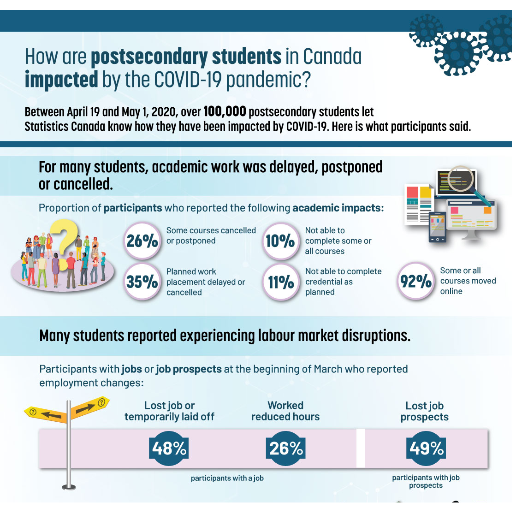
Online learning platform after corona
Even after the pandemic, many students will probably keep using online learning platforms because they have seen how well they work. When schools reopen, it's likely that these online tools will be used along with traditional teaching methods. In 2020, almost 3 million students were in fully online programs, and 6 million took at least one online course as part of their college education. After the pandemic, students became better at using computers and more aware of digital learning tools compared to before the pandemic. A study showed that online student enrollment went up from 30% to 70% during the COVID-19 pandemic.
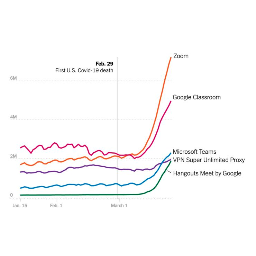
How internet affect during covid - 19 period
The internet became very important for staying connected with others, especially during the pandemic. About 90% of adults thought it was important at that time. It helped people quickly start working and studying from home, so they could keep doing their jobs and schoolwork. The internet also made it possible to use services like telemedicine, online shopping, and virtual events, which meant people didn't have to meet in person as much. As people used more online platforms, they learned new digital skills. However, the pandemic showed that some people had trouble getting internet access or couldn't afford it. The growing use of the internet is likely to change how we communicate, work ,and learn, even after the pandemic is over.
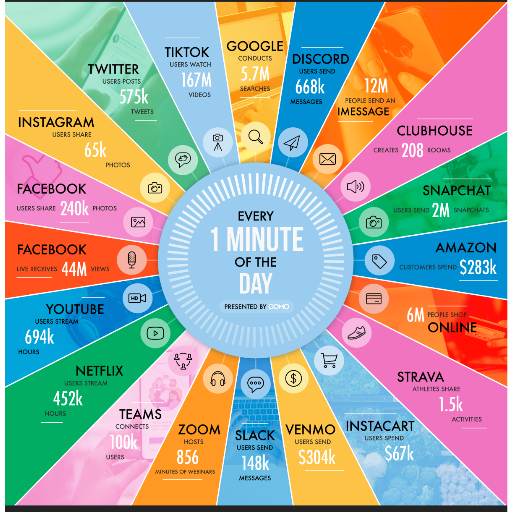
change in internet traffic during corona pandemic .
A 15-20% rise happened in just a few weeks, which is like what usually grows in a whole year. The use was highest all day (from 9 a.m. to 9 p.m.) instead of just in the evening. There was more than a 200% jump in traffic for apps used for working from home and video calls. Online games had a 20-80% increase, and streaming services saw big jumps too. Some mobile networks had less traffic because people used their home WiFi instead. The amount of traffic increased differently in different places, with some areas seeing bigger jumps. Most networks handled the extra traffic, but some needed to get more capacity.
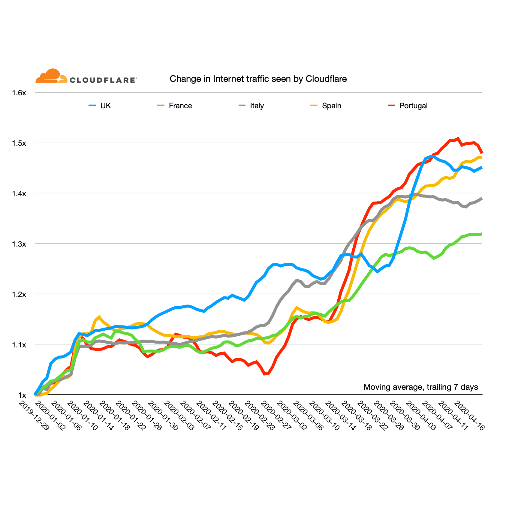
References : Statistics Canada. (2020). [Infographic showing changes in internet use during the COVID-19 pandemic]. Retrieved November 4, 2024, from https://www150.statcan.gc.ca/pub/11-627-m/2020032/11-627-m2020032-eng.jpg
Infographic showing internet traffic changes during COVID-19 pandemic]. (2020). WCCFtech. https://cdn.wccftech.com/wp-content/uploads/2020/04/Screen-Shot-2020-04-15-at-1.30.56-AM-740x466.jpg
- Full access to our public library
- Save favorite books
- Interact with authors
- < BEGINNING
- END >
-
DOWNLOAD
-
LIKE
-
COMMENT()
-
SHARE
-
SAVE
-
BUY THIS BOOK
(from $4.59+) -
BUY THIS BOOK
(from $4.59+) - DOWNLOAD
- LIKE
- COMMENT ()
- SHARE
- SAVE
- Report
-
BUY
-
LIKE
-
COMMENT()
-
SHARE
- Excessive Violence
- Harassment
- Offensive Pictures
- Spelling & Grammar Errors
- Unfinished
- Other Problem






COMMENTS
Click 'X' to report any negative comments. Thanks!