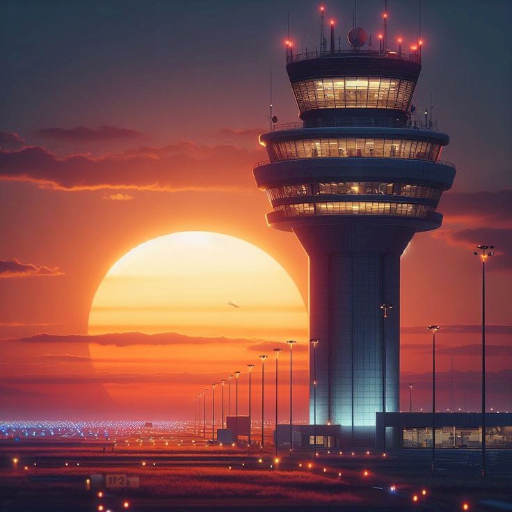

An air traffic controller is responsible for ensuring the safe and efficient movement of aircraft in the airspace. They work in air traffic control towers, approach control facilities, or en-route centers, monitoring and directing the flow of air traffic. Their primary objective is to maintain safe distances between aircraft and provide guidance to pilots to prevent collisions or conflicts.
RUNWAY
In aviation, a runway is an elongated, rectangular surface designed for the landing and takeoff of an aircraft. Runways may be a human-made surface or a natural surface . Runways, taxiways and ramps, are sometimes referred to as "tarmac", though very few runways are built using tarmac. Takeoff and landing areas defined on the surface of water for seaplanes are generally referred to as waterways. Runway lengths are now commonly given in meters worldwide, except in North America where feet are commonly used.
HANGGAR
A hangar is a large building or structure designed to house and protect aircraft. It provides storage, maintenance, and repair facilities for airplanes, helicopters, or other air vehicles. Hangars are typically made of metal, wood, or concrete and are found at airports, airbases, and private airstrips. They are equipped with wide doors to accommodate the entry and exit of aircraft and may also include office spaces, workshops, and storage areas for tools and parts.
ARRIVAL HALL
An arrival hall is the designated area in an airport where passengers arrive after their flight. It typically includes facilities for immigration checks, baggage claim, and customs clearance. The hall often features seating areas, information desks, currency exchange counters, and signage to guide passengers to transportation services or exits. It is also where travelers are met by friends, family, or transport services.
BOARDING GATE
An airport boarding gate is the area where passengers board their flights. Boarding gates are typically located after security checkpoints and include the following features:
Jetways: Connect the terminal to the aircraft gate, providing a safe and comfortable way for passengers to board
Boarding desk: Located at the gate
Seating: Passengers can wait for their flight in the seated waiting area
FUEL DEPOT
A fuel depot for airplanes, also known as an aviation fuel facility, is a specialized storage and distribution system designed to supply aircraft with fuel efficiently and safely. These depots are typically located at airports and consist of key components such as:
Storage Tanks: Large tanks store aviation fuels like Jet A, Jet A-1, or Avgas. These tanks are designed to prevent leaks and contamination.
Pipelines: Fuel is transported from refineries or bulk storage facilities to the airport fuel depot via pipelines, trucks, or rail.
Filtration Systems: Filters ensure that fuel is clean and free of water or debris before being dispensed into aircraft.
- Full access to our public library
- Save favorite books
- Interact with authors
THANK YOU

- < BEGINNING
- END >
-
DOWNLOAD
-
LIKE
-
COMMENT()
-
SHARE
-
SAVE
-
BUY THIS BOOK
(from $3.99+) -
BUY THIS BOOK
(from $3.99+) - DOWNLOAD
- LIKE
- COMMENT ()
- SHARE
- SAVE
- Report
-
BUY
-
LIKE
-
COMMENT()
-
SHARE
- Excessive Violence
- Harassment
- Offensive Pictures
- Spelling & Grammar Errors
- Unfinished
- Other Problem

COMMENTS
Click 'X' to report any negative comments. Thanks!