
Maratha Confederacy
INTRODUCTION
The Maratha Empire was an early modern Indian confederation that rose to prominence in the 18th century, dominating much of the Indian subcontinent. The Maratha Empire was established by Chhatrapati Shivaji in the late 17th century as a response to the chaos and misrule in the Deccan region.
The confederacy was officially recognized as a tributary state by Emperor Bahadur Shah I in 1707 after a long rebellion. From 1737 to 1803, the Marathas played a crucial role in the imperial politics of Delhi, influencing the power dynamics of the region and shaping the course of Indian history during this period.
The Sardar families, who contributed in giving rise to Maratha Confederacy.
1. The Peshwas of Pune
2. The Holkars Of Indore
3. The Bhosales Of Nagpur
4. The Shindes Of Gwalior
5. The Gaikwads of Vadodara
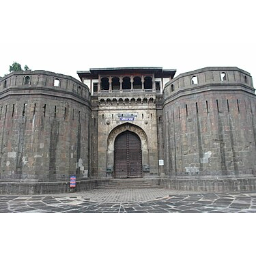
Shaniwar Wada, Pune
Peshwa Baji Rao I
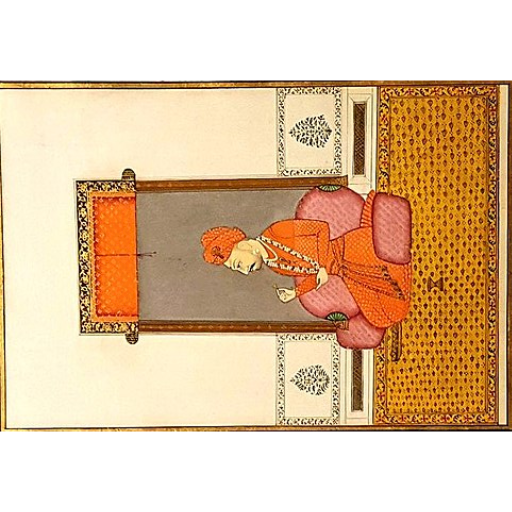
The Peshwas of Pune
In 1713, Shahu appointed Balaji Vishwanath (Bhat), as Peshwa. The appointment of Balaji's son, Baji Rao I, as Peshwa in 1719 by Shahu made the position hereditary in the Bhat family. Baji Rao proved his loyalty by controlling the feudal chieftains who wanted independence from the Maratha Empire. The rebellion of General Trimbak Rao Dabhade, the senapati (commander in chief), over Chauthai (revenue collection) of Gujarat is one example of such internal Maratha feuds. The followers of Baji and Trimbak clashed at the Battle of Bilhapur on 1 April 1731, and Trimbak was killed. In gratitude, Shahu gave the Peshwas and the Bhat family unchallenged control over Maratha empire. who also appointed Baji Rao's son as Peshwa in 1740, gave considerable authority to the Peshwas to command the Maratha armies, and they responded well during his reigns.
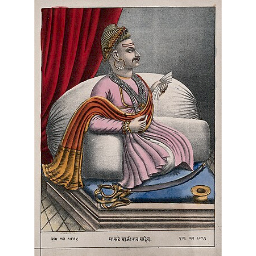
Peshwa Bajirao II
At the time of his death in 1749, Shahu made the Peshwas his successors under these conditions: Shivaji's descendants, who remained as the titular Raja of Satara, were called Swami (Marathi for the 'real owner') by the Peshwas who reported to them, and officially they were to seek guidance from the Raja.
The first (Bhat) Deshmukh family Peshwa was Balaji Vishwanath (Bhat) Deshmukh. He was succeeded as Peshwa by his son Baji Rao I, who never lost a battle. Baji Rao and his son, Balaji Baji Rao, oversaw the period of greatest Maratha expansion, brought to an end by the Marathas' defeat by an Afghan army at the Third Battle of Panipat in 1761. The last Peshwa, Baji Rao II, was defeated by the British East India Company in the Battle of Khadki which was a part of Third Anglo-Maratha War (1817–1818). The Peshwa's land (Peshwai) was annexed to the British East India Company's Bombay province, and Bajirao II, the Peshwa was pensioned off.
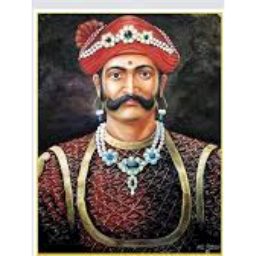
Malhar Rao Holkar
THE HOLKARS OF INDORE
Holkar dynasty, Maratha rulers of Indore in India. The family, of peasant origin and was said to have migrated from the Mathura region to the Deccan village of Hol, or Hal, the name of which, coupled with kar (“inhabitant of”), became the family surname.
The dynasty’s founder, Malhar Rao Holkar, rose from peasant origins by his own ability. In 1724 Baji Rao I, the peshwa (prime minister) of the Maratha state, gave him command of 500 horses, and he soon became the peshwa’s chief general in Malwa, with headquarters at Maheshwar and Indore. At his death (1766) he was the virtual ruler of Malwa. From 1767 to 1794 his son’s widow, Ahilya Bai, ruled the state with great skill and understanding. Indore was an island of peace and prosperity in a sea of violence, and her rule became proverbial for justice and wisdom. Tukoji Holkar, a distant relative whom she had appointed as commander of her forces, succeeded her two years later; on his death, in 1797, his son Jaswant Rao seized power,
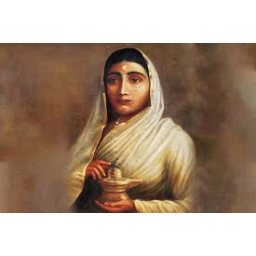
Devi Ahilyabai Holkar

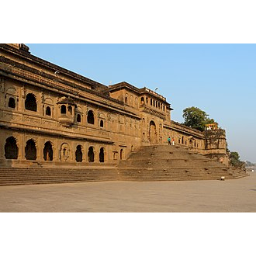
Maheshwar Fort
At the outbreak of the Second Maratha War in 1803, Jaswant Rao remained neutral, but in 1804, after the defeat of Sindhia (one of the other states of the Maratha confederacy), he attacked the British and besieged Delhi. His forces were defeated, however, at Dig and Farrukhabad in November 1804, and he made peace a year later. Soon thereafter he became insane; he died in 1811. The Holkar family rule continued, marked by disputes and abdications, until the state’s end as a separate entity after Indian independence in 1947.
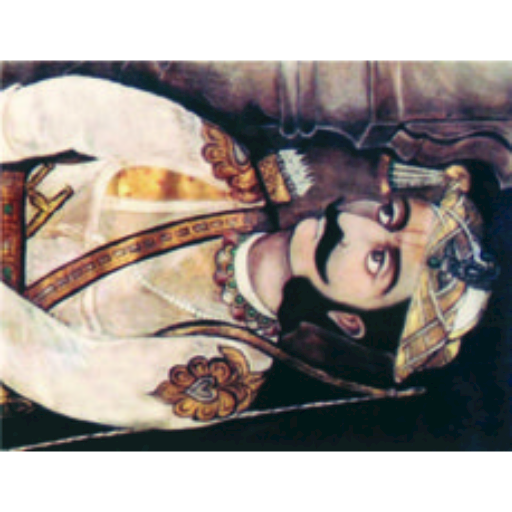
Raghuji Bhonsle
THE BHONSLES OF NAGPUR
Bhonsle dynasty Indian dynasty of the family of the great Maratha king Shivaji. Raghuji Bhonsle of Berar founded the dynasty in 1730. There were eight rulers in the line. They ruled at Nagpur in present-day Maharashtra state and were a leading power in the 18th-century Maratha confederacy.
The Bhonsles of Nagpur were a Maratha royal house that ruled the Kingdom of Nagpur from 1739 to 1853. They were from the Maratha Bhonsle clan and were one of the most powerful Maratha chiefs in the Maratha Empire. The Bhonsale family were originally headmen from Deor or Deur, a village in Satara district, under the forts Chandan Vandan (now in Koregaon Taluka, District Satara and was under Deshmukhi rights of Bhoite Clan).
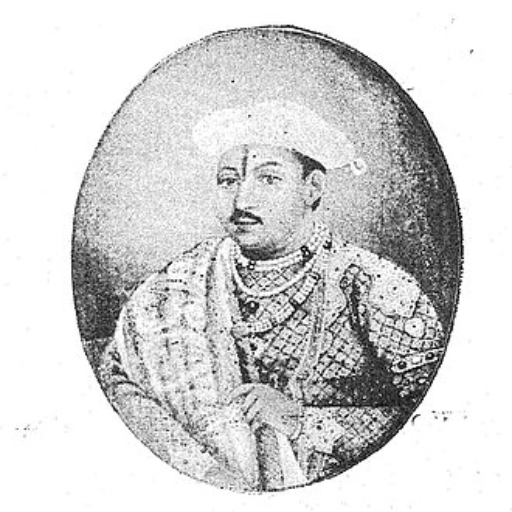
Mudhoji Bhonsle II
When Raghuji Bhonsle III died without a male heir in 1853, the British annexed the kingdom under the doctrine of lapse. Until the formation of the Central Provinces in 1861, the territories of the former kingdom were administered as Nagpur Province by a commissioner appointed by the Governor-General of India.
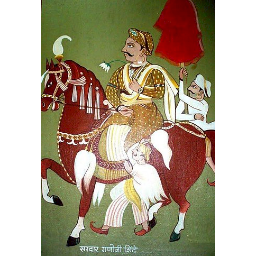
Sardar Ranoji Shinde
The Shindes of Gwalior
Sindhia or Shinde family, Maratha ruling family of Gwalior, which for a time in the 18th century dominated the politics of northern India. The dynasty was founded by Ranoji Sindhia, who in 1726 was put in charge of the Malwa region by the peshwa (chief minister of the Maratha state). By his death in 1750, Ranoji had established his capital at Ujjain. Only later was the Sindhia capital moved to the rock fortress of Gwalior.
Probably the greatest of Ranoji’s successors was Sindhia Mahadaji (reigned 1761–94), who created a north Indian empire virtually independent of the peshwa. He emerged from war with the British East India Company (1775–82) as the recognized ruler of northwestern India.
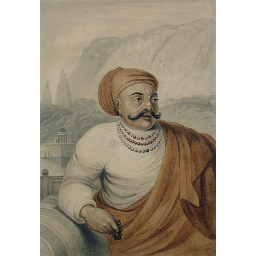
Mahadaji Shinde
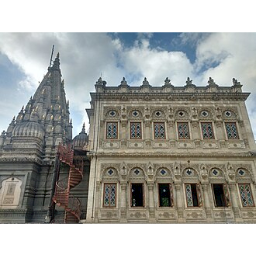
Shinde Chhatri, Pune
With the aid of French officers, he defeated the Rajputs, took the Mughal emperor Shah ʿAlām under his protection, and finally won control of the peshwa by defeating the Maratha Holkar, the peshwa’s chief general, in 1793.
His grandnephew, Daulat Rao, however, suffered serious reverses. He came into conflict with the British in 1803. After being defeated in four battles by General Gerard Lake, he was obliged to disband his French-trained army and sign a treaty; he gave up control of Delhi but retained Rajputana until 1817. The Sindhia became clients of the British in 1818 and survived as a princely house until 1947.
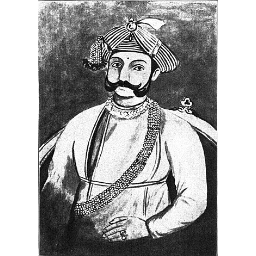
Pilajirao Gaekwad
- Full access to our public library
- Save favorite books
- Interact with authors
- < BEGINNING
- END >
-
DOWNLOAD
-
LIKE
-
COMMENT()
-
SHARE
-
SAVE
-
BUY THIS BOOK
(from $6.79+) -
BUY THIS BOOK
(from $6.79+) - DOWNLOAD
- LIKE
- COMMENT ()
- SHARE
- SAVE
- Report
-
BUY
-
LIKE
-
COMMENT()
-
SHARE
- Excessive Violence
- Harassment
- Offensive Pictures
- Spelling & Grammar Errors
- Unfinished
- Other Problem






COMMENTS
Click 'X' to report any negative comments. Thanks!