As a young man, moreover a catholic, I believe I would seek a peaceful ending to any issues if they arose. I don't believe I would participate in many strikes or protests except for those revolving around better living conditions for my people. During this time, the Italian people faced deplorable housing conditions, in which there was overcrowding and sanitary issues. This problem is attributed to the slum-like conditions that many Italians were forced to live in because of their income. I don't believe there would be much for me to do without the government's help, that being said, I could do what real immigrants did: make it feel a little more homelike. Many Italian immigrants tried to make the best of their situation by creating a strong community and always helping each other out. I think my identity would be highly influenced by my job and religion at the time. For example, many Italians were catholic, meaning that they would support things like prohibition. Additionally, my job in a factory could prove to change my idea of the American dream, which could be a culture shock. It could be seen that Italians are always trying to make the best of what they have, and they are always striving for something more. I relate this to my own life because I feel I never want to remain stationary with my education or financial opportunity.

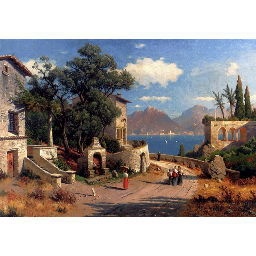
Dominic stood at the edge of his village in Italy. He looked at the green hills and smelled fresh bread from his mother’s kitchen. It was a peaceful place, but his family was very poor. No matter how hard his dad worked, they never had enough money. That’s why Dominic was leaving for America.
America promised jobs and a chance for a better life. The whole village helped him go. Neighbors and friends gave what they could. It wasn’t much, but it was enough for one ticket to America. Dominic felt excited and scared as he held the ticket in his hand. He practiced his English for weeks and whispered, “My name is Dominic. I will stay with a friend in New York.”
As the sun set, Dominic looked back at his home. His mother stood in the doorway, trying not to cry. His dad put a hand on his shoulder and nodded. Tomorrow, Dominic would board the ship to America. He felt sad to leave, knowing he was leaving part of himself behind.
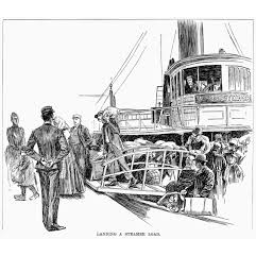
The ship creaked and swayed as Dominic held the railing, looking at the big ocean in front of him. The salty air felt sharp on his face, but below deck, it smelled worse. The steerage section was packed with people—men, women, and children all squeezed together in a dark space. The air was thick with sweat and sickness, and the ship rocked so much that it made many people feel sick. Dominic knew it would be hard, but this was worse than he expected.
Each day felt long. The food was not enough and tasted bad, mostly dry biscuits and watery soup. There was little clean water, and no one had clean clothes. People whispered about sickness spreading, and Dominic saw families huddled together, praying to stay healthy. He tried to stay strong, reminding himself that each wave brought him closer to a new life. When he couldn’t sleep, he quietly practiced his English, saying, “My name is Dominic. I will stay with a friend in New York.”
Even with the hard times, there were moments of hope. Some nights, passengers gathered on the deck to share stories about their families and dreams. Dominic listened, feeling better, knowing he wasn’t alone. He met an older man named Pietro, who had made this journey before. "The journey is hard, boy," Pietro said, "America is worth it, you’ll see." Dominic held onto those words, using them to stay strong when things got tough. He had come too far to turn back now.
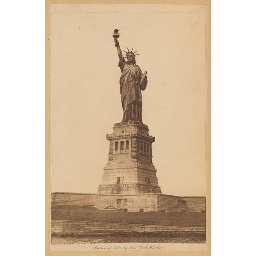
After weeks on the ship, Dominic felt wobbly as he stood on the deck, holding the railing tightly. Then, through the morning mist, he saw it—the Statue of Liberty! Gasps and whispers spread through the crowd of tired immigrants. The tall, copper woman held her torch high, and for the first time since leaving Italy, Dominic felt hope. He had made it!
But his journey wasn’t over. The ship docked at Ellis Island, where passengers lined up inside a huge immigration station. Nervous whispers filled the air as inspectors checked people’s eyes and hands and marked their coats with chalk. Dominic watched as some passengers received an "X" on their clothes. He had heard stories about people marked like that—they might not get into America. Families held on tight to each other, praying they wouldn’t be separated. Dominic’s heart raced as he stepped forward when it was his turn. As he stepped up to the man
A man in a dark suit looked down at him and asked a question in English. Dominic took a deep breath, remembering the words he practiced. "My name is Dominic. I will stay with a friend in New York." The inspector nodded and moved on. Dominic felt a wave of relief, but he knew not everyone was so lucky.
As he stepped into the bright sunlight outside Ellis Island, he promised himself that no matter how hard life in America would be, he would make this chance count. He had survived the journey—now, his real adventure was about to begin.
Dom held a small bag with all his things as he left the processing center. The air smelled different—like coal and something he didn’t know. A man led him and other immigrants down a busy street with carts, horses, and loud vendors. It was noisy and fast, very different from the quiet hills of Italy. Dom's heart raced. This was his new home, but it felt scary.
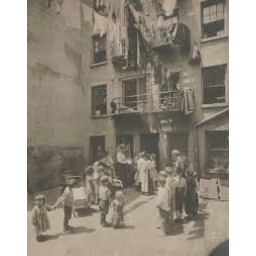
When they got to their new place, Dom couldn’t believe his eyes. The tenement was tall and narrow, with laundry hanging from windows and children playing in the street. Inside, the halls were dark and smelled musty. Their apartment was tiny—just one room with a bed and a stove. Four other men lived there, so Dom had to sleep on the floor. He remembered his family’s cottage in Italy, where he had more space. Maybe leaving home wasn’t such a good idea.
That night, Dom lay awake, listening to the sounds of the city. He heard rats in the walls and voices from the street. He missed his mother’s cooking and the sound of his father chopping wood. His heart ached with homesickness. Was this really the better life he wanted?
As morning light peeked through the cracks in the wall, Dom made a promise. No matter how tough life was, he would keep trying. He didn’t come this far to give up.
Dom woke up to loud shouting outside his window. He rubbed his sleepy eyes and sat up on the hard wooden floor, stretching his sore muscles. The tenement was buzzing with noise—moms calling their kids, feet stomping up and down the stairs, and pots clanging in the distance. Everything felt strange.
When he stepped outside, Dom’s stomach knotted. The streets of New York were noisy and crowded, filled with people speaking different languages. The signs in shop windows were confusing, and when someone spoke to him in English, he just nodded, pretending to understand. Back in Italy, he knew everyone in his village. Here, he was just another face in a big crowd.
That feeling of loneliness followed him all day. He wanted to find work, but every place he went either ignored him or told him to leave. Without knowing English, how could he earn money? He wandered the streets, unsure of what to do. Just when he was about to head back home feeling sad, he heard a friendly voice.
“Dom! There you are!” A boy with curly hair ran up to him, smiling. It was Tony, the only person who spoke both Italian and English. “You look lost,” Tony laughed. “Come on, I’ll show you around. You can’t live in New York and not know your city!”
For the first time that day, Dom smiled. Maybe he wasn’t as alone as he thought.
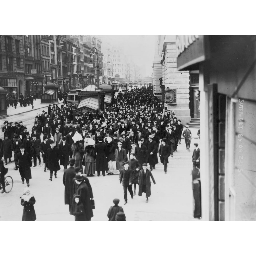
Dom spent the whole day with Tony, exploring the busy streets of New York. He had never seen so many people before! Vendors shouted from their carts, selling fresh bread, fish, and roasted chestnuts. Street performers played music, while tired factory workers rushed by, covered in dirt. Everything moved fast, and Dom found it hard to keep up.
Tony took him through narrow streets, showing him important places. “That’s where you can buy cheap fruit,” he said, pointing to a small shop with lots of apples and oranges. “And over there,” he pointed to a big brick building, “is where you can find work if you don’t mind getting dirty.”
Dom listened closely, trying to remember it all. He still felt out of place, but Tony made everything easier, like he had always lived there. Dom noticed how Tony switched between Italian and English while talking to people. He wished he could do that too.
As the sun began to set, Tony smiled at Dom. “Tomorrow, I’ll take you to the meatpacking plant where I work. It’s not pretty, but it pays. You need a job to survive here.”
Dom nodded, thankful but nervous. He had heard stories about factories—how dangerous they were and how little they paid. But he knew he had to work if he wanted to succeed in America.
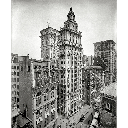
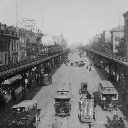
The next morning, Dom woke up before the sun. The room was dark, but he could hear the men around him sleeping. He sat up, feeling nervous. Today, he would see the meatpacking plant where he might work. He wasn’t sure what to expect, but he was ready to earn money.
Outside the tenement, Tony greeted him with a big smile. “Come on, we don’t want to be late!” he said, leading Dom through the busy streets. As they walked, Dom looked around, amazed by everything. He saw a man standing on a crate, shouting to a crowd. “The workers deserve more! The bosses get rich while we suffer!” Dom didn’t understand everything, but he knew the man was upset about money.
Tony pulled Dom away quickly. “Socialists,” he said quietly. “They want better pay and safer jobs, but the bosses don’t like that.”
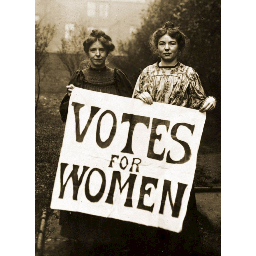
A few blocks later, they saw a group of women holding signs. Some were chanting, and others were handing out papers. Dom recognized the words “Votes for Women” on their signs. He looked at Tony, confused.
“They want the right to vote,” Tony explained. “Women can’t vote like men can.”
Dom was surprised. He had never thought about things like voting or pay before. Back in Italy, life was simple: you worked, you ate, you survived. But in America, people were fighting for change. As they turned the corner, the meatpacking plant appeared. The streets smelled bad, like blood and rotten meat.
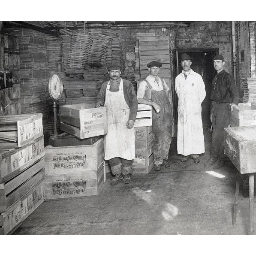
Dom stepped through the heavy wooden doors of the meatpacking plant, and the first thing he noticed was the awful smell. It was a mix of raw meat, blood, and something sour that made him feel sick. He covered his nose with his sleeve, but the stench was everywhere. The floors were slippery with grease, and the sounds of saws and knives filled the air.
Tony guided him through the factory, avoiding workers carrying big pieces of meat on their shoulders. Dom’s eyes grew wide as he saw men cutting and packing meat into boxes. Some workers used huge hooks to lift cows and pigs onto metal racks. Blood dripped onto the floor, splashing around their boots. The men worked quickly, and Dom struggled to keep up.
A man in a dirty apron handed Dom a knife. “You! Cut the fat,” he ordered, pointing to a pile of meat on the table. Dom was unsure what to do, but Tony whispered, “Just follow what the others do.”
Dom’s hands shook as he picked up a piece of meat and pressed the knife to it. The blade slipped, and he almost cut himself. The man in the apron frowned. “Faster!” he shouted.
Dom pushed himself to keep going, his arms starting to hurt. He realized there were no breaks, and the factory was loud and dangerous. Everywhere he looked, men worked with sharp knives and heavy machines. If someone got hurt, no one even stopped to help.
- Full access to our public library
- Save favorite books
- Interact with authors
- < BEGINNING
- END >
-
DOWNLOAD
-
LIKE
-
COMMENT()
-
SHARE
-
SAVE
-
BUY THIS BOOK
(from $2.99+) -
BUY THIS BOOK
(from $2.99+) - DOWNLOAD
- LIKE
- COMMENT ()
- SHARE
- SAVE
- Report
-
BUY
-
LIKE
-
COMMENT()
-
SHARE
- Excessive Violence
- Harassment
- Offensive Pictures
- Spelling & Grammar Errors
- Unfinished
- Other Problem





COMMENTS
Click 'X' to report any negative comments. Thanks!