



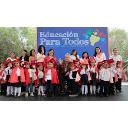







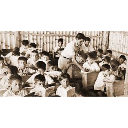


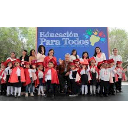

In Ecuador, education has been a political battleground for more than a century. From the Public Instruction Law of 1897, which marked a step toward secular education, to the reforms of the 21st century, there has been a constant struggle to define what and how education should be taught. Between 2006 and 2017, the country experienced a period of government-led transformations, generating both support and resistance. The confrontation between left-wing and right-wing ideologies has directly influenced these decisions. This book explores how these tensions have shaped the Ecuadorian education system.

“TECHNICAL UNIVERSITY OF AMBATO”
FACULTY OF HUMAN SCIENCES AND EDUCATION
“PEDAGOGY OF NATIONAL AND FOREIGN LANGUAGES”
APE 2
Name:
Maite Andrade
Teacher:
Mg. Juan Carlos Silva
Subject:
Systems and contexts


The Politics of Transforming Education in Ecuador: Confrontation and Continuity, 2006-17


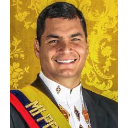
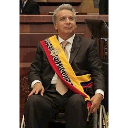
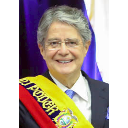
It all began in 2006 with the Educational Revolution, when Rafael Correa assumed the presidency and launched an ambitious plan to transform Ecuador's education system.
Since then, investment in basic education has increased in 2007, improving infrastructure and the resources available to students.


In 2008, the Organic Law on Intercultural Education (LOEI) was passed, promoting a more inclusive and equitable education.
Since then, the Ten-Year Education Plan (PDE) has been established in 2009, with clear goals to improve the quality of education in the country.


In 2010, Ecuador participated in the Second Regional Comparative and Explanatory Study (SERCE) to measure student achievement in the region.
Later, in 2011, the National Institute for Educational Evaluation (INEVAL) was founded to conduct teacher and student evaluations.


Therefore, in 2013, changes were implemented in teacher training, focusing on professional development and performance evaluation.
This bore fruit in 2014 when Ecuador participated in the Third Regional Comparative and Explanatory Study (TERCE), showing progress in student learning.


In 2015, the National University of Education (UNAE) was created to train educators and ensure quality teaching.
And in 2016, the SER Maestro assessment was launched, which sought to measure teachers' performance in the classroom.


But in 2017, the government legally dissolved the National Union of Educators (UNE), sparking controversy and resistance among teachers.
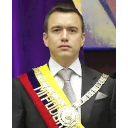
And finally, in 2017, Lenin Moreno assumed the presidency and faced the challenges of continuing the educational reforms implemented by Correa


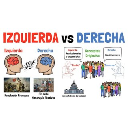
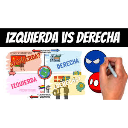
Left vs. Right Wings- Key Differences


Regarding the Role of the State, leftists are strong on the economy and social programs, while rightists have limited access and prefer the private sector.
In the Economic Approach, leftists seek equality and wealth redistribution, while rightists seek growth and a free market.

Regarding Social Policy, leftists are progressive and support social change, while rightists are conservative and support tradition.
Leftists support free public education and healthcare, while rightists support privatization.


- Full access to our public library
- Save favorite books
- Interact with authors

- < BEGINNING
- END >
-
DOWNLOAD
-
LIKE
-
COMMENT()
-
SHARE
-
SAVE
-
BUY THIS BOOK
(from $3.79+) -
BUY THIS BOOK
(from $3.79+) - DOWNLOAD
- LIKE
- COMMENT ()
- SHARE
- SAVE
- Report
-
BUY
-
LIKE
-
COMMENT()
-
SHARE
- Excessive Violence
- Harassment
- Offensive Pictures
- Spelling & Grammar Errors
- Unfinished
- Other Problem

COMMENTS
Click 'X' to report any negative comments. Thanks!