This book is a final product of the Cultural Echoes Beyond Borders eTwinning project. It was created by teachers and students working together in international mixed teams. Each page is a result of teamwork, friendship, and cooperation. In this project, we focused on cultural heritage, active citizenship, digital learning, and sustainability. We wanted to understand each other’s countries, traditions, and values. One of the best ways to do this was through legends. Legends are more than old stories. They are the heart of a culture. They carry history, imagination, and local wisdom. So, we chose to introduce the cities where we live through their legends. But there was one important rule: No student worked on their own city’s legend. Instead, they learned about a legend from another city or another country. They researched, wrote, drew, and even recorded voice-overs for their legends. This helped everyone explore new places and cultures.. Together, we reached our goal: To learn, to share, and to grow together—across borders.


The book created by
Recai HANÇER/ Bayburt Science High School: Nurefşan, Şeyda, Hayrunnisa
Doina Botnari/Liceul Teoretic Gaudeamus: Elena, Alexandra, Anastasia
Tuba AYKUTLUĞ/Etlik Anatolian High School:Eren, Enver, İkra, Tuana, Emir Tahir
Lorraine Davies/Scuola Secondaria di Primo Grado "Giacomo ":Students Of 2A And 2I, Ic Trento 5(Pietro R, Florencia, Matilde, Giovanni and Francesca)
Aysel YAKUT/Bayburt Secondary School: Tarık, Eymen, Egemen, Yağmur, Engin, Rauf
Pakize KOCA/Çankaya ŞehitMertKaya Secondary School: Duru, Ece, Mete, Doruk
Natalia Bergamo/Scuola Secondaria di Primo Grado "Giacomo Bresadola": Berta
and Martino
The book created by:
Mevhibe Kübra HANÇER/Bayburt Science High School: Sümeyye, Ecrin
Veronica Taroiu: DILANCEA Cara
Burak TÜRK/Bayburt Vocational and Technical Anatolian High School: Mehmet Akif, Mustafa, Eymen, Sedat, Kaan, Mert Can
Meryem TOPUZ/Acırlı Fatih İmam Hatip Secondary School: Ayşe, Ceren, Zehranur, Pınar, Muhammet, Burak, Eyyüp
Silvia Cociug/IP Liceul “Columna”: Bianca, Andreea
Derya YILMAZ/Kastamonu Private Hazerbey Secondary School:Beste, İnci, Hatice, Zeynep, Rüzgar, Deniz, Atilla
Nahit KAHRAMAN/Bayburt High School: Yusuf, Erdem, Mustafa, Emre
Nazlı AYDIN/Hamur High School: Esmagül,Sümeyra,Abdullah, İrem, Yağmur
Angela Di Lecce/IP “DE NORA LORUSSO: Fariello, Marco
Denis, a 13-year-old student, loves legends and old stories. He lives in a small town and goes to middle school. He is very curious about myths, ghosts, and magical stories from different countries.
One Monday afternoon, Denis sits in his room and says, "I want to learn about legends from other countries. I will start with Romania!" He opens his notebook and writes the title: "Romania – Legends and Ghost Stories."
He searches on Google for “famous Romanian legends” and finds something interesting – The Legend of Count Dracula (Vlad Țepeș) and Ghost Stories of Transylvania. "Wow!" says Denis. "This sounds scary but exciting!"
He wants to know more, but some words are difficult.
He asks his English teacher, Ms. Laura, the next day.
Denis: "Teacher, what is ‘Transylvania’? And who is Vlad Țepeș?"
Ms. Laura: "Good question, Denis! Transylvania is a region in Romania. It is famous for Dracula stories. Vlad Țepeș was a real prince."
Denis also writes to ChatGPT: "Can you tell me about Romanian legends?" ChatGPT gives him a list of famous stories.
Then, Denis talks to his best friend, Alex.
Denis: "Alex, do you like ghost stories?"
Alex: "Yes, but only in the daytime!"
They laugh together and plan to read a ghost story after
school. Denis writes in his notebook:
“Romania is a country in Eastern Europe. It has beautiful castles and dark forests. It is famous for scary legends like Dracula and ghost stories from Transylvania.”
The Legend of Count Dracula and Ghost Stories
Long ago, in the 15th century, deep in the heart of Romania, surrounded by dark forests and misty mountains, there lived a prince named Vlad Țepeș. The people both respected and feared him. He was known for his ruthless methods of punishment, especially his favorite: impalement. That is why they called him “Vlad the Impaler.”
His castle stood high upon a rocky cliff, towering above the land like a watchful beast. It is said that at night, glowing eyes could be seen staring from the castle walls. Vlad ruled with an iron fist, claiming to protect his land from invaders. But over time, his cruelty gave birth to darker rumors.
Whispers began to spread: Vlad was no longer a man... but a creature of the night. They said he drank the blood of his enemies and never truly died. A vampire. Some believed that his soul still wandered the cold, stone halls of his ancient castle. On stormy nights, the howling of wolves and the rustling winds seemed to carry his voice.
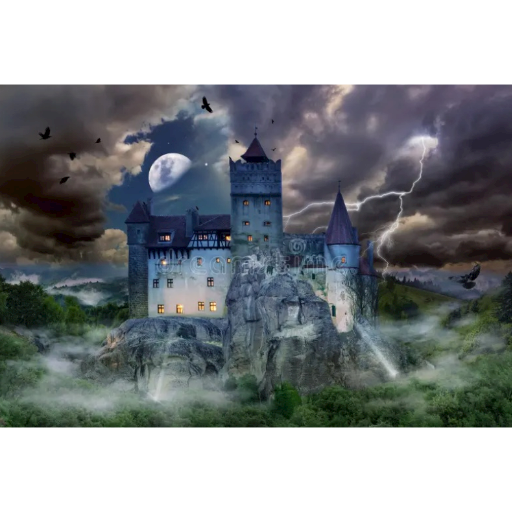
One night, a brave villager climbed the mountain in search of Vlad’s grave. Legend had it the grave bore no name—only the mark of a bat carved into the stone. As the villager dug into the frozen earth, the ground trembled, and the air turned icy cold. Then he heard a whisper:
“I am still here…”
No one ever climbed that mountain again.
And to this day, during the full moon, some claim to see a shadowy figure standing in the highest window of the castle—cloak billowing, eyes glowing red in the dark.
This is why, in Romania, everyone knows: Count Dracula once lived… and perhaps, he still does.
Denis sends a message to his cousin Svetlana, who is from Moldova.
Denis: "Hi Svetlana! Do you know about the Sânziene fairies?"
Svetlana: "Yes! We celebrate them in summer. They bring good luck!"
Denis smiles and writes more in his notebook:
“Moldova is a small country near Romania. It has many beautiful legends. People believe in fairies and magical stories. They also have special spring celebrations.”
The next day, Denis continues his legend journey. "Today I will learn about Moldova!" he says.
He uses Google again and searches for “Moldovan fairytales.” He finds The Legend of the Sânziene (Drăgaica Fairies) and two other stories: Legenda Berzei Albe and Legenda Mărțișorului.
"I never heard about these!" Denis thinks. Some of the stories are in Romanian, so Denis copies the text into ChatGPT and says, "Please explain this in English. Simple words, please." ChatGPT helps again. Denis now understands the story of the fairies and the white stork (berzei albe).
"The Lights at the Edge of the Forest"
Once upon a time, in a small village nestled among the green hills of Moldova, lived a young girl named Elena. She had grown up listening to stories from her grandmother about the Sânziene fairies, known as the Drăgaica. These fairies were said to appear on the summer solstice, carrying golden flowers from the sky. They only revealed themselves to those with a pure heart. At night, they danced on the edges of forests, healing the sick and blessing the fields with abundance.
On the night of the summer solstice, Elena placed a flower crown. woven by her grandmother upon her head and walked toward the forest's edge, hoping to witness the magic of Sânziene night. The moonlight bathed the earth in silver, and dew kissed her ankles as she stepped through the tall grass. Suddenly, a soft melody echoed through the trees like a song carried on the wind.
In that moment, golden lights appeared all around her. The Drăgaica Fairies emerged, their dresses fluttering as they danced. Elena walked among them, cautiously, but the fairies smiled at her. One of them approached and gently placed a glowing flower in her hand:
"Your heart is pure. This flower will show you the way.
When Elena blinked, the fairies had varnished. Yet, the flower in her hand still glowed softly. From that day on, everything Elena touched blossomed. The soil she planted flourished, the sick were comforted, and joy returned to the village for the Sânziene had whispered nature's secrets into her soul.

The Legend of the White Stork, The Legend of Mărțișor
A long time ago, in a small village, people were sad. The winter was very long. The sun was gone, the sky was gray, and everything was cold. There were no flowers, no green trees, and no birds. The people waited for spring, but it did not come.
One day, a big and evil dragon came from the mountains. He flew over the village and made the sky even darker. He saw a kind and beautiful girl and took her away. He locked her in a tall, cold tower. The people were very afraid. They cried and asked for help, but no one was brave enough.
Then, a young man from another village heard the story. He was not strong, but he had a kind and brave heart. He said, “I will save the girl.” He left his home and started a hard journey.
He walked through snow, ice, and strong wind. His hands were cold, and his feet were tired, but he did not stop. He wanted to help the girl and bring back spring.
After many days, he found the tower. The dragon was waiting. The young man and the dragon fought. The fight was long and difficult. At last, the dragon was defeated, but the young man was badly hurt. His red blood fell on the white snow.
Then something magical happened. A small flower grew from the snow. It had white and red petals. It was the first flower of spring. The people saw the flower and smiled. They said, “Spring is coming!”
The girl was free, the sun came back, and the snow began to melt. Birds flew in the sky again, and flowers grew everywhere. The people were happy and wanted to remember this day every year.
They called the flower Mărțișor. To remember the brave boy and the coming of spring, they made red and white strings and gave them to family and friends. The red means love, life, and courage. The white means purity, peace, and the snow of winter.
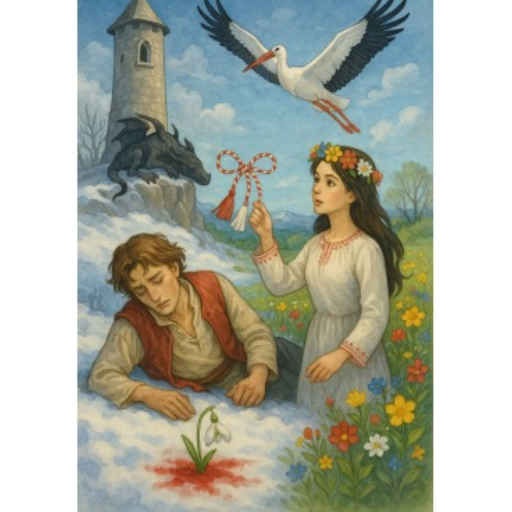
Every year, on March 1st, people in Romania and Moldova wear or give these red and white strings. Sometimes, they also add small symbols like flowers, hearts, or coins. These are gifts of love and friendship. People say they bring good luck, health, and happiness.
Some people say that when you see the white stork in the sky, it means spring is here. The stork flies back from warm countries and brings sunshine. It builds its nest on roofs and brings joy to families. Children run outside to look at the sky and find the first stork of the year.
On Wednesday, Denis wakes up early. "Today I will explore Italy!" he says with excitement. He makes some tea and opens his notebook again: "Italy – The Legend of Romulus and Remus."
He types into Google: “Famous legends of Italy.” He reads about Romulus and Remus – two twin brothers connected to the beginning of Rome. "Hmm, this story is about the start of a city!" Denis thinks.Some words are difficult. He asks ChatGPT again: "Can you help me understand the legend of Romulus and Remus? Just the idea, not the full story." ChatGPT gives a short summary in simple English.
Later at school, Denis asks his history teacher:
Denis: "Sir, is Rome really built by twins?"
Teacher: "That’s a legend, Denis. But it’s a very old and important one."
At lunch, he talks to his friend Maria. She visited Italy last year.
Maria: "I saw a statue of the twin brothers in Rome!"
Denis: "Cool! I want to see it one day."
He writes in his notebook:
“Italy is a country in Southern Europe. It is famous for its history, food, and legends. One famous legend is about two brothers who started the city of Rome.”
The Legend of Romulus and Remus
Many years ago, in the ancient land of Italy, there was a powerful city called Alba Longa. Its king, Numitor, was kind and wise. But one day, his jealous brother Amulius took the throne by force and sent Numitor away. To make sure no one could challenge his power, Amulius made Numitor’s daughter, Rhea Silvia, become a Vestal Virgin – a priestess who was not allowed to marry or have children.
But the gods had a different plan. The god of war, Mars, fell in love with Rhea Silvia, and soon she gave birth to twin boys – Romulus and Remus.
When Amulius heard about the babies, he was furious. He ordered that the twins be thrown into the River Tiber and left to die.The river, however, had mercy. The basket carrying the babies floated safely down the river until it came to rest under a fig tree.
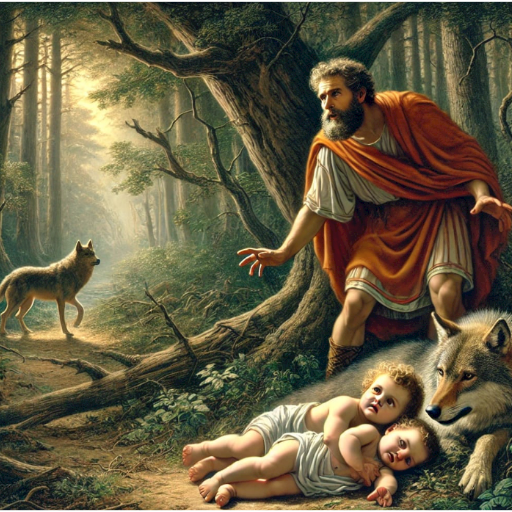
There, something magical happened. A she-wolf came from the forest and found the crying infants. Instead of harming them, she gently picked them up and nursed them in her den at the foot of Palatine Hill. The boys grew strong under her care.
One day, a shepherd named Faustulus found the twins and brought them home. He and his wife raised Romulus and Remus as their own. The boys grew up brave, clever, and full of energy.
They often explored the forests and hills, always feeling like they were meant for something greater.
When they were older, Romulus and Remus discovered their true identity – that they were the sons of a princess and grandsons of a king. With courage in their hearts, they returned to Alba Longa, defeated the evil Amulius, and helped their grandfather regain his throne.
After restoring justice, the twins decided to build a new city near the place where the she-wolf had saved them. But a disagreement began. Romulus wanted to build the city on Palatine Hill, while Remus preferred Aventine Hill. They argued and looked to the skies for a sign from the gods. Remus saw six vultures, but Romulus saw twelve, and each claimed the gods were on his side.
Their argument turned into a fight. In a moment of anger and pride, Romulus struck his brother down. Remus died, and Romulus, filled with sadness but determined, continued to build the city. He named it Rome, after himself, and became its first king.
And so, in 753 BCE, the great city of Rome was born – a city that would one day rule a vast empire. The legend of Romulus and Remus lives on, reminding the world of how courage, fate, and even tragedy helped shape one of history’s greatest civilizations.
On Thursday, Denis chooses another country. "Let’s go to Spain today – through stories!"
He looks online and writes: Spain – The Lovers of Teruel. He finds a romantic and sad story called "The Lovers of Teruel."
"A love story this time?" he says. "That’s different!" He searches “Spanish legends in English” and finds a short summary of the legend.
Denis doesn’t understand the word “tragic.” He asks his English teacher again.
Denis: "What does ‘tragic’ mean?"
Ms. Laura: "It means very sad. Something that ends with pain or loss."
Denis: "Oh… This story is really emotional."
He sends another message to ChatGPT: "Can you explain the meaning of ‘The Lovers of Teruel’ without telling the full story?" ChatGPT gives a short explanation: “It is a famous Spanish legend about love and sadness.”
Denis writes in his notebook:
“Spain is in the southwest of Europe. It has many old cities and beautiful traditions. The Lovers of Teruel is a legend about deep love and sad destiny.
The Lovers of Teruel
Teruel is a small city in the region of Aragón, in Spain. It is very old and beautiful. Many tourists visit Teruel every year. The city is famous for a romantic and sad story. The story is called “The Lovers of Teruel.”
The story is about two young people: Diego and Isabel. They live in Teruel many years ago. Diego is a good and kind man, but he is poor. Isabel is a rich girl. Her family is important in the city. Diego and Isabel love each other very much. They want to get married.
But Isabel’s father says no. He wants his daughter to marry a rich man. Diego is sad, but he does not give up. He says to Isabel:“Give me five years. I will go away and make money. When I come back, we can marry.”
Isabel agrees. She promises to wait for five years. Diego goes far away to work and earn money. Isabel waits and waits. Five years pass, but Diego does not come back on time. Her father says she must marry another man. Isabel is very sad, but she accepts.
One day after the wedding, Diego comes back. He has money now. But it is too late. Isabel is married. Diego is shocked and heartbroken. He asks Isabel for one kiss. He says:
“Please, give me a kiss. I am dying.”
But Isabel says no, because she is now a married woman. She wants to be loyal to her husband. At that moment, Diego falls to the ground and dies. His heart is broken.
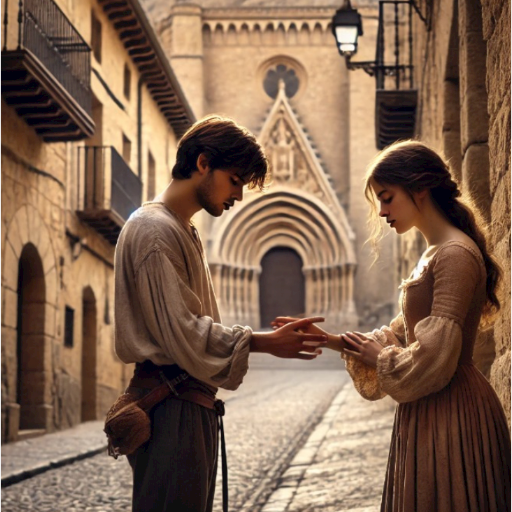
The next day, Isabel goes to Diego’s funeral. She is very sad. She walks to his body, bends down, and gives him a kiss. After the kiss, she also dies.
Today, people in Teruel remember this story. There is a special place in the city with their tombs. It is called Mausoleum of the Lovers. Many people visit the tombs every year. Their hands almost touch, but they do not hold each other. It shows their love and sadness.
The story of the Lovers of Teruel is very old, but it is still popular. It is a symbol of true love in Spain.
On Friday, Denis feels extra curious. "I learned about Romania, Moldova, Italy, and Spain. Now, I want to learn about Turkey!"
He opens his notebook and writes: Turkey – The Legend of the Maiden’s Castle (Kızkalesi). He types into Google: “Famous legends from Turkey.”
He finds many interesting stories, but one catches his attention: The Legend of Kızkalesi – a castle in the sea, with a sad story. "A castle in the sea? That sounds magical!" Denis says.
He looks at pictures of the castle in Mersin, a city in southern Turkey. "Wow… It’s so beautiful. I want to go there one day."
He writes to ChatGPT again: "Can you help me understand what the Kızkalesi legend is about? Just the main idea, no full story." ChatGPT replies: “It’s a Turkish legend about a castle built in the sea to protect a princess.”
Denis goes to school and tells Ms. Laura,
Denis: "Teacher, I found a castle in the sea in Turkey!"
Ms. Laura: "Ah, Kızkalesi! That’s a very famous legend from Mersin."
Denis: "I want to visit Mersin one day. It looks amazing."
At home, he watches a short travel video about Mersin on YouTube. He hears Turkish words and sees people swimming near the castle.
He writes in his notebook:
“Turkey is a country between Europe and Asia. It has a long history and many beautiful legends. Maiden Castle is a small castle in the sea, in the city of Mersin. People say it has a sad story about a princess.”
The Legend of Maiden's Castle
The King of Korikos wanted a daughter very much. He prayed to God for years. One day, his wish came true, and he had a beautiful and kind daughter. As the girl grew up, everyone loved her.
One day, a fortune teller came to the city. The king invited him to the palace to look at his daughter’s future. The fortune teller looked at the princess’s hand and became very scared. At first, he didn’t want to say anything. But when the king insisted, the fortune teller said, “Your daughter will be bitten by a snake and die. This cannot be changed.”
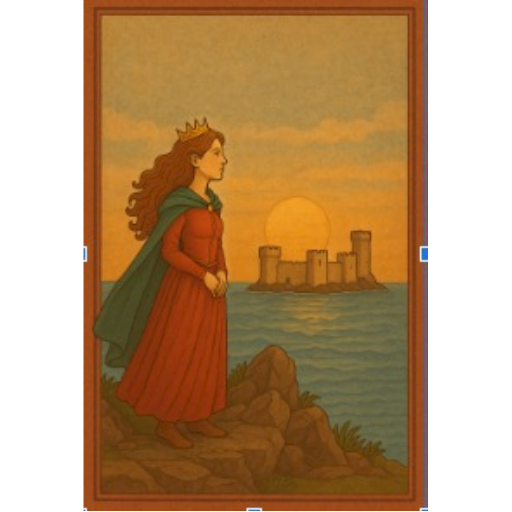
The king wanted to protect his daughter. So, he built a white stone castle on a small island near the shore. He put his daughter there, thinking she would be safe. But the princess felt very lonely in the castle. She became sad and weak.
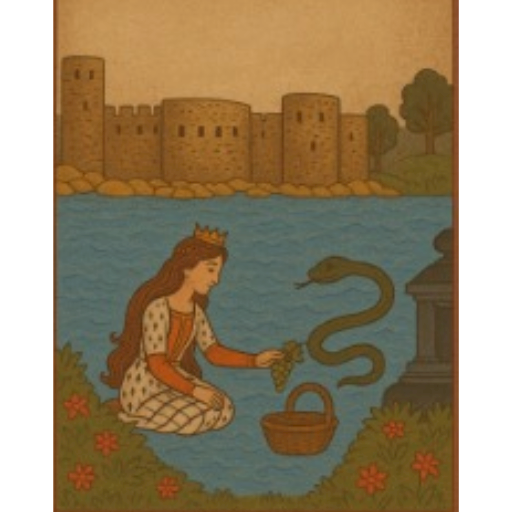
When she turned nineteen, the king made a big celebration for her in the castle. A woman from a village brought a basket of grapes as a gift. But while she was picking grapes, a snake hid inside the basket, and no one saw it. The princess loved grapes. That night, she took the basket to her room and started eating the grapes. Suddenly, the snake came out and bit her. The princess died right away.
Denis also would like to learn about the legends of Mardin. Mardin is a city in the southeast of Turkey.
It is famous for its old stone houses, narrow streets, and beautiful view of the Mesopotamian plains.
Many people say it looks like a city from a fairytale.
Denis sees a photo of a castle on a high hill.
He reads the name: Mardin Castle – also called The Eagle’s Nest. "That sounds interesting. I want to know more!"
He writes in his notebook:
“Mardin – The Legend of the Eagle’s Nest”
The Legend of Mardin Castle (The Eagle's Nest)
High above the ancient city of Mardin, perched on a steep rocky hill, stands the legendary Mardin Castle—known to many as "The Eagle’s Nest." This mysterious fortress has watched over the Mesopotamian plains for centuries, cloaked in history and myth. According to legend, the castle was built during the Roman era and later became a powerful stronghold during the Artuqid and Ottoman periods. Its nickname, “The Eagle’s Nest,” comes from its towering position, as if only eagles could reach such heights. From its walls, one can see vast lands stretching far into Syria, offering both a strategic and poetic view.
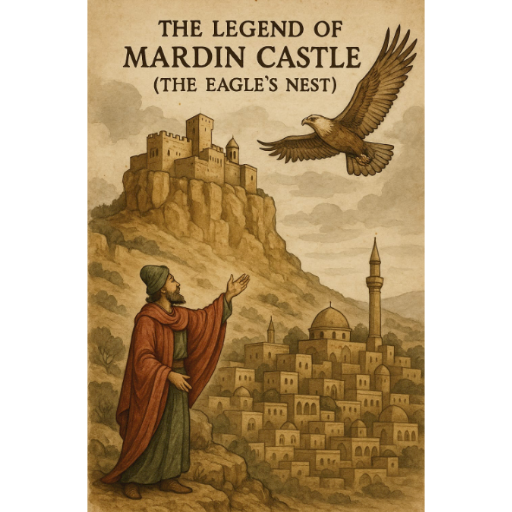
One of the most famous stories tells of a wounded eagle that sought refuge at the castle during a fierce battle. The locals believed the eagle was a sacred symbol of protection. Miraculously, after the eagle’s arrival, enemy forces retreated, and the castle remained unharmed. Since then, the eagle has become a symbol of strength and divine protection for the people of Mardin.
Legends also speak of hidden tunnels beneath the castle, secret treasures, and brave warriors who once defended it. Today, while parts of the castle are closed to the public due to military use, it remains a symbol of pride and mystery, attracting visitors from all over the world who come to admire its beauty and feel the spirit of ancient legends.
On Saturday, Denis wakes up and looks at his notebook. "Where should I go today?" he wonders.
He sees the word Turkey again. "Turkey has many legends. Yesterday I read about Kızkalesi and Mardin's Castle. Today, I want to learn about a mountain." He writes the new title: Turkey – The Legend of Mount Ararat (Ağrı Dağı).
He searches on Google: “Mount Ararat legend.” He finds a story about a mountain with snow, mystery, and an old tale. "This mountain is so big and strong," Denis says. "It looks magical."
He learns that Mount Ararat is the highest mountain in Turkey. It is near the city of Ağrı, in the east of the country.
He wants to understand more, so he types into ChatGPT: "What is the legend of Mount Ararat? Just the main idea, no details, please." ChatGPT answers: “It is a famous Turkish legend connected to a big mountain and a deep love or a great event.”
Denis is even more curious. He prints a photo of the mountain and pastes it in his notebook.
At school on Monday, he shows it to Ms. Laura.
Denis: "This is Mount Ararat! It’s in Turkey."
Ms. Laura: "Yes, Denis! It’s very famous. Some people also connect it with Noah’s Ark."
Denis nods. "I didn’t know Turkey had so many amazing stories."
He writes:
“Mount Ararat is the highest mountain in Turkey. It is in the east, near the city of Ağrı. The mountain is strong, snowy, and full of mystery. Many people tell legends about it.”
The Legend of Mount Ararat
Towering at over 5,000 meters, Mount Ararat dominates the horizon like a silent guardian of history. For thousands of years, it has lived in the hearts of poets, prophets, and wanderers. To many, it is not just a mountain—it is a sacred symbol, wrapped in cloud and legend. Its immense presence and ancient aura have long captivated those who gaze upon it, making it far more than just a geological formation.
The most famous legend tied to Ararat is the biblical story of Noah’s Ark. After the great flood, it is said that the Ark came to rest “on the mountains of Ararat” (Genesis 8:4). This has made Ararat a place of holy fascination, and even today, explorers and mystics search its icy summit for traces of the ancient vessel. This enduring narrative has solidified Ararat's place in religious and historical quests.
Though no solid evidence has ever been found to definitively prove the Ark's resting place on Ararat, the mountain continues to inspire those who believe it holds the key to humanity’s rebirth after destruction. The persistent hope of discovery fuels expeditions and keeps the legend alive, demonstrating the powerful human connection to stories of origin and survival.
In Armenian folklore, Ararat is depicted as a living being—some say a sleeping giant, others say a watching god. Its deep silence and occasional tremors are said to be signs that the mountain dreams, stirs, and remembers. Villagers speak of strange lights on its slopes, and some claim that voices can be heard in the wind—echoes of the Ark, or whispers from another world. These tales add to its mystique, giving the mountain a sentient quality in the cultural imagination.
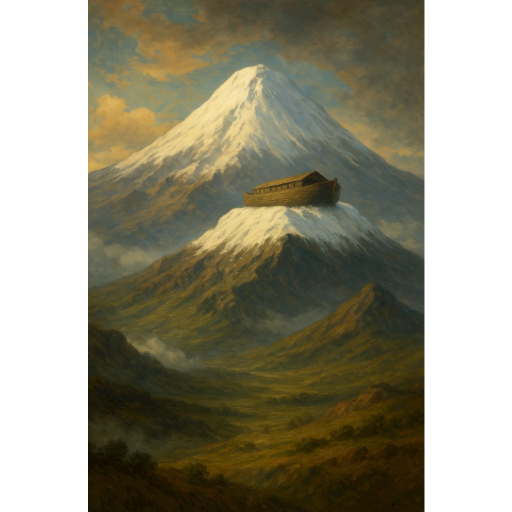
Though Ararat now lies within Turkey, it remains a national and spiritual symbol for Armenians everywhere. Visible from Yerevan, it stands as a distant home, a reminder of loss, hope, and identity. Many see it not only as a landmark but as a soulmark—a sign of endurance and divine connection. Mount Ararat thus stands abetween earth and sky, myth and reality, a legend carved into stone and a symbol that time cannot erase.
On Sunday, while looking at a map of Turkey, Denis wondered about the capital city. He found Ankara, the capital of Turkey, and noted it in his notebook. He quickly noticed the similarity between "Ankara" and "anchor," sparking his curiosity. He then searched online for "Ankara name origin" and "Legend of the Anchor Ankara," discovering a short legend about a ship anchor that supposedly gave the city its name.
Denis found this discovery interesting, noting that a city's name could come from an anchor. He then asked ChatGPT for a brief explanation of the legend. ChatGPT confirmed it was a legend about how the city got its name, stemming from the belief that an anchor was found there a long time ago. Denis particularly liked this story because it was different from typical legends about love or ghosts, focusing instead on a city's etymology.
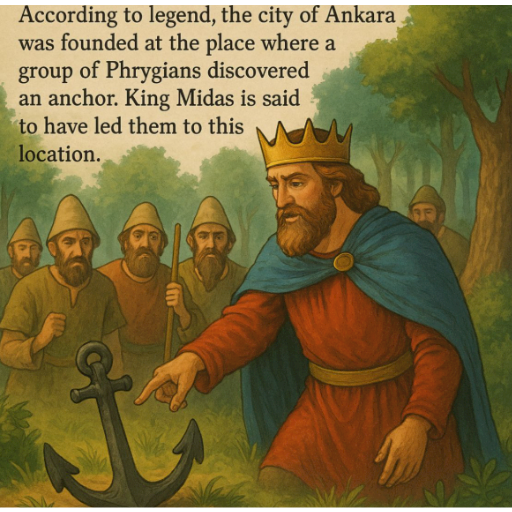
The Legend of the Anchor(Ankara) City
Many centuries ago, the famous King Midas of Phrygia prayed for a sign from the gods to show him where to build a new city. One day, his men were exploring the land when they discovered an old anchor buried on a hill far from the sea. Surprised by this strange sign, they brought the news to Midas. He recognized it as the divine message he had been waiting for.
Following the will of the gods, King Midas ordered a city to be built on that very hill. He named it “Ankyra,” meaning “anchor” in ancient Greek. Over time, the city grew into a great center of culture and trade. The name slowly evolved into “Ankara,” the modern capital of Turkey. To this day, the anchor remains a symbol of the city's ancient and mythical beginnings.
Denis, feeling the urge for a new story on Monday afternoon, consults his map of Turkey and lands on Kastamonu. Intrigued, he titles a new entry in his notebook: "Turkey – The Legend of Sheikh Şaban-ı Veli and the Diamond." His online search for "Kastamonu legends" and "Şaban-ı Veli diamond story" quickly uncovers a unique tale. Unlike the love or ghost stories he's encountered before, this one stands out to him as being about "wisdom and value." Facing some difficult vocabulary, he turns to ChatGPT for a concise explanation of the legend's core idea.
ChatGPT provides a succinct answer, stating the legend of Sheikh Şaban-ı Veli and the diamond is about a "spiritual teacher and a diamond," and that it "teaches a lesson about what is truly valuable." This brief insight further piques Denis's curiosity about Kastamonu itself. He then searches for the city's location, learning that it's situated in the north of Turkey, close to the Black Sea. He also discovers and views a photograph of Sheikh Şaban-ı Veli's tomb, a tangible link to the legend.
Excited by his findings, Denis shares the photo of the tomb with his friend Alex at school, highlighting that it's a "real place in Kastamonu." Alex responds positively, expressing his enjoyment for "stories with wise people." Concluding his research for the day, Denis records his key takeaways in his notebook: "Kastamonu is a city in the north of Turkey. It has forests, mountains, and old buildings. One legend tells about a man named Sheikh Şaban-ı Veli and a diamond. The story teaches the meaning of true value."
- Full access to our public library
- Save favorite books
- Interact with authors
- < BEGINNING
- END >
-
DOWNLOAD
-
LIKE(1)
-
COMMENT()
-
SHARE
-
SAVE
-
BUY THIS BOOK
(from $20.59+) -
BUY THIS BOOK
(from $20.59+) - DOWNLOAD
- LIKE (1)
- COMMENT ()
- SHARE
- SAVE
- Report
-
BUY
-
LIKE(1)
-
COMMENT()
-
SHARE
- Excessive Violence
- Harassment
- Offensive Pictures
- Spelling & Grammar Errors
- Unfinished
- Other Problem






COMMENTS
Click 'X' to report any negative comments. Thanks!