Institutional Disclaimer:
This book is an independent educational resource created by Dr. Genevieve Charbonneau, EdD. While inspired by the author’s professional experience at the University of California, San Francisco (UCSF), this publication is not affiliated with, sponsored by, or endorsed by UCSF. All opinions, interpretations, and educational materials herein are solely those of the author.

Table of Contents
Chapter: Page:
1. What is Healthcare Simulation?.....................................................................................3
2. The Science Behind Simulation......................................................................................9
3. Simulation Labs...............................................................................................................15
4. Teamwork in Healthcare................................................................................................22
5. Scenarios that Save Lives...............................................................................................28
6. Technology & Innovations.............................................................................................33
7. Simulation Around the World.......................................................................................40
8. Your Turn to Simulate!...................................................................................................45
9. STEM Connections..........................................................................................................47
10. Careers in Healthcare Simulation................................................................................49
11. Glossary..........................................................................................................................51
12. Teacher Notes................................................................................................................52
13. Image Credits................................................................................................................53
14. References.....................................................................................................................56
15. About the Author...........................................................................................................58
Chapter 1: What is Healthcare Simulation?
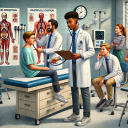
Imagine being able to practice saving lives and without risking anyone’s health. That’s what healthcare simulation is all about! It’s a safe, fun, and hands-on way for doctors, nurses, pharmacists, dentists, physical therapy learners and students to learn how to take care of patients before they ever treat someone who is real. If you love to investigate and wonder how or why something happened, then healthcare simulation is for you.
Simulation uses tools like:

Just like pilots use flight simulators before flying real planes, or astronauts practicing in a safe facility before heading into space, healthcare workers use simulation to practice before facing real emergencies. It helps them:

o Intramuscular (IM) injections
o Subcutaneous (SubQ) injections
o Needle handling and safety
o Injection angle and depth
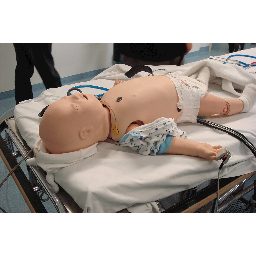
Some modern high fidelity manikins have heartbeats, pupils that dilate, and can even give birth. Manikins can be programmed to "talk" and describe symptoms like real patients.


Real-Life Examples
In a simulation, a student might have to:
• Restart a heart using CPR and an AED
• Deliver a baby from a high-tech manikin mother
• Treat a burn or allergic reaction
• Perform a check-up or take vital signs
These situations are practiced over again, helping students build confidence, accuracy, and speed.
Why It Matters
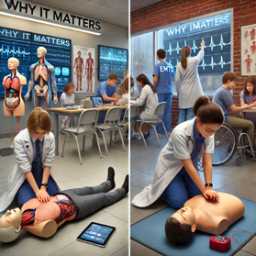
Would you want someone to learn CPR for the first time during a real emergency? Probably not! Simulation gives healthcare workers and students the power to:
• Make mistakes in a safe space
• Learn from feedback
• Repeat a scenario until they get it right
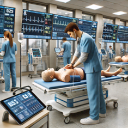

This is called deliberate practice which is a key part of becoming excellent at something. Simulation also helps healthcare teams learn how to talk to patients and families with care and respect.
Your Turn to Simulate!
Mini Activity: Act Out a Doctor Visit
Work with your class or group:
1. One person is the doctor.
2. One person is the patient.
3. Others can be nurses, parents, or observers.
Questions to ask:
Then switch roles and try again!


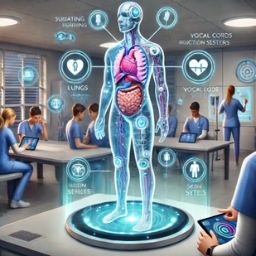
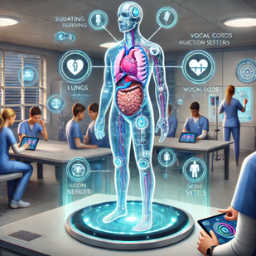
Healthcare simulation is like building a human from science, sensors, and software! Every part of a high-tech manikin is designed to copy how the real human body acts and reacts in medical situations.
Simulation brings together biology, engineering, technology, and communication to teach people how to care for the human body in a realistic way. Let's break it down!
Body Systems in Action
When you’re treating a patient, whether real or simulated, you need to understand how the body systems work. That’s where science comes in!
Common Simulated Body Systems:
1. Respiratory System (Lungs):
o Sim manikins breathe in and out
o Chest rises and falls with air
o Can simulate coughing, wheezing, or blocked airways
2. Circulatory System (Heart + Blood):
o Hearts that beat (slow or fast)
o Manikins can bleed with fake blood
o Can simulate a heart attack or high/low blood pressure

3. Nervous System (Brain + Reactions):
o Eyes that react to light
o Seizures or fainting simulations
o Patients may “respond” to pain or voice commands
4. Digestive System:
o Some manikins simulate vomiting
o Stomach noises
o Can practice feeding tubes
5. Reproductive System:
o Birthing manikins simulate labor and delivery
Simulation Tech Tools
Technology helps turn science into something you can see and touch. Here are some of the most common tech tools:
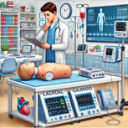
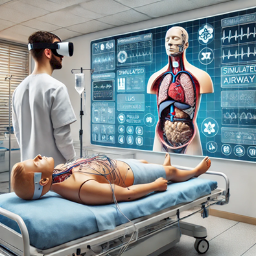
A student puts on VR goggles and walks into a virtual ER. A patient on the bed is coughing and clutching his or her chest. The student checks vitals, looks at a monitor, and uses a virtual stethoscope. It’s just like the real thing but without the risk!
Simulation engineers design manikins to feel like real humans using materials science and anatomical accuracy:
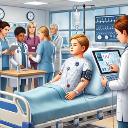
Simulation Technicians can even program manikins to:
Mini Activity: Sim Stick Figure Draw a stick figure on a piece of paper. Label 3 major body systems (lungs, heart, stomach, etc.). Next to each label, explain how that part could be simulated in a manikin.
Bonus Challenge: Add one sound effect and one movement your manikin would make.


Chapter 3: Simulation Labs
What is a Simulation Lab?
A simulation lab (or "sim lab" for short) is a special classroom designed to look and feel like a real hospital, clinic, or home setting. It’s where students, doctors, nurses, and health professions learn, practice, and prepare. You are taking everything that you are learning in theory, and what you are practicing in skills and applying all of that when you are in the simulation lab.
Imagine walking into a sim lab:
• There’s a hospital bed with a manikin in it.
• Monitors are beeping.
• Medical tools are nearby on trays.
• A team is practicing how to handle an emergency.
Everything is set up to help you learn to save lives safely!
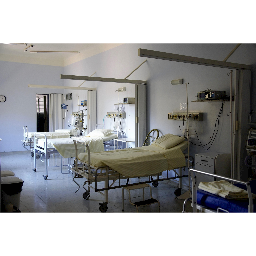
Here are some things you will find in a sim lab:
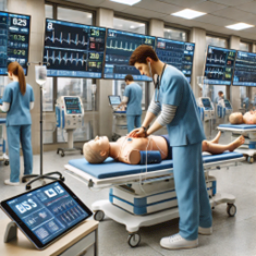

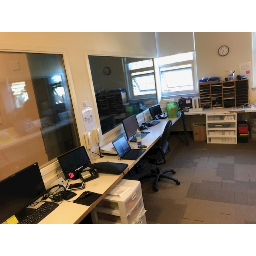
Behind the scenes, there’s usually a control room with instructors. It has:
From this room, instructors can:
It’s like being a puppeteer but for a robot patient!
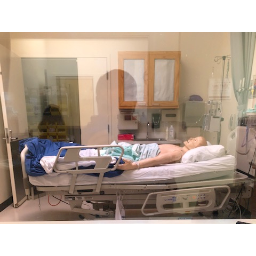
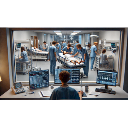
Types of Sim Labs
Not all sim labs are the same. They are designed to match different real-world settings:
1. Emergency Room (ER) Sim Labs: Fast-paced practice for emergencies
2. Surgery Sim Labs: For practicing operations
3. ICU Sim Labs: Monitors, alarms, and critical care
4. Pediatric Sim Labs: Use child or baby manikins
5. Home Health Sim Labs: Simulate care inside a home
Each type helps students get used to different environments.
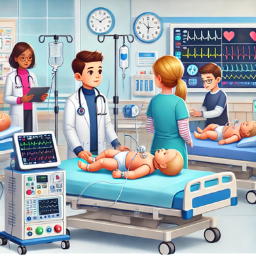
What would happen if a team didn’t communicate well during a sim?
Sim labs are designed to make learning feel real. They include sights, sounds, and even smells!
These sensory clues help learners recognize symptoms faster.
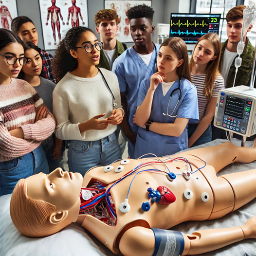
Students often work in teams to solve a medical puzzle. A manikin may:
The team must decide quickly:
It is all about practicing under pressure.

Mini Activity: Design Your Own Sim Lab! On paper, draw a top-down map of your own simulation lab. Include at least 5 important items, such as:
Bonus Challenge: Label what happens in each area. What kind of sim lab is it? ER? ICU? Home care?
Why Teamwork is a Superpower in Healthcare
In a real hospital, no one saves lives alone. It takes a whole team of healthcare professionals working together to care for a patient. This means good communication, trust, quick thinking, and knowing one's role.
In healthcare simulation, students learn how to work like real medical teams. They practice making fast decisions, sharing information, and supporting each other under pressure.
This kind of teamwork has a name: interprofessional communication. It means professionals from different jobs, like doctors, nurses, and therapists who all work as a united team to help a patient.


Every team member plays a unique role, and all are equally important. Here’s a quick breakdown:
In a simulation, students may take on these roles and learn how to communicate like pros.
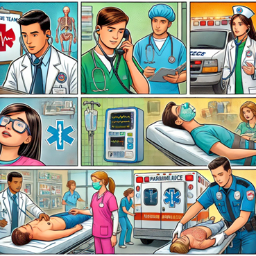
Communication is one of the most important tools in healthcare. Here’s how pros do it:
Good communication prevents mistakes. In a simulation, students can practice talking clearly and listening closely.
Teamwork in Action
Here’s what a team might do in a sim lab emergency:
1. Patient stops breathing.
2. Doctor calls out: “Start CPR!”
3. Nurse begins compressions.
4. Tech preps the defibrillator.
5. Therapist helps monitor breathing.
6. All share updates as the scene changes.
This kind of simulation teaches students how to stay calm, speak up, and support one another.
In simulations, you can safely practice making split-second decisions as a team, just like real healthcare workers do every day.
Mini Activity: The “Silent Patient” Game
1. One student plays the patient but cannot talk.
2. The team must figure out what’s wrong using yes/no questions only.
3. Use body language, props, or tools to communicate.
4. Take turns being the patient and the team.
Bonus Challenge: Try it in 5 minutes or less!
Real-Life Emergencies, Simulated Safely
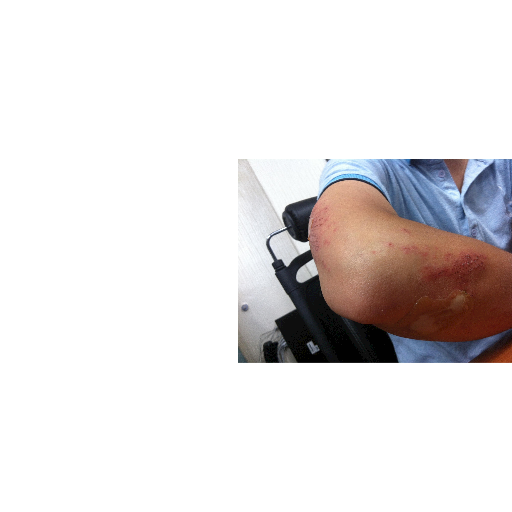
Every day, healthcare workers face situations where every second counts. From sudden allergic reactions to life-threatening injuries, they must act quickly and work as a team. Afterwards, when healthcare teams debrief, they talk about what went well in the situation and what they could possibly work on doing better in the future. Often, this scenario can be reenacted during a simulation event.
Simulation gives students a chance to experience these emergencies in a safe way. By practicing again and again, they build the confidence, skill, and teamwork needed to stay calm in a real crisis.
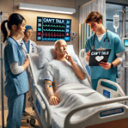
Here are a few examples of the kinds of scenarios healthcare teams practice:
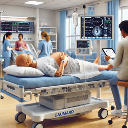
Each scenario helps students learn to stay focused, listen to their teams, and act quickly.
The more you practice, the more your brain and body learn what to do automatically. This is called muscle memory. It’s how:
In simulation, teams can:
After a sim, the team comes together to talk about it. This is called a debrief. They ask:
Learning from each scenario makes the next one even better.
Your Turn to Simulate!
Mini Activity: Code Blue Drill
Set up an emergency scenario in class:
1. One student is the patient (on the floor or in a chair)
2. Assign roles:
o Responder: Starts CPR
o Caller: Pretends to call 911
o AED Runner: Grabs the pretend defibrillator
3. Use a timer! See how fast your team can respond.
Bonus Challenge: Switch roles and try again faster!
Chapter 6: Technology & Innovation
Simulation Tech: Where Science Meets Imagination
Simulation is changing fast! What used to be simple plastic dummies are now high-tech robots powered by computers, sensors, and even artificial intelligence.
Simulation doesn’t just help learners—it inspires inventors too! Every new device is created by someone asking: “How can we make this better?”
Let’s explore some of the coolest tech in the world of healthcare sim.


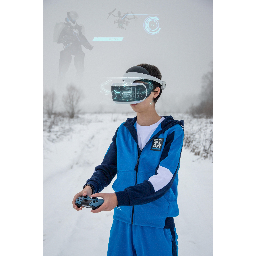
Put on virtual reality goggles and step into a 3D hospital. You can:
You can even zoom in on blood vessels or switch views from doctor to patient!
These aren’t just programmed—they learn and adapt.
AI adds realism and challenge.
Train with students from around the country—or the world!
Attach sensors to your hands or chest:
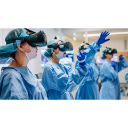

New technology allows learners to:
It also allows instructors to change scenarios in real time, making it feel even more real.
Think Like an Inventor
The best simulation tools are created by people who understand:
Some tools even mix with gaming, robotics, or animation. Simulation is a place where science and creativity collide!
Think About It:
• What healthcare problem would you like to solve?
• What part of the body is hardest to simulate?
• What’s a tool that doesn’t exist yet—but should?
Your Turn to Simulate!
Mini Activity: Design a Future Simulation Tool
1. Think of a healthcare challenge.
2. Imagine a tool that could help solve it using simulation.
3. Draw your invention!
4. Give it a name and describe:
o What it looks like
o What it does
o Who would use it
Bonus Challenge: Write an ad or poster for your tool. What makes it awesome?
- Full access to our public library
- Save favorite books
- Interact with authors
- < BEGINNING
- END >
-
DOWNLOAD
-
LIKE(1)
-
COMMENT()
-
SHARE
-
SAVE
-
BUY THIS BOOK
(from $11.39+) -
BUY THIS BOOK
(from $11.39+) - DOWNLOAD
- LIKE (1)
- COMMENT ()
- SHARE
- SAVE
- Report
-
BUY
-
LIKE(1)
-
COMMENT()
-
SHARE
- Excessive Violence
- Harassment
- Offensive Pictures
- Spelling & Grammar Errors
- Unfinished
- Other Problem






COMMENTS
Click 'X' to report any negative comments. Thanks!