

Once upon a time, there was a little boy named Benjamin. He was one year old, and one day his tummy began to hurt. He has been having watery stools for the past 3 days and a fever that wouldn’t go away even with Tylenol. His mom was so worried, she took him to the hospital.

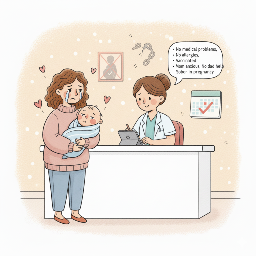
Benjamin’s mom rushed him into the emergency room, clutching her lethargic son.
The nurse greeted them and asked about his history. His mother explained that Benjamin had no medical problems, no allergies, and was fully vaccinated. The nurse noted these details with care.
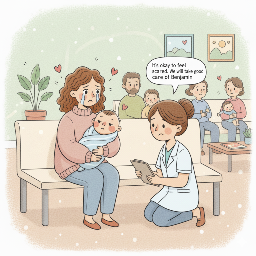
Tears streamed down the mother’s face as she admitted how scared she was. She often cried when stressed and needed support to feel steady. She also revealed that while she had stayed sober during pregnancy, both parents struggled with substance use. His father still used substances and rarely helped at home, leaving much of the caregiving to her alone.
The nurse offered calm reassurance, promising they would check Benjamin’s vital signs, run the needed tests, and make sure he was safe.
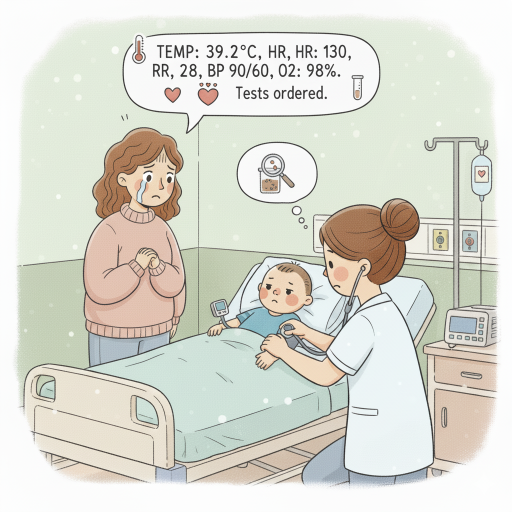
The nurse checked Benjamin’s vitals: his temperature was 39.2°C, heart rate 130, Resp rate 28, blood pressure 90/60, oxygen 98%.
Several tests and stool samples were ordered to identify the causative organism of this suspected gastroenteritis.

The doctor came in and gently explained to Benjamin’s mom, “We believe your son has gastroenteritis. It’s an infection that causes frequent watery stools, sometimes fever or vomiting. Most children recover in less than two weeks.”
She went on, “The infection damages the intestines, making fluids and salt leak out. That’s why he’s losing so much in his stool.
Some children get more ill if it’s their first infection, if they’re malnourished, have weak immunity, or ingest a large amount of the virus.”
The doctor reassured her, “The most important treatment is replacing fluids. Medicines are rarely needed. We’ll keep him safe while he recovers.”

Benjamins mom appeared anxious and asked what can cause this?
The doctor explained, “Several viruses can cause gastroenteritis.
Rotavirus is most common in young children, especially in winter, but vaccines now help prevent it. Norovirus spreads easily at any age and often causes outbreaks. Sapovirus mainly affects infants and toddlers with milder symptoms. Astrovirus usually affects children under four, often in winter.”
Benjamin’s mom listened carefully, trying to take it all in. “The lab is currently working to figure out which strain your son has,” the doctor added.
The doctor spoke gently. “If gastroenteritis isn’t treated, children can become very sick. The most serious risk is dehydration, which may lead to shock and even death, especially in children under two.
Their bodies have less fluid and they rely on others to drink.”

She continued, “There can also be electrolyte problems, like low or high sodium or potassium. Low potassium can slow the intestines, making vomiting worse.”
The doctor added, “Frequent acidic stools can also irritate the skin and cause painful rashes.”
Benjamin’s mom nodded, grateful to have everything explained so clearly.

In another room, the doctors reviewed Benjamin’s lab results. His white blood cell count was elevated, confirming infection.
A stool smear and tests for ova and parasites were still pending, both important for ruling out bacterial or parasitic causes.
They anticipated electrolyte imbalances from ongoing diarrhea, especially with sodium, potassium, and magnesium. These shifts could be dangerous if not corrected. They also expected an increase in creatinine, a sign of dehydration and stress on the kidneys.
The doctors agreed his labs showed infection and the risk of fluid and electrolyte loss. Careful monitoring is needed.
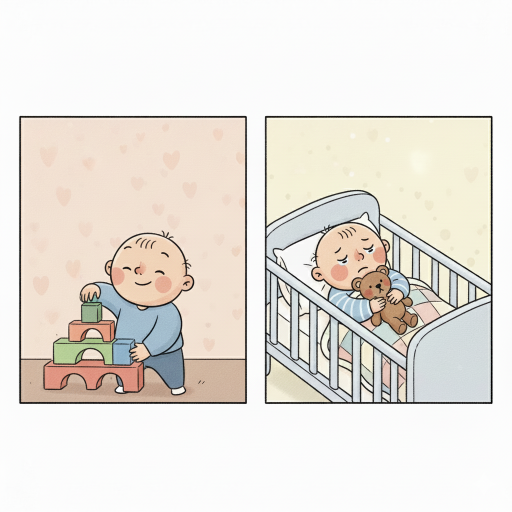
At one year old, Benjamin should weigh around 10 kg, pull to stand, and maybe walk with help. He can use his pincer grasp, jabber like a little conversation, and play peek-a-boo. His favorite thing to play with was his little block set, but right now, he is too tired to play. Instead, Benjamin could only cuddle his favorite teddy bear, named 'Hugs'.

Benjamin's mom nodded with understanding.
The nurse taught mom how to keep Benjamin safe: wash her hands after diaper changes, prepare formula safely at each feeding, and watch for warning signs. "Some things you can look for are sunken fontanelles, lethargy, fewer wet diapers, or a high fever," the nurse said. She made sure to explain gently and respectfully using easily understandable words. "We will make sure to go over this again before you go home."

"When he is feeling better, he can eat age-appropriate foods," she said, "Sugary, fatty foods can cause diarrhea and this is something that could make Benjamin feel sick again. You can continue breastfeeding as this is the best food for his tummy." Benjamin's mom listened intently so that she could understand how to keep him healthy once he was feeling better.
Benjamin needed fluids first. The nurses gave him an oral rehydration solution in small sips. "If he can't tolerate a drink, IV fluids will help Benjamin feel better," the nurse explained.
The nurses counted Benjamin’s diapers and stools. They tracked if he peed enough by weighing the wet diapers and looked at how watery his stools were. They kept a tally of the number of wet diapers each day to track how often he was going to the bathroom. This showed the nurse how well Benjamin's body was recovering from fluid loss.

The nurses regularly checked Benjamin's vital signs. "Sometimes dehydration makes kids breathe fast and deep. We are checking Benjamin’s breathing to make sure his oxygen stays normal and he isn't developing acidosis, as this would make Benjamin even sicker, " the nurse said.

- Full access to our public library
- Save favorite books
- Interact with authors
References
Arora, S. (2017). Roy’s adaptation model: Effect of care on pediatric patients. International Journal of Nursing and Midwifery Research, 4, 52–60. https://doi.org/10.24321/2455.9318.201708
Aghsaeifard, Z., Heidari, G., & Alizadeh, R. (2022). Understanding the use of oral rehydration therapy: A narrative review from clinical practice to main recommendations. Health science reports, 5(5), e827. https://doi.org/10.1002/hsr2.827 (Prabhleen)
Andropoulos, Dean B. “Pediatric Normal Laboratory Values.” Gregory’s Pediatric Anesthesia, 9 Dec. 2011, pp. 1300–1314, https://doi.org/10.1002/9781444345186.app2.
Canadian Pediatric Society. (2023). Dehydration and diarrhea in children: Prevention and treatment. Caring for Kids. https://caringforkids.cps.ca/handouts/health-conditions-and treatments/dehydration_and_diarrhea
Consensus Guidelines for IV Fluid Management - UCSF Pediatrics. Medconnection.ucsfbenioffchildrens.org, 5 July 2023, medconnection.ucsfbenioffchildrens.org/maintenance-iv-fluid.
College of Registered Nurses of Saskatchewan. (2022). Acute gastroenteritis: Pediatric.https://www.crns.ca/wp-content/uploads/2022/06/Acute-Gastroenteritis-Pediatric-CDT-2022.pdf
Gaglani, A., & Gross, T. (2018). Pediatric pain management. Emergency Medicine Clinics of North America, 36(2), 323–334. https://doi.org/10.1016/j.emc.2017.12.002
Ghsaeifard, Z., Heidari, G., & Alizadeh, R. (2022). Understanding the use of oral rehydration therapy: A narrative review from clinical practice to main recommendations. Health science reports, 5(5), e827. https://doi.org/10.1002/hsr2.827
Keenan-Lindsay, L., Leifer, G., & Townsend Little, K. (2020). Leifer’s introduction to maternity and pediatric nursing in Canada (3rd ed.). Elsevier.
Kight, B. P., & Waseem, M. (2025). Pediatric Fluid Management. In StatPearls. StatPearls Publishing. http://www.ncbi.nlm.nih.gov/books/NBK560540/
Lab Dept: Hematology COMPLETE BLOOD COUNT REFERENCE VALUES RBC Parameters (Conventional Units) Age HGB (G/DL) HCT (%) RBC (X10 MCV (Fl) MCH (Pg) MCHC (%) RDW| (%).
Leung, A., Hon, K. (2020). Pediatrics: how to manage viral gastroenteritis. Drugs in Context. (10). DOI: 10.7573/dic.2020-11-7 (Marissa Johnson)
Lo Vecchio, A., Dias, J. A., Berkley, J. A., Boey, C., Cohen, M. B., Cruchet, S., Liguoro, I., Salazar Lindo, E., Sandhu, B., Sherman, P., Shimizu, T., & Guarino, A. (2016). Comparison of Recommendations in Clinical Practice Guidelines for Acute Gastroenteritis in Children. Journal of pediatric gastroenterology and nutrition, 63(2), 226–235. https://doi.org/10.1097/MPG.0000000000001133
“Milestones for a 1-Year-Old | HealthLink BC.” Healthlinkbc.ca, 2023, www.healthlinkbc.ca/healthwise/milestones-1-year-old. Accessed 23 Sept. 2025.
OneHealth. (2020). Pediatric fluid management for dehydration: Clinical care pathway. https://www.onehealth.ca/Portals/1/Pediatric%20 %20Fluid%20Management%20for%20Dehydration%20-%20CCP%20 %202020%20%28July%202022%20update%29.pdf
O’Ryan, M. (2025). Acute Viral Gastroenterits in children in resource abundant countries: Management and prevention. UpToDate. https://www.uptodate.com/contents/acute-viral gastroenteritis-in-children-in-resource-abundant-countries-management-and-prevention
O’Ryan, M. (2025). Acute viral gastroenteritis in children in resource abundant countries: Clinical features and diagnosis. UpToDate. https://www.uptodate.com/contents/acute viral-gastroenteritis-in-children-in-resource-abundant-countries-clinical-features-and diagnosis
“PedMed.” Pedmed.org, 2025, pedmed.org/pedsearch.php.
Thibault, C., Pelletier, É., Nguyen, C., Trottier, E. D., Doré-Bergeron, M.-J., DeKoven, K., Roy, A.-M., Piché, N., Delisle, J.-F., Morin, C., Paquette, J., & Kleiber, N. (2023). The Three W’s of Acetaminophen In Children: Who, Why, and Which Administration Mode. The Journal of Pediatric Pharmacology and Therapeutics : JPPT, 28(1), 20–28. https://doi.org/10.5863/1551-6776-28.1.20 (BROOKE ELLIS)
- < BEGINNING
- END >
-
DOWNLOAD
-
LIKE(1)
-
COMMENT()
-
SHARE
-
SAVE
-
BUY THIS BOOK
(from $3.99+) -
BUY THIS BOOK
(from $3.99+) - DOWNLOAD
- LIKE (1)
- COMMENT ()
- SHARE
- SAVE
- Report
-
BUY
-
LIKE(1)
-
COMMENT()
-
SHARE
- Excessive Violence
- Harassment
- Offensive Pictures
- Spelling & Grammar Errors
- Unfinished
- Other Problem





COMMENTS
Click 'X' to report any negative comments. Thanks!