Lestat (Red Bean)

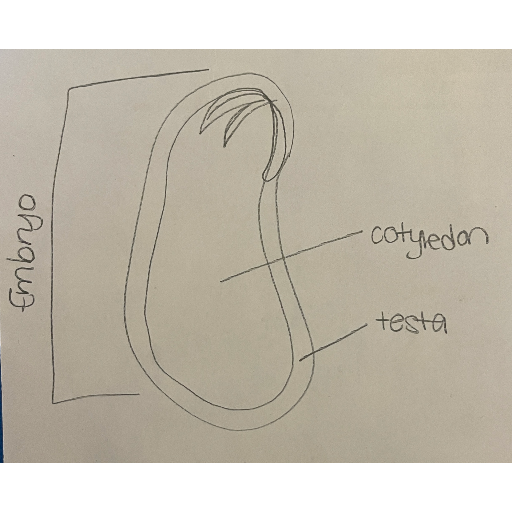
Seed Structure
Embryo: Develops into a new plant
Cotyledon: Stored food that the plant uses before it begins photosynthesis (develops into 1st leafs)
Testa: Seed coat protecting the embryo (can vary in thickness)
Germination
The sprouting of a seedling from a seed.
1. Water is absorbed & activates the plant embryo cells.
2. The embryonic plant begins to synthesize gibberellin (plant hormone that stimulates mitosis & cell division, activates amylase production).
3. Gibberellins cause the synthesis of amylase.
4. Amylase hydrolyzes starch being stored in the cotyledon, producing maltose.
5. Maltose is absorbed by the plant embryo.
6. Maltase digests maltose, producing glucose (which is used in cellular respiration to create ATP to fuel plant growth).
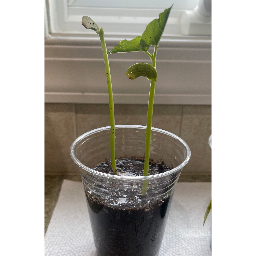
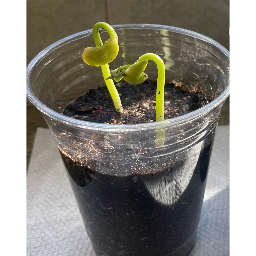
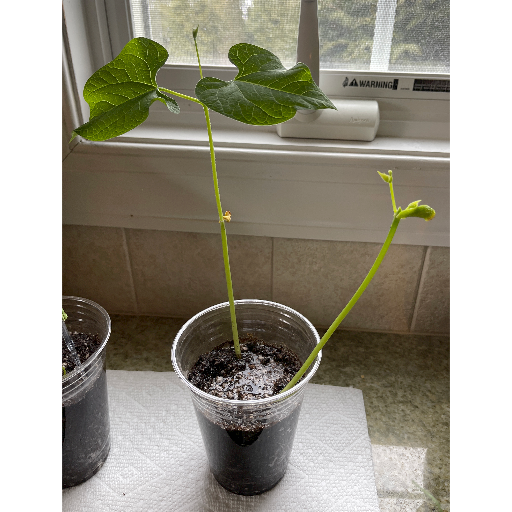
Lestat beginning
to sprout: stems are growing
upwards & cotyledons are
lifting out of the soil.
Radicle
First leaves
Cotyledons
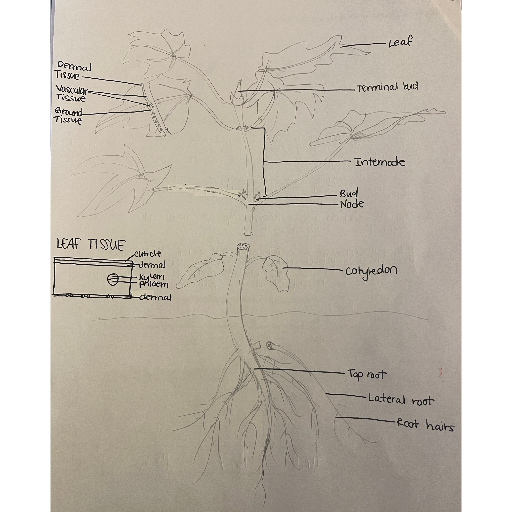
Terminal bud: New shoot growth
Node: Where leaves/buds attach
Bud: Grow into branch/flower
Cotyledon: Stored food
Tap root: Anchor & water access
Lateral root: Increase absorption
Hairs: Boost water/mineral absorption
Leaf: Photosynthesis & gas exchange
Dermal tissue: Protective outer layer
Cuticle tissue: Waxy coat that reduces water loss
Meristems: Regions from which a plant can grow
Apical: Causes primary growth (up & down, length), is located at the tips of shoots & roots, produces new leaves, flowers, and roots
Lateral: Causes secondary growth (widening), located in the stem of the cambium, produces cork & bark
Ex: Vascular cambium in trees
Shoot apical meristem

Lateral meristem (inside)
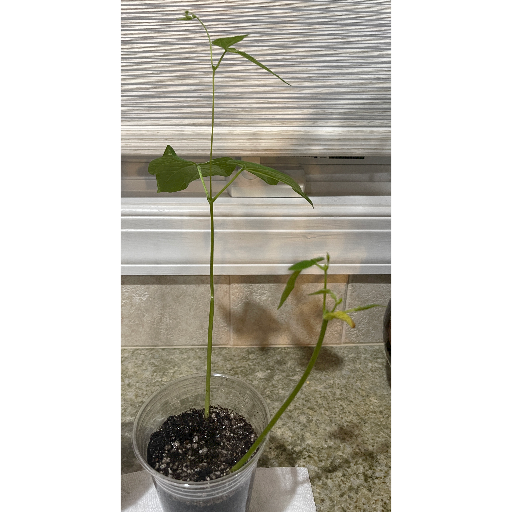
Auxin: influences cell growth rates by changing gene expression; in the shoot apical meristem it promotes growth & division so the plant will grow taller, it prevents growth & division @ nearby axillary buds
Gibberellin: Stimulates mitosis & cell division in the embryo; activates production of amylase
Phototropism: Light receptors trigger the redistribution of auxin to the dark side of th plant, causing the dark side of the shoot to elongate and the shoot to grow towards the light
Dark side
Side that gets light
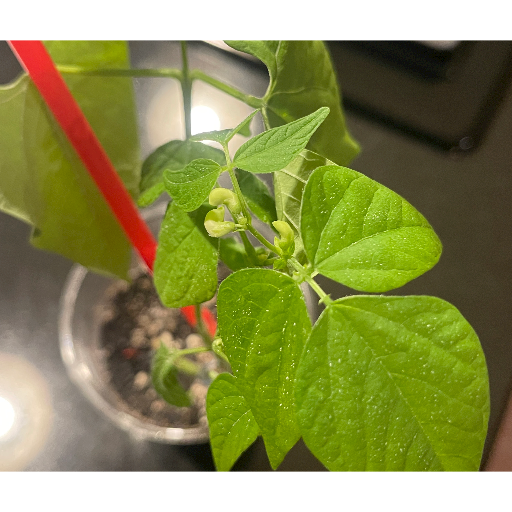
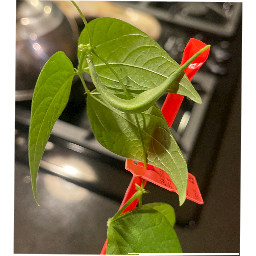
Pods started to grow
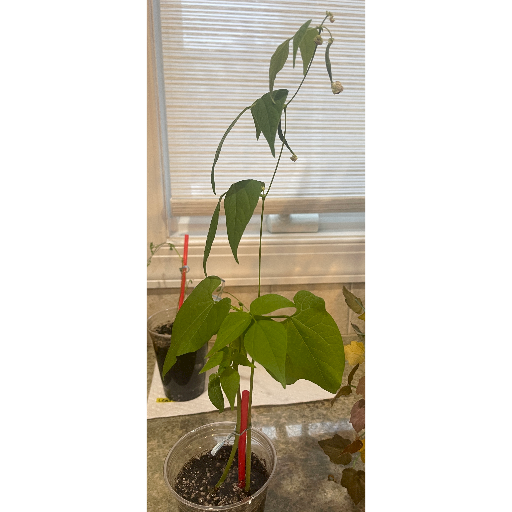
Lestat started to flower & grew much taller, along with some new leaves

1. Mineral ions are actively transported into the roots (low to high)
2. Water enter the roots by osmosis passively thru membrane or channel protein (hypotonic to hypertonic)
3. Water is transported thru xylem tissue (vascular tissue) that transports water & dissolved mineral ions from roots to leaves
4. Cohesion & adhesion maintain a chain of water in the xylem, froom roots to leaves
5. Water evaporates from leaves thru stomata (typically open during the day so the plant can get the CO2 needed for photosynthesis; H2O evaporates when the stomata are open, pulling the chain of water up the xylem)
6. The rate of transpiration depends on abiotic factors
Transpiration/Evaporation Process
*Xylem is made of dead cells, only the cell wall remains (made of cellulose & lignin) which provide rigidity & strength to to the plant that allows for upright growth
- Full access to our public library
- Save favorite books
- Interact with authors
- < BEGINNING
- END >
-
DOWNLOAD
-
LIKE
-
COMMENT()
-
SHARE
-
SAVE
-
BUY THIS BOOK
(from $2.99+) -
BUY THIS BOOK
(from $2.99+) - DOWNLOAD
- LIKE
- COMMENT ()
- SHARE
- SAVE
- Report
-
BUY
-
LIKE
-
COMMENT()
-
SHARE
- Excessive Violence
- Harassment
- Offensive Pictures
- Spelling & Grammar Errors
- Unfinished
- Other Problem





COMMENTS
Click 'X' to report any negative comments. Thanks!