I wrote this book because I love space, and I had questions that I was curious about. I wanted to answer it for others who are just as curious as me. I am dedicating this book to Mrs. Terhune because she stayed with me on this journey to get where I am and enabled me to write this book for more people to get excited about space.

Table of Contents
What are the conditions on Mars?.....................................................................................4
How do spaceships come back from space?....................................................................5
Is there a limit on how far you can go in a spaceship?...................................................6
How does the crew prevent muscle loss while in space?...............................................7
Is it better to have men or women on the spaceship?...................................................8
Mission to Mars..................................................................................................................10
Works Cited.........................................................................................................................11
About the Author................................................................................................................13
Mars is a cold, dry, rocky planet with a dusty red surface. Mars was named after the Roman god of war because its reddish color reminded people of blood. According to the article titled Mars: Facts - NASA Science, “The temperature on Mars can be as high as 70 degrees Fahrenheit (20 degrees Celsius) or as low as about -225 degrees Fahrenheit (-153 degrees Celsius).” The range of temperature on Mars is very great and the low temperatures are well below living conditions for humans. The article also states, “There is water on Mars today, but the Martian atmosphere is too thin for liquid water to exist for long on the surface.” Because the atmosphere is thin, liquid water evaporates or freezes very quickly so most of the water on Mars is mainly found in the form of ice. The wind can blow very strong on Mars and create huge dust storms that can cover the planet for months. These extreme conditions would make it a very difficult place for humans to live.
What are the conditions on Mars? (description)

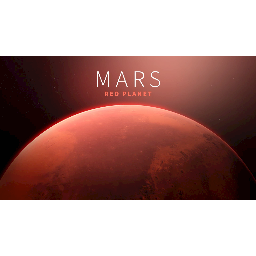
Mars' surface
“It really does look like a rain of fire coming down from the sky.” According to the website Starlust.org, this is a description of a spaceship returning to Earth. But how does a spacecraft actually make it back? First, the spaceship leaves orbit by firing two small engines. Then, it begins falling toward the Earth’s atmosphere. Next, it enters the atmosphere at a very high speed causing it to heat up and glow due to friction. A strong, protective layer on the spaceship, called a heat shield, absorbs and blocks the heat so that the inside of the spacecraft does not burn. After that, the spaceship slows down due to air resistance, called drag. Then, parachutes open to slow down the spaceship even more. Finally, the spaceship lands safely on Earth. Starlust.org states “Re-entry is the culmination of the mission and while astronauts are excited to return home, re-entry is a thrilling experience, different from launch, but just as crucial and potentially hazardous.” The astronauts are excited and anxious to return home but they need to make sure that they perform all of the necessary steps to ensure that they will return home safely.
How do spaceships come back from space? (sequence)
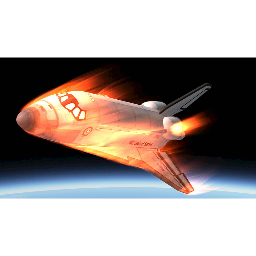
Image of spaceship during reentry.
Source: infiniteflight.com
Advancements in technology have allowed the construction of faster spacecraft than ever before. These faster aircrafts are allowing humans to explore more of space. According to Apollo11Space.com, “The fastest human-made object to date is NASA’s Parker Solar Probe, which reached speeds of about 364,621 mph (586,803 km/h) in 2024. To put that in perspective, at that speed, you could travel from New York to London in about 30 seconds!” Even though 364,621 mph sounds extremely fast, it is still not fast enough to explore outer space. Because space is so large, traveling to other planets or stars will take a very long time.. Apollo11Space.com explains that “The trip to Jupiter would take about 6 years with current technology, and that’s just one way.” As a result, there is a limit to how far we can travel into space. Spaceships would not be able to hold enough resources to support a crew for decades so until we find a faster method of travel, we are limited in the distance that we can send a spaceship to explore.
Is there a limit on how far you can go in a spaceship? (cause and effect)
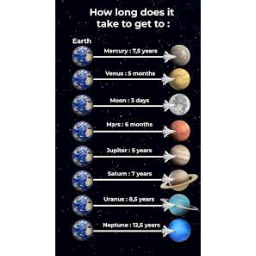
Chart of how long space travel takes
Source: engineeringfacts.com
In space, there is no gravity pulling on the astronauts bodies like there is on Earth. Without constant pulling on the body, the astronauts face losing muscle and bone. According to an article by NASA, “Each astronaut aboard the space station engages the muscles, bones, and other connective tissues that comprise their musculoskeletal systems using Earth-like exercise regimens. Crews exercise for an average of two hours a day.” Riding a stationary bike or running on a treadmill for 2 hours can be boring for the astronauts. To help keep the astronauts more interested in exercising, research is being done to find alternate methods of exercise, like virtual reality. The article goes on to state that “VR for exercise focuses on developing a virtual reality environment astronauts can pedal through while on the station’s exercise bicycle. It’s more than just a different view—creating an immersive experience helps astronauts enjoy their time exercising.” If astronauts enjoy exercising more, they might work out harder and then their bodies will be healthier in space. If this idea works, it could help make longer missions possible in the future.
How does the crew prevent muscle loss while in space? (problem and solution)

L image: astronaut exercising
Source: issnationallab.org
R image: exercising with VR
Source: newatlas.com
- Full access to our public library
- Save favorite books
- Interact with authors
- < BEGINNING
- END >
-
DOWNLOAD
-
LIKE
-
COMMENT()
-
SHARE
-
SAVE
-
BUY THIS BOOK
(from $2.99+) -
BUY THIS BOOK
(from $2.99+) - DOWNLOAD
- LIKE
- COMMENT ()
- SHARE
- SAVE
- Report
-
BUY
-
LIKE
-
COMMENT()
-
SHARE
- Excessive Violence
- Harassment
- Offensive Pictures
- Spelling & Grammar Errors
- Unfinished
- Other Problem






COMMENTS
Click 'X' to report any negative comments. Thanks!