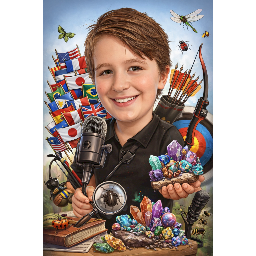
I'm Hunter, and I am originally from South Africa. I love Science and Nature! My favourite things to learn about are Entomology, Geography, Minerals and Flags. My hobbies are Archery, Radio PSA's and Public Speaking. Thank you for joining me on this Arachnid discovery!

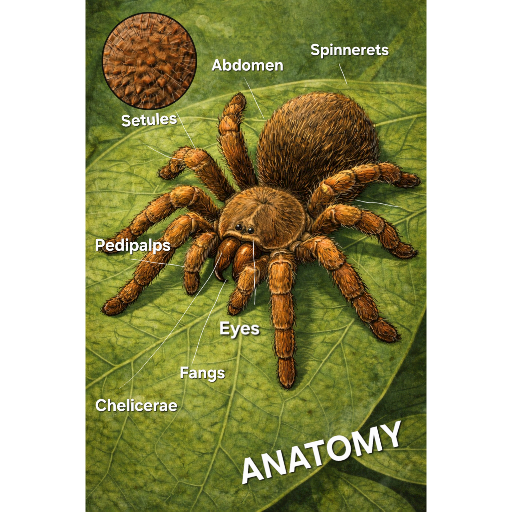
Spiders have lived on Earth for millions and millions of years. There are over 53 thousand species of spiders, but only 30 species are considered deadly. Spiders are in a family called Arachnids, although some don't look like it. These creepy crawlies have many characteristics, including setules (hairs) on their legs for climbing, and a web factory in their behinds called spinnerets. Other features include fangs, a mouth, eyes (up to 8), book lungs, abdomen, pedipalps (2 prey detectors), and chelicerae.
Let's go and explore some strange and abnormal spiders.
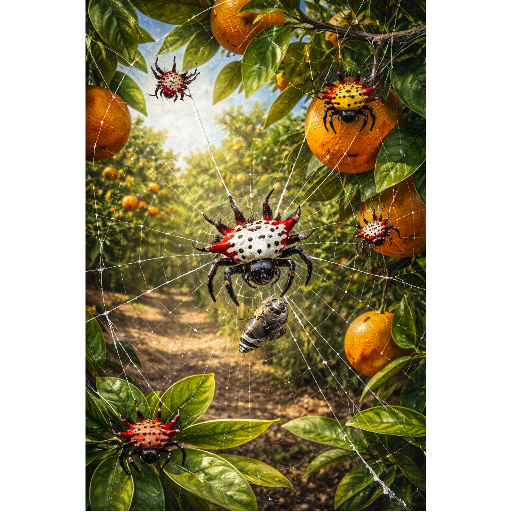
CRAB-LIKE SPINY ORB WEAVER
These spiders live in the Southeast United States of America. They are known for their unique look which includes six spines on the back and colors often including white, orange, yellow, red or black. They're also good for pest control. Their diet includes flies, beetles, moths, and mosquitoes. They are basically like the guardians of the garden.
,
TRAPDOOR SPIDER
These 'masters of surprise' spiders, live in warm places like North America, South America, Africa, Australia, China, Japan and India. These spiders are venomous, however they would most likely not bite. If they did bite you, it would not send you to the hospital, but it could be painful. They are known for their awesome hunting strategy. First, they craft a lid to hide under, using twigs, silk, leaves and soil. Then they make strands of silk as a security system (like lazers in spy movies). Finally, they wait until prey steps on those strands to alert the spider. When that happens, they strike, grabbing their prey at hyperspeed
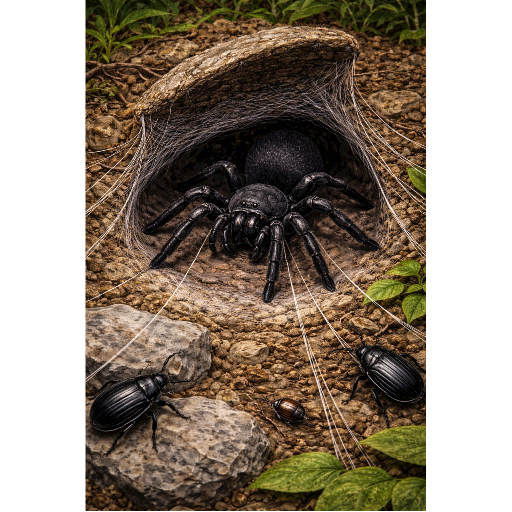
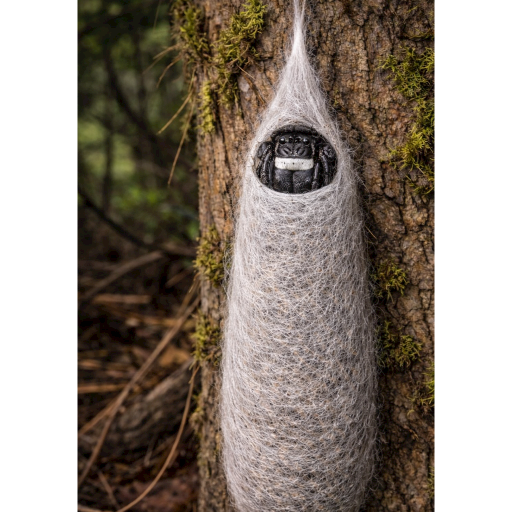
PURSEWEB SPIDER
These unique web designers live in warm and humid places like North America, Asia, Africa and Europe. A bite from these guys won't be venomous but it will hurt a bit. They are known for their cool hunting strategy. First, they make a cone or cylinder, depending on what kind of purseweb spider it is. Then they wait for their prey inside. When bugs land on their web, they strike their fangs through the web and stab their prey. They cut a small gap in the purseweb to drag in their food, and sew it up again.
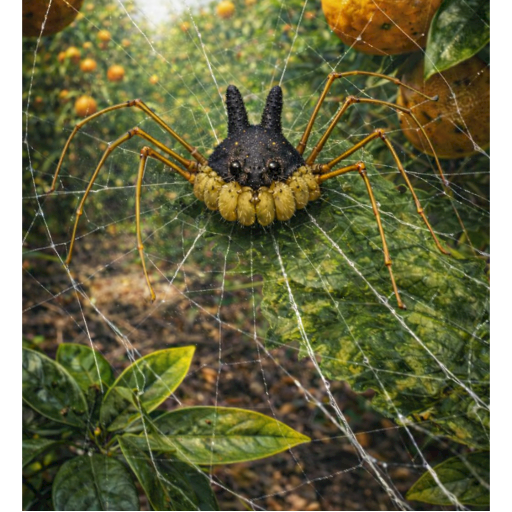
Bunny Harvestman Spider
These small, bunny-like spiders live in the Amazon Rain Forest. Although they belong in the Arachnids family, they actually are not spiders at all. They're known for their bunny-like appearance, which is both cute and creepy. They are omnivores and eat dead insects, animals, plants and even bird droppings. They even have the ability to regrow limbs! When a predator tries to harm these creatures, they will drop a leg and run. The leg will still twitch, distracting the predator. This process is called autotomy.

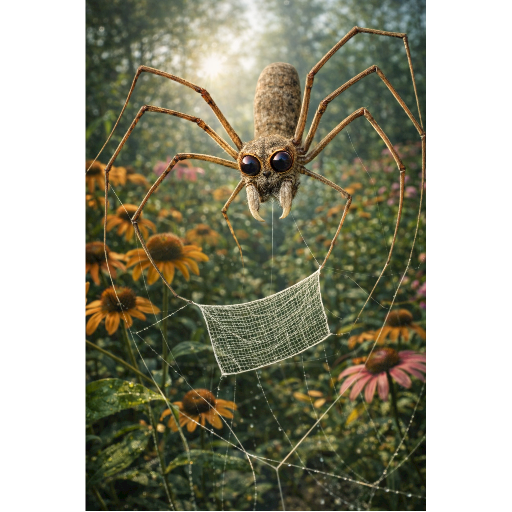
Ogre-Faced Net Caster
These stick look-a-likes live in warm places like Australia, Asia, Africa, South America and The United States. Fun fact, these guys are nocturnal, so they hunt at night.
They are known for their hunting strategy. Firstly, they make a rectangle shaped web and stretch it. Then, they defecate behind their web (as the bait) and then climb up. They wait until prey comes and cast down their web like a fishing net. They are like geometric web fishers!
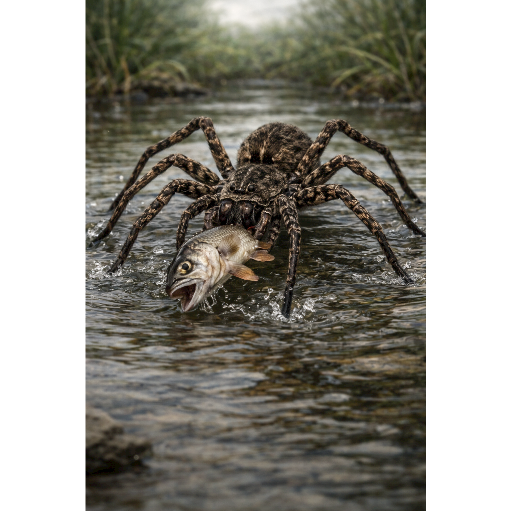
Dock Spider
These water walkers are found on docks, water, outdoor showers, boat launches and marshes all over the world. These guys can walk on water, because of something called surface tension. Surface tension is when things like sticks, leaves or small insects are lighter than water, giving them the ability to float on water. The spider eats aquatic bugs, little fish, frogs and tadpoles. A bite from a dock spider is similar to a sting from a bee, and some people can get an allergic reaction.
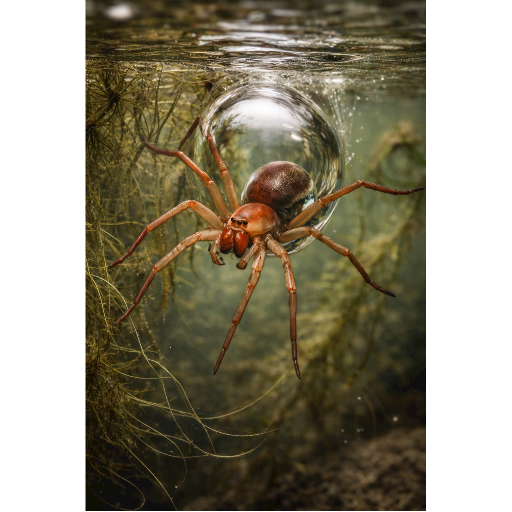

Diving Bell Spider
These eight legged submarines live in the swamps, ponds, marshes and lakes of Asia and Europe. They live their lives entirely under water. These guys hunt by waiting in their bubble until prey comes close to it, and then they catch them. They eat small living creatures like mosquito larvae, little crustaceans, water mites, and aquatic insects. So they are basically expert scuba divers.
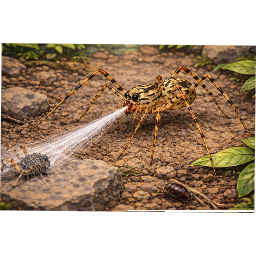
Spitting spider
These shotgun slingers live in warm places all over the world. They're known for the hunting method they use. The spider spits at its prey (like the name suggests) ,with a venomous silky substance from its fangs. This milky concoction immobilizes their prey. They eat small insects including flies, silverfish and ants.
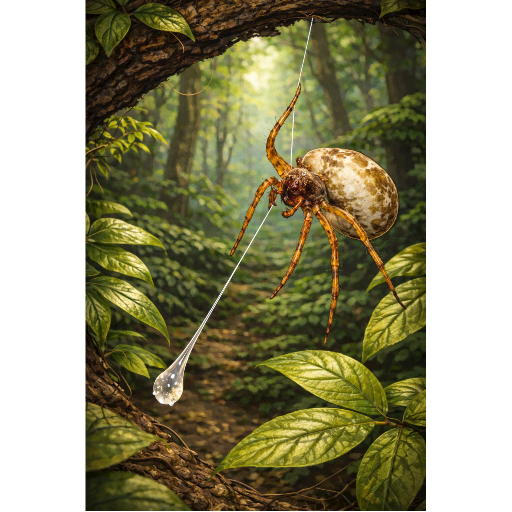
Bolas spider
These droplet ball swingers live in warm areas around the world. They also have a unique hunting strategy. They use a sticky silk-like droplet on a string (from their spinneret) to hunt male moths. The spider creates a scent that smells like a female moth's scent to lure the male moth in. When a male moth comes close, the spider swings the sticky drop like a fishing line and when it hits the moth, the moth gets stuck. Then the spider climbs down the strand of silk, wraps up the prey and eats it.
- Full access to our public library
- Save favorite books
- Interact with authors
- < BEGINNING
- END >
-
DOWNLOAD
-
LIKE(7)
-
SHARE
-
SAVE
-
BUY THIS BOOK
(from $3.39+) -
BUY THIS BOOK
(from $3.39+) - DOWNLOAD
- LIKE (7)
- SHARE
- SAVE
- Report
-
BUY
-
LIKE(7)
-
SHARE
- Excessive Violence
- Harassment
- Offensive Pictures
- Spelling & Grammar Errors
- Unfinished
- Other Problem





COMMENTS