This book is for all the children who like learning about earthquakes!

Oh no! Do you feel that shake?



! !


That might be from an earthquake!

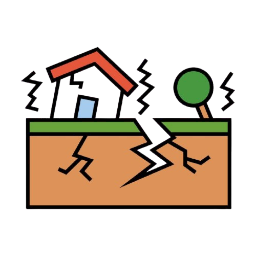


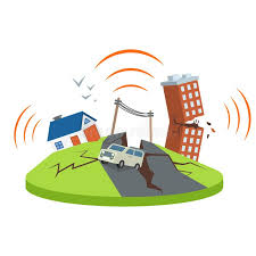
Earthquakes are the sudden, fast shaking of the ground.
What is an earthquake?

There are seven tectonic plates that make up Earth's crust.
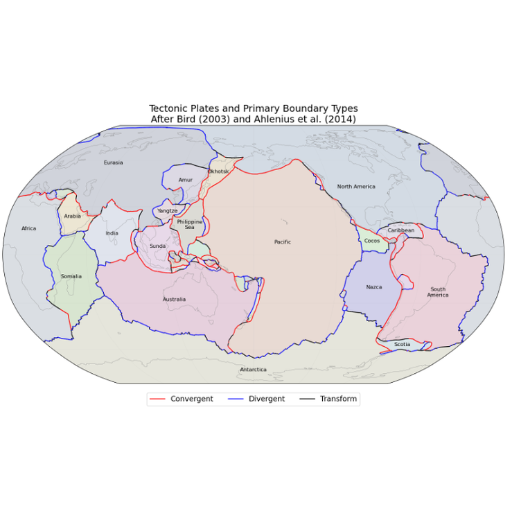
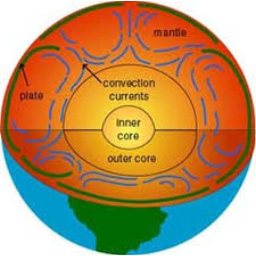
Convection currents underneath them (in Earth's mantle) allow the tectonic plates to move!
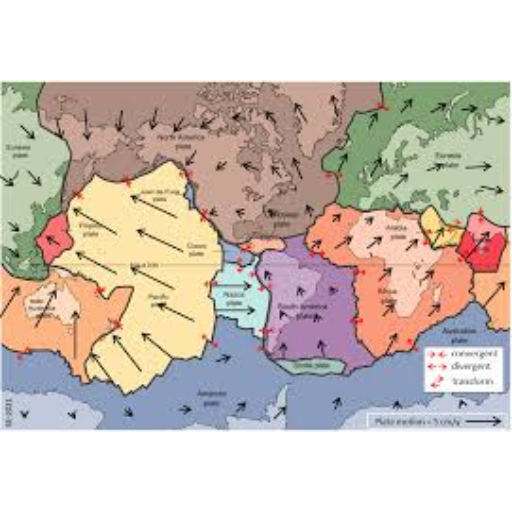
What is really happening during an earthquake?
Tectonic plates are constantly moving under your feet,

and sometimes, two of these plates can meet!
We call these locations plate boundaries!
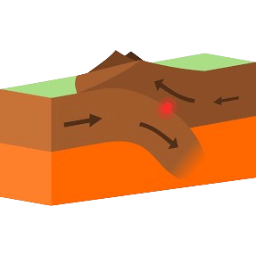
If one plate goes under the surface while the other slides above, we call it subduction!
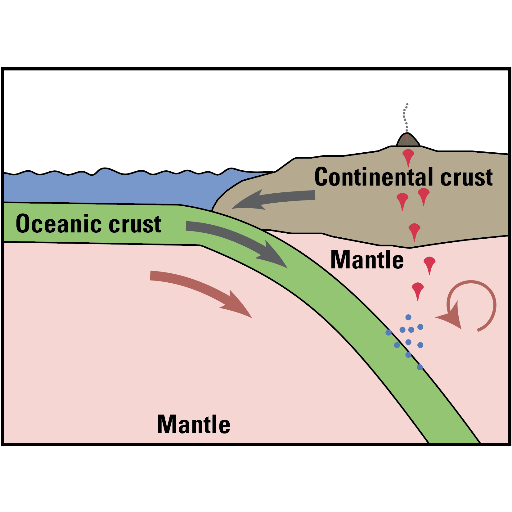
Subduction happens at convergent plate boundaries!
Transform boundaries
Divergent Boundaries
Convergent boundaries
The places that get the most ouchies
are found near plate boundaries!
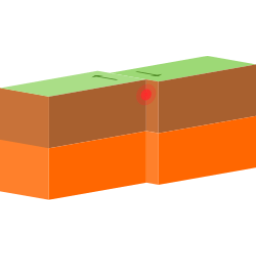
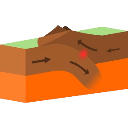
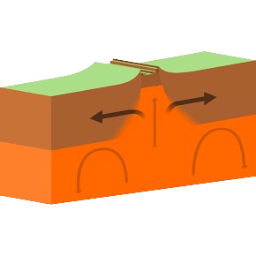
These create faults, which release energy as seismic waves spread out from them. This is what causes the shaking you feel in the ground!
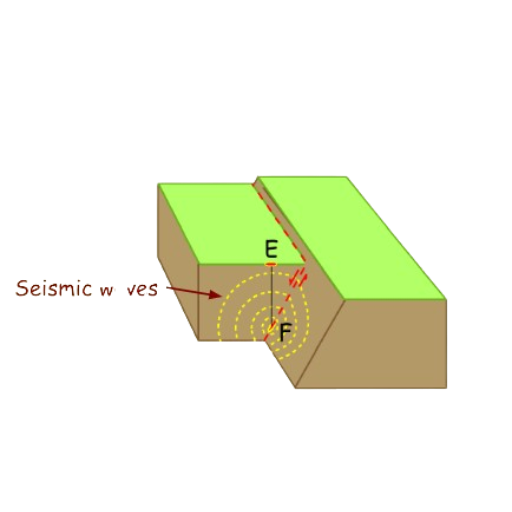
Seismic waves

Seismic waves are the ground vibrations produced by an earthquake.
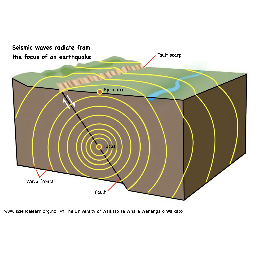

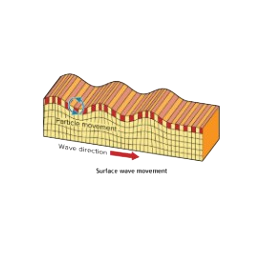
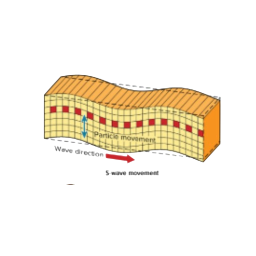
There are three types of seismic waves. Body waves, which are primary and secondary waves, and surface waves.
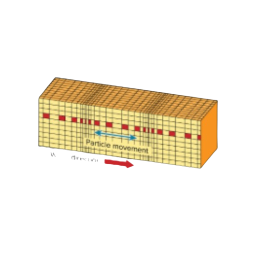
P-wave
S-wave
Surface wave
Body waves travel through the inside of the earth (interior).
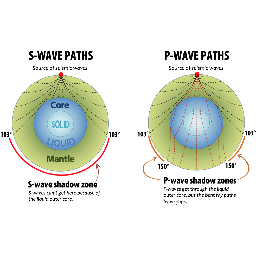
P-waves (primary waves) squeeze and push rocks and are the first waves we see, and secondary waves are the slower, second ones!
Remember: Primary=first, and Secondary=Second!
Primary 🥇
Secondary 🥈
&
Body waves start from the focus,
and are either shallow, intermediate, or deep in earth's surface!
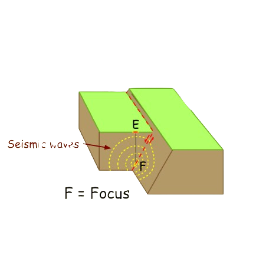
Seismic waves
Shallow waves cause the most crisis because they're closer to the surface!
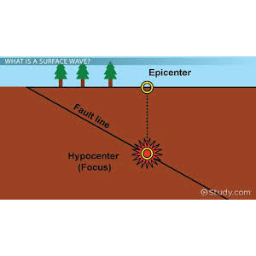
Surface waves start from the epicenter. They cause the ground to move both sideways and up and down!
The epicenter is point on the Earth's surface directly above the focus!
How do we know when an earthquake will happen?
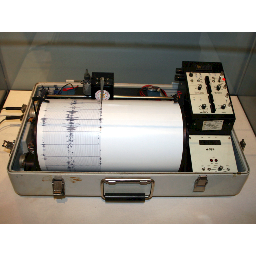
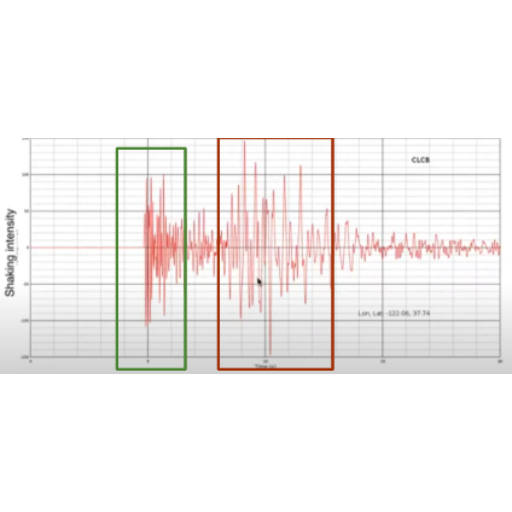
Scientists use seismographs to detect earth's movement (seismic waves) during at earthquake!
Farther apart = farther away
Closer together = close by
P-wave
The separation of p-waves and s-waves can tell how far away an earthquake is.
S-wave
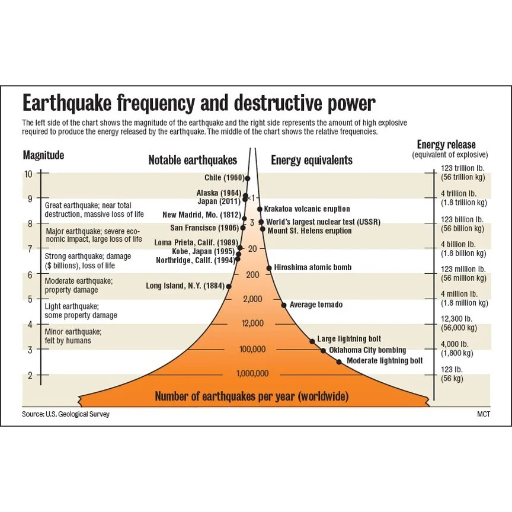
Scientists use the Richter Scale to measure the magnitude (size) of the earthquake!
How do we prepare for an earthquake?
People who live in areas with many earthquakes should always make an emergency plan!

Plan where to meet if you ever are separated from family.

After an earthquake, we plan to all meet up at the local police station to make sure we're all safe!
Make a supply kit that has enough food and water to last many days, first aid kit, a flashlight, extra batteries, a fire exinguisher, and a whistle.
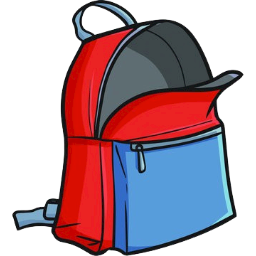


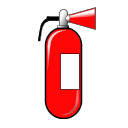

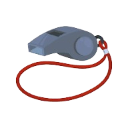

Wait, why do we need a fire extinguisher and a whistle?
?

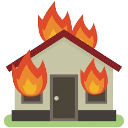
That's a great question, Bandana! Earthquakes can often cause fires from wires in our houses, so it's good to keep a fire extinguisher on hand. A whistle is helpful in case of emergencies, and when you need to get attention quickly.


- Full access to our public library
- Save favorite books
- Interact with authors
Read and find out!
What is an earthquake?
Stay educated,
safe,
and excited with
Malana and Bandana!
- < BEGINNING
- END >
-
DOWNLOAD
-
LIKE(1)
-
COMMENT()
-
SHARE
-
SAVE
-
BUY THIS BOOK
(from $7.79+) -
BUY THIS BOOK
(from $7.79+) - DOWNLOAD
- LIKE (1)
- COMMENT ()
- SHARE
- SAVE
- Report
-
BUY
-
LIKE(1)
-
COMMENT()
-
SHARE
- Excessive Violence
- Harassment
- Offensive Pictures
- Spelling & Grammar Errors
- Unfinished
- Other Problem





COMMENTS
Click 'X' to report any negative comments. Thanks!