“Build a Kit | Ready.Gov.” Build a Kit, Ready, www.ready.gov/kit. Accessed 17 Apr. 2026.
“Can You Predict Earthquakes?” USGS, 29 Sept. 2025, www.usgs.gov/faqs/can-you-predict-earthquakes.
Dupuis, Emilie Richardson. “Countries with the Highest Risk of Earthquakes.” RoughMaps, www.roughmaps.com/destinations/20-countries-highest-risk-earthquakes-1763586861. Accessed 16 Apr. 2026.
“Earthquakes | Ready.Gov.” Earthquakes, www.ready.gov/earthquakes. Accessed 17 Apr. 2026.
Work Cited

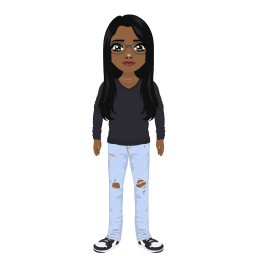
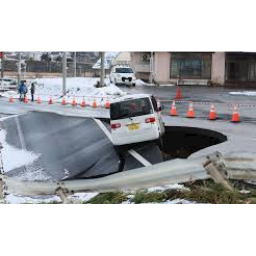
TV: People are hurt after a 7.5 magnitude earthquake hits Japan.
Wow..

TV: Magnitude is how strong something is.
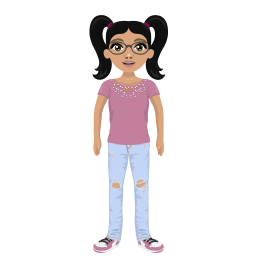
Okay, kiddo, time for bed. Turn off the TV.
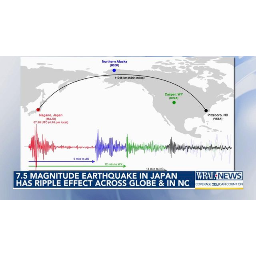
TV: Japan has one of the most earthquakes.
Okay mama.
Mom, what are earthquakes?
It's when the ground shakes because of rocks underground move .
The ground we are on is like a giant puzzle! We call these pieces tectonic plates.
They move very slowly. A theory is that the plates were all connected, then they moved away. Making contients.

A theory is that earthquakes come from energy being let go in rocks. This is called the Elastic Rebound Theory.
A theory is a guess that explains how our world works.
As they move, the plates get stuck together. Like bubble gum in hair! Earthquakes come from transform boundaries.
They bump and slide with eachother and get stuck.
They try to move away, building up pressure. Pressure is like drinking out of a straw.
BOOM! The plates get free, slipping from each other.
The point in the Earth where the earthquake starts is called the focus.
The area at the top of the focus is called the epicenter
The giant crack where the rocks moved from is called a fault.
That movement makes an Earthquake.
What happens during an Earthquake?
The ground shakes.
Rumble, wiggling, shaking happens around us.
What makes the ground shake, Mom?
They are called seismic waves.
What are seismic waves?
Seismic waves are like ripples in a pond.
Instead, they go through the ground. There are three types called P-waves, S-waves, and Surface waves.
The P means Primary waves.
They are speedy, fast and arrive first.
S stands for Secondary waves.
It arrives second, slow as a turtle, but gives a big shake as strong as a bear.
Scientists use a seismograph to detect them
- Full access to our public library
- Save favorite books
- Interact with authors
- < BEGINNING
- END >
-
DOWNLOAD
-
LIKE(1)
-
COMMENT()
-
SHARE
-
SAVE
-
BUY THIS BOOK
(from $8.99+) -
BUY THIS BOOK
(from $8.99+) - DOWNLOAD
- LIKE (1)
- COMMENT ()
- SHARE
- SAVE
- Report
-
BUY
-
LIKE(1)
-
COMMENT()
-
SHARE
- Excessive Violence
- Harassment
- Offensive Pictures
- Spelling & Grammar Errors
- Unfinished
- Other Problem





COMMENTS
Click 'X' to report any negative comments. Thanks!