


Where does the carpet chameleon live, and what is it's habitat like?
The carpet chameleon inhabits the central lands of Madagascar, in environments such as forests, suburban gardens, and scrublands.
Their habitats are dense and bushy, and this is because they require plants to climb, hide, and hydrate. Thier habitats are usually around the 62-degree to 84-degree range
How many offspring in one season?
The average amount of eggs laid per season by the Carpet Chameleons is about 8-23 eggs, and there are chances of 5-25
What does the Carpet Chameleon eat, and how long does it live?
Carpet Chameleons eat all types of different insects, some of which include crickets, silworms, flies, and dubia roaches. These all provide the Chameleon with necessary nutrients like calcium.
Carpet Chameleons have a very short life expectancy, which is only about 2-3 years, and 5 if they are lucky. This all results in a fast-paced life-cycle, which also means reaching sexual maturity in only 6 months.
What are some different variations in my species
The Carpet Chameleon reaches about 6.7 to 9.8 inches at full maturity, and it weighs about 13 to 15 grams. Male Carpet Chameleons usually display colors of green, yellow, and white, while females are usually blue, orange, yellow, and green
Adaptations
They have adapted the ability to rapidly change color, a long, sticky tongue to catch insects and bugs, and toes that evolved into a pincer-like shape to latch onto trees.
How do these adaptations allow them to survive and reproduce
These adaptations allow them to live better in their environment, both with increased area to travel with specially adapted toes, the ability to catch prey from far away with their tongue, and hide from their predators with the ability to rapidly change their color.
Two homologous structures shared between humans and the carpet chameleons
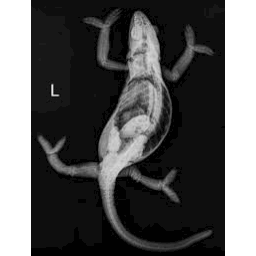
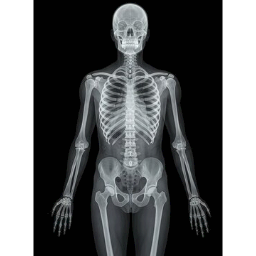
Humans and Carpet Chameleons share tetrapod limbs, which means they have almost the same limb bones, like the femur, tibia, and fibula, and the humerus, radius, and ulna. They also share the cranium, or better known as the skull. These both share the same function of protecting the brain


vestigial structures
A vestigial structure found on the carpet chameleon is its tiny atrophied venom glands in the mouth area. Scientists discovered that they still possess tiny venom glands, but these glands only produce harmless amounts and are no longer useful for hunting or defense. Because these glands are present but are not functional, they are vestigial structures
What is was used for?
Scientists believe the venom glands were once more functional in ancient ancestors. Earlier lizard ancestors may have used venom to help attack prey, weaken insects or small animals, or protect themselves from predators.
The carpet chameleon became more specialized for catching prey with its long, sticky tongue, camouflage, and stealth. Since venom was no longer necessary to survive, the venom glands shrank over time and lost most of their function.
Why did it become vestigial?
- Full access to our public library
- Save favorite books
- Interact with authors

- < BEGINNING
- END >
-
DOWNLOAD
-
LIKE
-
COMMENT()
-
SHARE
-
SAVE
-
BUY THIS BOOK
(from $2.99+) -
BUY THIS BOOK
(from $2.99+) - DOWNLOAD
- LIKE
- COMMENT ()
- SHARE
- SAVE
- Report
-
BUY
-
LIKE
-
COMMENT()
-
SHARE
- Excessive Violence
- Harassment
- Offensive Pictures
- Spelling & Grammar Errors
- Unfinished
- Other Problem

COMMENTS
Click 'X' to report any negative comments. Thanks!