





To Amelia AirheartThe woman with a big Heart
This book was created and published on StoryJumper™
©2014 StoryJumper, Inc. All rights reserved.
Publish your own children's book:
www.storyjumper.com


There are currently 264 known monkey species.
Apes are not monkeys.
Some monkeys live on the ground, while others live in trees.
Different monkey species eat a variety of foods, such as fruit, insects,
flowers, leaves and reptiles.
Groups of monkeys are known as a ‘tribe’, ‘troop’ or ‘mission’.
The Pygmy Marmoset is the smallest type of monkey, with adults
weighing between 120 and 140 grams.
The Mandrill is the largest type of monkey, with adult males weighing
up to 35 kg.


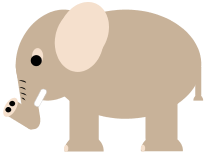
There are two types of elephant, the Asian elephant and the African
elephant.
Elephants are the largest land-living mammal in the world.
Female elephants are called cows. They start to have calves when they
are about 12 years old and they are pregnant for 22 months.
An elephant can use its tusks to dig for ground water. An adult elephant
needs to drink around 210 litres of water a day.
Elephants have large, thin ears. Their ears are made up of a complex
network of blood vessels which help regulate their temperature. Blood is
circulated through their ears to cool them down in hot climates.


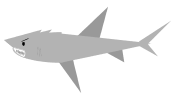
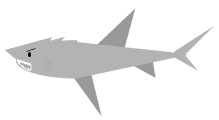
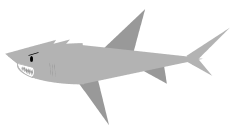
Sharks do not have a single bone in their bodies. Instead they have a
skeleton made up of cartilage; the same type of tough, flexible tissue
that makes up human ears and noses.
Sharks have outstanding hearing. They can hear a fish thrashing in the
water from as far as 500 metres away!
If a shark was put into a large swimming pool, it would be able to
smell a single drop of blood in the water.
A pup (baby shark) is born ready to take care of itself. The mother
shark leaves the pup to fend for itself and the pup usually makes a
fast get away before the mother tries to eat it!
Great whites are the deadliest shark.


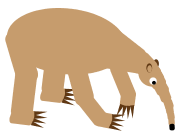
Anteaters are edentate animals—they have no teeth.
But their long tongues are more than sufficient to lap up
the 35,000 ants and termites they swallow whole each
day.
The anteater uses its sharp claws to tear an opening into
an anthill and put its long snout and efficient tongue to
work. But it has to eat quickly, flicking its tongue up to
160 times per minute. Ants fight back with painful stings,
so an anteater may spend only a minute feasting on
each mound. Anteaters never destroy a nest, preferring
to return and feed again in the future.
You've previewed 9 of 15 pages.
To read more:
Click Sign Up (Free)- Full access to our public library
- Save favorite books
- Interact with authors

- < BEGINNING
- END >
-
DOWNLOAD
-
LIKE(12)
-
COMMENT()
-
SHARE
-
SAVE
-
BUY THIS BOOK
(from $2.99+) -
BUY THIS BOOK
(from $2.99+) - DOWNLOAD
- LIKE (12)
- COMMENT ()
- SHARE
- SAVE
- Report
-
BUY
-
LIKE(12)
-
COMMENT()
-
SHARE
- Excessive Violence
- Harassment
- Offensive Pictures
- Spelling & Grammar Errors
- Unfinished
- Other Problem

COMMENTS
Click 'X' to report any negative comments. Thanks!