
This book was created and published on StoryJumper™
©2015 StoryJumper, Inc. All rights reserved.
Publish your own children's book:
www.storyjumper.com


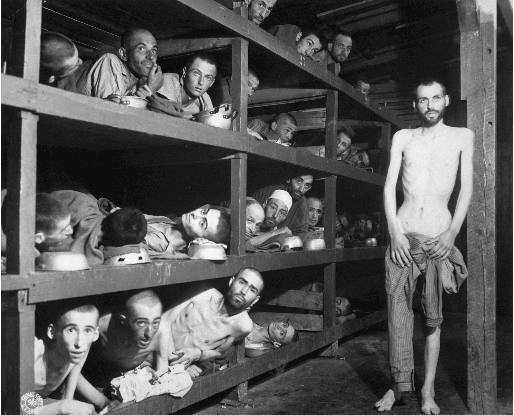
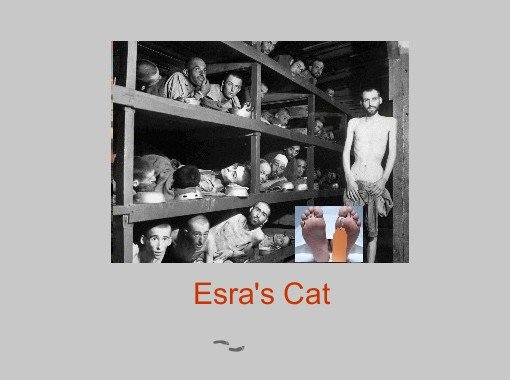
Chapter 1 Title: Sighet's Blind Eye
Summary of Chapter One:
* Wiesel met Moche the Beadle, a poor man in the community,
who became a mentor and a teacher to him (in relation to the
cabbalistic texts).
* Moche the Beadle was taken prisoner by the Gestapo and,
after surviving, tried to tell people his story to warn them, but
they didn't believe him.
* Eventually, German Gestapo appeared in Sighet, and after
living for sometime in the ghetto, Wiesel and his family were
sealed in a cattle car for deportation, which had 80 people per
car.
Symbol:
The symbol of a blind eye stands for denial.
This concept is shown in chapter one when
Moche the Beadle tried to warn all the towns-
people about the horrors of the Germans, but no
one would listen to him. They decided to turn a blind
eye to him. Therefore, this is an appropriate symbol for Wiesel
to choose.

Quote:
"Optimism soon revived." (page 19)
In the fifth grade, I got an ulcerated cornea. This left me with
extremely limited vision in my left eye after months of eye
drops and doctor visits around the clock. Instead of bringing
myself down and complaining the whole time, I rejoiced
because I got to miss a week of school! This, in hindsight, was
a very beneficial mindset to have, because instead of being
sensitive about it now, I can joke about it and it is just a little
fun fact about me. While it wasn't fun and may hinder me
later, I am not upset about it at all now.
Literary Device:
"He was as awkward as a clown" (page 13)—simile
This simile is used to clarify that Moche the Beadle was
physically awkward because clowns are usually associated as
being clumsy, which is what Wiesel wanted to help the reader
understand.
Chapter 2 Title: The Last Stop for Hope
Summary:
-The train stops in Hungary, where an officer tells the
passengers that anyone caught hiding gold, silver, or watches
will be shot. Madame Schächter begins screaming about a fire
that no one can see but her.
-The Jews arrive at the Auschwitz camp and thank God for
their haven. Once the excitement somewhat wears off and
people head to sleep, Madame Schächter again screams about
the fire; this time, it's real and is accompanied by a heinous
stench.
Symbol:
The symbool of a gasp stands for
realization. The passengers on the train
spent the whole ride shushing Madame
Schächter because she was screaming
about fire, and only when they arrive at
the camp do they truly understand why
she must have been screaming.

Quote: "Here was a sudden release from the terrors of the
previous night."
This quote reminds me of a tornado warning. It can be
terrifying trying to keep calm while it seems that the Earth is
against you, but inevitably the warning will be over and you'll
be allowed to come out of hiding in a closet or the basement.
You'll see all your belongings and realize how materialistic we
all are, but you'll simultaneously be grateful that it all
survived. The morning after a late-night tornado warning can
feel surreal.
Literary Device:
Wiesel uses foreshadowing with Madame Schächter's screams
about fire to create suspense. We, as readers with previous
knowledge of the Holocaust, know that it was common for the
camps to have crematoriums. The Jews in the train had no
idea. Therefore, the reader is feeling the uneasiness of
knowing what they may stumble upon.
Chapter 3 Title: Darkness Prevails
Summary:
-A fellow prisoner rushes up to Wiesel and his father shortly after his mother
and sisters were sent to the right. The prisoner urges the men to lie about
their ages.
-The men, using their false ages, are sent to the left. They are deemed fit to
work. They are sent toward crematoriums, then turn left before reaching the
graves. This is where Wiesel lost his faith. This is where the Jews lost their
hope.
-After a very brief moment of rejuvenated hope as the Jews are reunited
with friends and family, optimism soon turns back to weariness.
-Elie lies to Stein, an apparent family member. He says that Stein's wife and
children are still alive, and this leads to Stein sneaking Elie extra rations.
-The man in charge of Elie's block of men was fired for being too humane,
and the replacement was a savage.
Symbol:
The symbol of an eclipse represents a
sudden and long period of darkness
where there was previously light. All of
the residents of Auschwitz are feeling
the stresses and presences of death.
This is taking a toll on them. Many have
lost their faith, and many have lost their
soul. This represents an overall
darkness in their lives.

Quote:
"The student of the Talmud, the child I was, has been
consumed in the flames." (page 46)
This is significant because we have all gone through
troublesome times (though none to this degree) that have
made us want to give up. Often times, there are points in life
that demand we grow up, that we leave the past behind to
live despite whatever monstrosities may be dragging us down.
This is where it becomes impactful to the reader to see that
even when it seems all hope of who you once were is lost, you
may still make it out the other side.
Literary Device:
"And he [Stein] was so thin himself, so dried up, so weak...."
(page 53)
Wiesel uses this unusual punctuation to emphasize the point
that Stein was weak and wasting away. It is meant to cause a
pause in the reader's mind so they can think about what
effects the camps are having on these men.
Chapter 4 Title: Death
Summary:
- Wiesel is forced to give up his gold crown to a man that is
later imprisoned for trafficking.
- Wiesel meets a French girl who (presumably) can't speak
German. She shocks him by reassuring him in flawless
German.
- Wiesel is whipped 25 times for seeing Idek with a half-naked
Polish girl. He is threatened with 5 more if he tells anyone
what he saw.
- Just before an air raid, a man is shot for dunking his head in
a pot of soup.
- A man is hanged for stealing during the raid.
- A young boy is hanged with two other men, the former for
not revealing information during torture and the latter for
concealing weapons.
Quote:
"A child with a refined and beautiful face, unheard of in this
camp." (page 70)
This reminds me of band camp, where there were a couple of
girls that would compliment me in almost a mean way for
taking pride in my appearance, even at band. It was always
frustrating, having them always on my back, but I understood
where they were coming from. We were at band to learn and
become better people and better marchers and musicians, not
to woo anyone. However, I was completing these tasks well
enough that I figured it would be okay to make myself more
confident by the way I dressed.
Symbol:
The symbol of the handcuffs stands for
the punishment in this chapter. From
the men and boys hanged, to the man
shot for stealing soup, to Wiesel's
lashings, this concept is prevalent in
this chapter.

Literary Device:
Wiesel uses imagery when he says, "That night the soup
tasted of corpses." He did this to enliven this part of the story
and to emphasize the toll this death had on the men. Because
no one in our incredibly privileged town of Planfield will ever
experience the pain of the Holocaust, Wiesel can use phrases
such as these to attempt tconvey the pain.
Chapter 5 Title: Last Call
Summary:
- On the Jewish New Year, Wiesel and his father find it hard to
praise God and not be angry with him.
- A man suggests that Elie runs past Dr. Mengele during the
selection process, and both he and his father pass.
- The second selection comes, and ten people are chosen for
further inspection. Elie's father happens to be one of them. He
gives Elie a knife and a spoon, that he returns once he learns
that his father passed the second time.
- Akiba Drumer is taken by the selection. Like a rabbi that Elie
had known, once Drumer lost his faith in God, he lost his will
to keep on living. He knew that he'd be chosen, so he asked
all the men to recite the Kaddish as he was burned. The men
forgot.
Summary:
-Wiesel's foot begins to swell because of the cold. He has
surgery, and stays in the hospital to rest for another two
weeks.
-Two days after Wiesel's operation, there's a rumor that the
Red Army is advancing on Buna. This means evacuation.
Elie, considered an invalid, is instructed to stay in the hospital
in order to be liberated, but he disobeys to find his father.
-The men spend their last night in Buna. The men march on,
through the endless snow, to an unknown destination.
Symbol:
The red question mark stands for the rabbi,
Akiba Drumer, Elie, and his father's sudden
questioning of God. With all that's happening
in their lives, these men are having trouble
thinking that God has abandoned them. The
question mark is red because red is the color
often associated with anger, which has taken
hold of everyone in these camps.

Quote:
"He would have liked to say so many things." (page 81)
This relates to me because I am a person that is very
conscious of the way my words will come across, and I am
very empathetic to the people I am speaking with. I also have
very strong feelings and opinions, so I often find it hard to
find a happy medium. Therefore, there are many times where
I am unhappy with important conversations that go down,
because I feel that my feelings are not properly conveyed.
Literary Device:
Wiesel uses situational irony to create suspense. The reader
has been rooting for Elie and his survival throughout the
novel, and to hear that had he just stayed in the hospital he
would've been freed makes the reader feel tense and full of
emotion and lost hope, similar to that that he must have felt.
Chapter 6 Title: The Race for Survival
Summary:
-The men are forced to run nearly 50 miles over the course of
many hours. The men are so exhausted, but are afraid of
stopping for fear of being shot or trampled.
-After arriving to the next building, Elie and his father, among
many men, are afraid to fall asleep, because they might die in
their sleep. They would not be the first to suffer this fate.
-Elie recalls a boy's death by trampling after the boy's father
comes asking. After realizing what the boy had done to betray
his father, Elie vows never to do the same.
-After running for several more hours, a boy named Juliek dies
after playing himself to death on his violin.
-Elie leaves his spot on the right to collect his father from the
left. The confusion causes a few deaths.
Symbol:
The symbol of anesthesia stands for
the numbness felt by the men, not only
through the cold of the snow, but also
their apathy toward death anymore.

You've previewed 25 of 39 pages.
To read more:
Click Sign Up (Free)- Full access to our public library
- Save favorite books
- Interact with authors

- < BEGINNING
- END >
-
DOWNLOAD
-
LIKE(2)
-
COMMENT()
-
SHARE
-
SAVE
-
BUY THIS BOOK
(from $7.79+) -
BUY THIS BOOK
(from $7.79+) - DOWNLOAD
- LIKE (2)
- COMMENT ()
- SHARE
- SAVE
- Report
-
BUY
-
LIKE(2)
-
COMMENT()
-
SHARE
- Excessive Violence
- Harassment
- Offensive Pictures
- Spelling & Grammar Errors
- Unfinished
- Other Problem





COMMENTS
Click 'X' to report any negative comments. Thanks!