 For Anatomy & Physiology
This book was created and published on StoryJumper™
©2015 StoryJumper, Inc. All rights reserved.
Publish your own children's book:
www.storyjumper.com

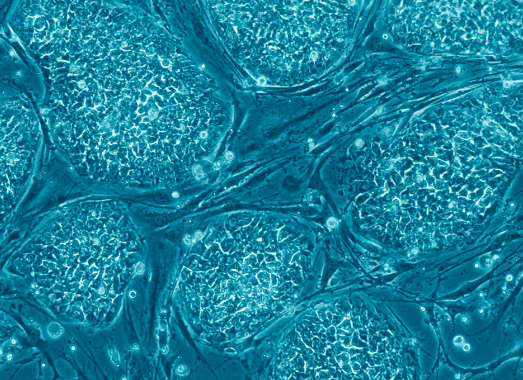

Cells are the basic unit of life. Organelles are
structures within cells and cells make up tissues,
which work together to complete a specific function.
Tissues in turn compose organs. Organs come in
systems and all of the systems of organs come to
make your body.
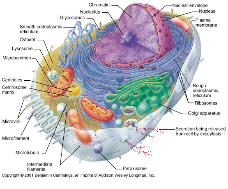

Organelles are structures within cells that perform
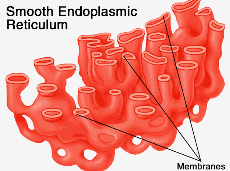
specific functions. One such organelle is the smooth
endoplasmic reticulum(smooth ER)
The smooth ER is responsible for synthesizing lipids,
absorbing fats from the digestive tract, and metabolizing
drugs in the cell. The smooth ER is cylindrical.
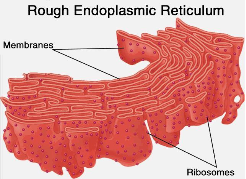
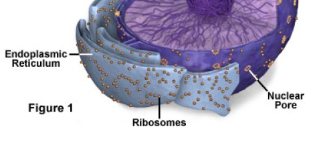
The rough endoplasmic reticulum (rough ER) is
responsible for synthesizing proteins that will move
through it and then travel to another organelle and the
Golgi apparatus for more processing.
The rough ER is covered with dot-like structures called
ribosomes. The ribosomes are where protein synthesis
occurs.
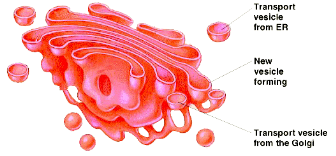
The Golgi apparatus is a stack of usually six membranous
sacs that are relatively flat in shape. This organelle is
responsible for refining, packaging, and transporting
synthesized proteins coming from the ER.
These proteins arrive at the Golgi apparatus inside of
vesicles.
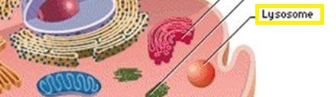
Lysosomes are small membranous sacs that contain
enzymes. The acidic pH of them allows the lysosomal
enzymes to function. Lysosomal enzymes break down
both nutritional molecules and foreign ones.
For example, lysosomal enzymes break down
cholesterol, toxins, and drugs in liver cells.
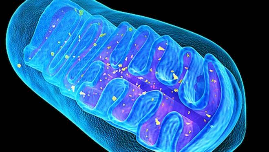
Mitochondria are often referred to as the powerhouse of
the cell because hey are the site of vital chemical
reactions for capturing and storing energy from nutrient
molecules.
Mitochondria are sacs that are long and fluid filled. They
have an inner and outer layer.
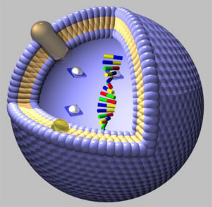
Vesicles are membranous sacs that are responsible for
storing or transporting substances within and between
cells.
Ribosomes are where protein synthesis occurs.
Ribosomes are connected to the membranes of the
endoplasmic reticulum, especially that of the rough ER.
They are also found throughout the cell in cytoplasm.
Clusters of ribosomes found in cytoplasm are called
polysomes and have the ability to distribute large
amounts of protein.
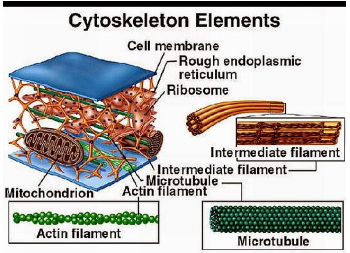
The cytoskeleton, the skeleton of the cell, is an extensive
network of protein rods and tubules that forms a
framework inside of the cytoplasm.
You've previewed 11 of 18 pages.
To read more:
Click Sign Up (Free)- Full access to our public library
- Save favorite books
- Interact with authors

- < BEGINNING
- END >
-
DOWNLOAD
-
LIKE
-
COMMENT()
-
SHARE
-
SAVE
-
BUY THIS BOOK
(from $3.59+) -
BUY THIS BOOK
(from $3.59+) - DOWNLOAD
- LIKE
- COMMENT ()
- SHARE
- SAVE
- Report
-
BUY
-
LIKE
-
COMMENT()
-
SHARE
- Excessive Violence
- Harassment
- Offensive Pictures
- Spelling & Grammar Errors
- Unfinished
- Other Problem





COMMENTS
Click 'X' to report any negative comments. Thanks!