This book is dedicated to...
My dog for being fluffy.
The most interesting part of this unit for me was learning about the evidence Wegener compiled in order to make his case. Before this, I was not aware of the matching fossils in South America and Africa or the matching rock samples.

Created & published on StoryJumper™ ©2026 StoryJumper, Inc.
All rights reserved. Sources: storyjumper.com/attribution
Preview audio:
storyj.mp/aehaxp793x2i
2
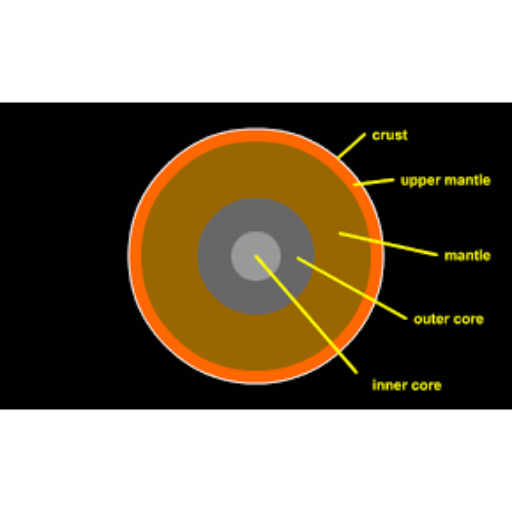
Earth's Layers
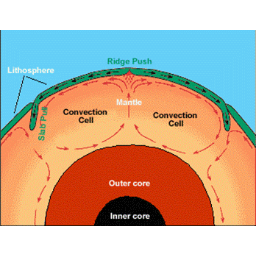
A convection current is when hot matter rises and colder matter falls because of uneven heating. These convection currents are important because the tectonic plates are on top of the mantle where the convection currents take place, and they are the cause of the plates' movement.
3
4
Continental Drift
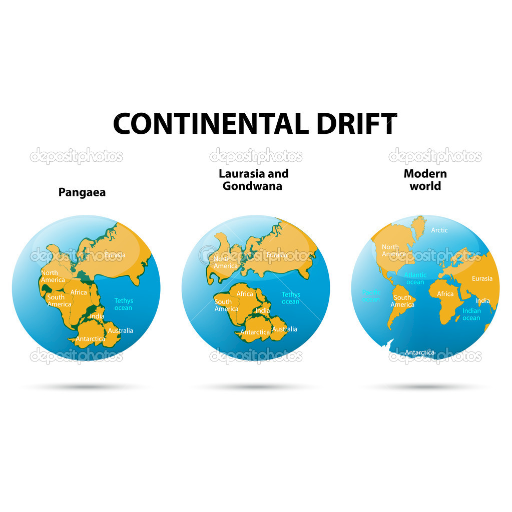
In the early twentieth century, a geophysicist named Alfred Wegener proposed the idea of Continental Drift, stating that all the continents were constantly moving and at one point in the past had all been connected in a super-continent called Pangaea. His evidence was a pair of matching fossils from an animal and a fern as well as matching rock samples from two mountain ranges in eastern South America and western Africa, and the fact that the continents looked like they could fit together like a puzzle. However, other scientists didn't believe him because he didn't know why the continents moved.
5
6
Sea-Floor Spreading
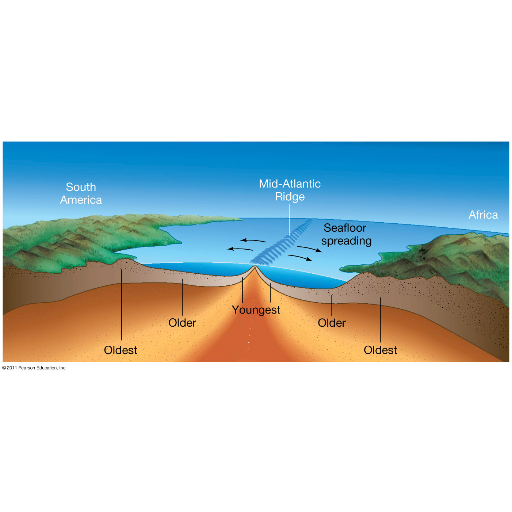
In the early twentieth century, a geologist named Harry Hess proposed the idea of Sea-Floor Spreading. As magma comes through mid-ocean rifts because of the convection currents in the mantle, it hardens and spreads the oceanic plates apart. His evidence was that rocks nearer to rifts were younger than rocks farther from the rifts. Also, similar bands of matching rock were found on either side of the rifts. Finally, from earthquake data, there was proof that the oceanic crust was sinking into the mantle at trenches, which was where the magma that rose up came from. This theory was important to Wegener's theory of continental drift because it provided a reason for why the plates moved.
7
8
Plate Tectonics
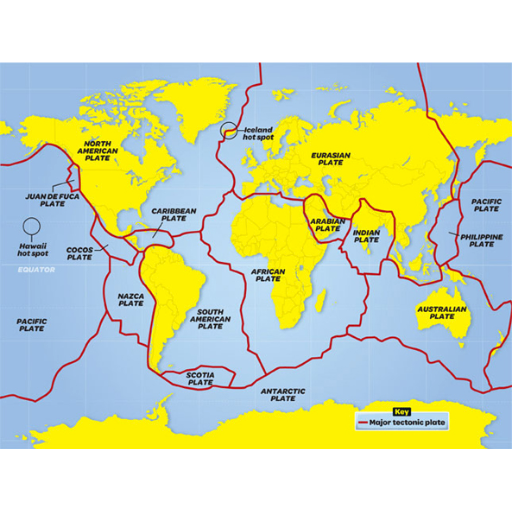
The theory of Plate Tectonics is that the lithosphere, the rigid outer layer of the earth, is divided into large slabs of rock, or plates, that move very slowly and cause natural disasters such as earthquakes through the various movements they make. This theory is also part of many other theories, such as the theory of Continental Drift and the theory of Seafloor Spreading.
9
10
Types of Stress
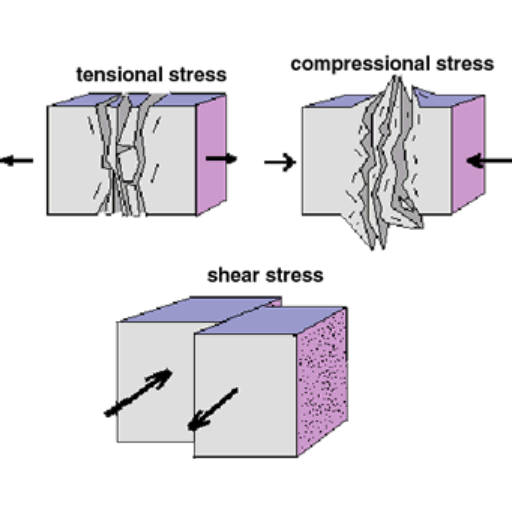
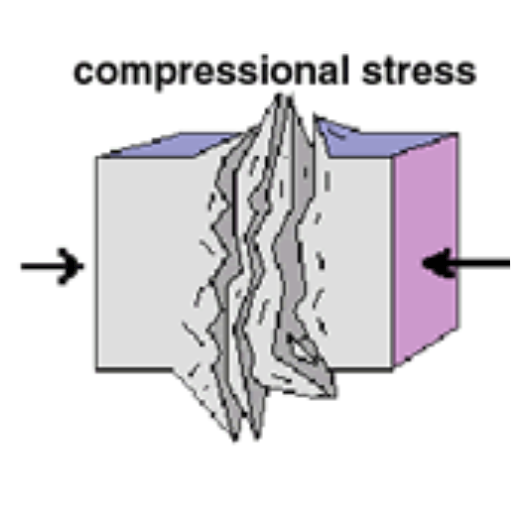
There are three types of stress. These are compression, tension, and shearing. Compression is when two plates come towards each other. Tension is when two plates move away from each other. Shearing is when two plates move past each other in opposite directions.
11
12
Convergent Boundary
A convergent boundary is created by compression, where two plates are coming together. This type of boundary is where mountains, volcanoes, or trenches can form.
13
Benefits:
- Full access to our public library
- Save favorite books
- Interact with authors
READ
23
- < BEGINNING
- END >
-
DOWNLOAD
-
LIKE
-
COMMENT()
-
SHARE
-
SAVE
BUY THIS BOOK (from $4.19+)
-
BUY THIS BOOK
(from $4.19+) -
BUY THIS BOOK
(from $4.19+) - DOWNLOAD
- LIKE
- COMMENT ()
- SHARE
- SAVE
- Report
Liked By
X
Encourage this author
-
BUY
-
LIKE
-
COMMENT()
-
SHARE
Problem with this book
X
- Excessive Violence
- Harassment
- Offensive Pictures
- Spelling & Grammar Errors
- Unfinished
- Other Problem
Which pages have problems?
Please describe the problem:
left text
right text
"The Changing Earth"
This book provides an overview of Earth's layers, continental drift, sea-floor spreading, plate tectonics, types of stress, and crustal features.
(22 pages)
Privacy level:
PUBLIC
10 reads
Report





COMMENTS
Click 'X' to report any negative comments. Thanks!