I would like to thank everyone that made this book possible, specifically my dog.
The most interesting thing I learned in this unit is when I learned about divergent plates. This is because I was able to learn all about rift valleys. I also was able to learn about convection currents because of this.


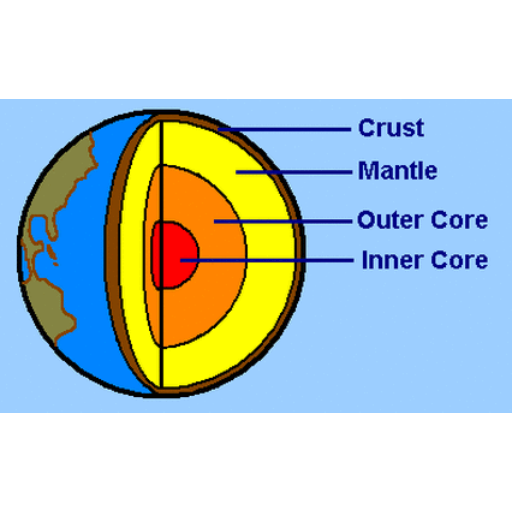
Earth's layers: A diagram
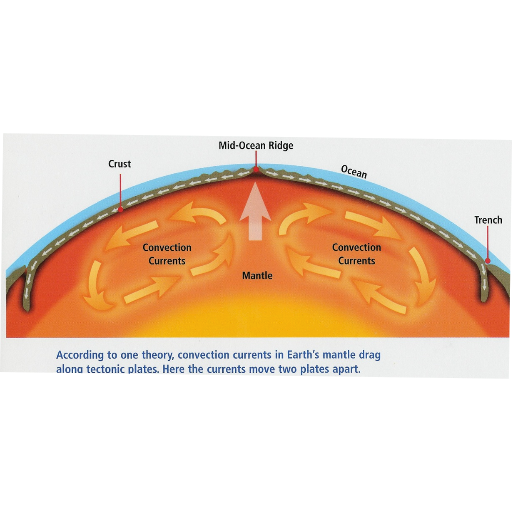
Within the mantle, convection currents move the molten rock (at a plastic consistency) around, causing the crust on top of it to move around. Convection currents are caused by the fact that hot liquids go up, while cold liquids go down. This makes it important to the plate tectonic theory, because it explains how the continents could move.

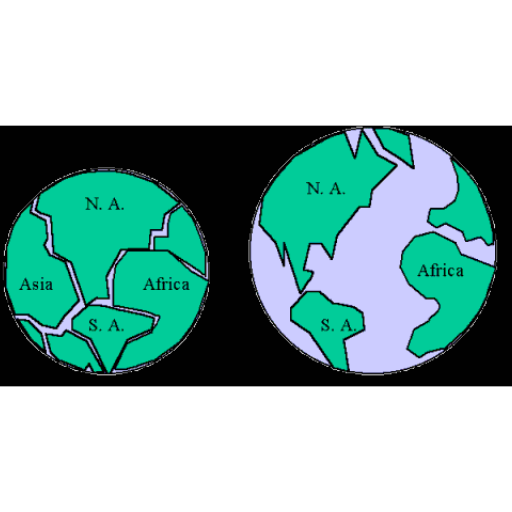
Continental Drift: A diagram
all continents were once in a super continent called Pangea, as shown in the picture above. Then, Pangea split apart to form the continent as

The Continental Drift theory was proposed by Alfred Wegner, and stated that
we know it today. There are 4 pieces of evidence that supported this theory:
- There was a seed plant that was found in two continents, but that couldn't have crossed the ocean in between. There was also a fresh water reptile that did the same thing as the plant.
- The continents fit together like a puzzle
- Coal was found in non-tropical areas
- Mountain-range lines formed the same way on different continents
This theory was doubted by other scientists because Alfred could not explain how this happened.
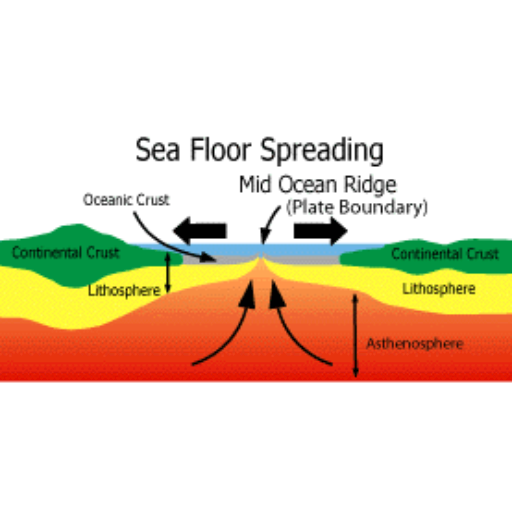
Sea-floor spreading

The Sea-floor Spreading Theory, proposed by Henry Wess, is the theory that new Oceanic Crust is created as the old crust widens out. A piece of evidence for this is the fact that new material is erupting along the mid-ocean ridge. Another piece of evidence is the fact that there are magnetic stripes in the ocean's rocks, which
wasn't how it was when the poles originally reversed. A final piece of evidence is the fact that drilling samples taken around a mid ocean ridge show that rock closer to the ridge is younger. This theory was an important discovery because it explained how the Continental Drift Theory could be possible.
Plate Tectonics

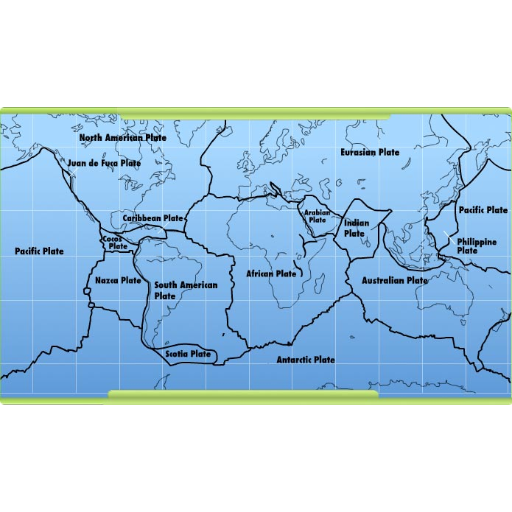
The theory of plate tectonics combines what scientists knew about continental drift and sea floor spreading into a single theory. It states that the lithosphere is broken into separate sections called plates. The plates fit closely together along the cracks. Most of the plate boundaries are found on the ocean floor. As plates move they collide, pull apart, and grind past each
other. No plate can move without affecting other plates. The plates of the lithosphere float on top of the asthenosphere. The movement in the asthenosphere caused by convection currents causes the plate to move.
Types of stress

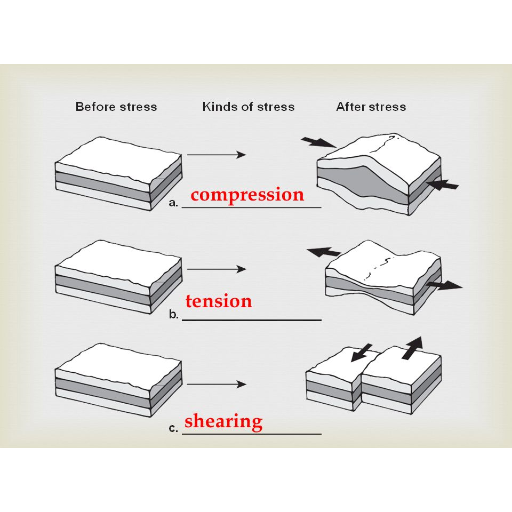
There are many different types of stress where two plates meet at a tectonic boundary. The first type is compression, and it is where two plates come together.
The second type is tension, and it is where two plates diverge.
The third type is shearing, and it is where two plates slide past each other.
Convergent boundary

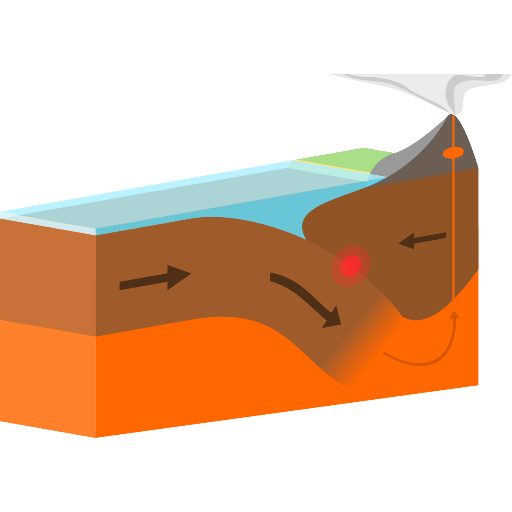
The plates move together, pushing against each other. When it is an oceanic plate and a continental plate, is forms a subduction zone, which could form a volcano and also an ocean trench, as shown in the picture.
When two of the same type of plates converge, mountains can be formed.
- Full access to our public library
- Save favorite books
- Interact with authors

- < BEGINNING
- END >
-
DOWNLOAD
-
LIKE
-
COMMENT()
-
SHARE
-
SAVE
-
BUY THIS BOOK
(from $3.99+) -
BUY THIS BOOK
(from $3.99+) - DOWNLOAD
- LIKE
- COMMENT ()
- SHARE
- SAVE
- Report
-
BUY
-
LIKE
-
COMMENT()
-
SHARE
- Excessive Violence
- Harassment
- Offensive Pictures
- Spelling & Grammar Errors
- Unfinished
- Other Problem

COMMENTS
Click 'X' to report any negative comments. Thanks!