 This took forever
 This book was created and published on StoryJumper™
©2010 StoryJumper, Inc. All rights reserved.
Publish your own children's book:
www.storyjumper.com

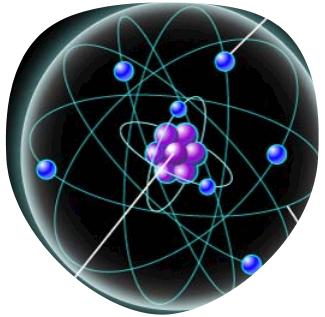

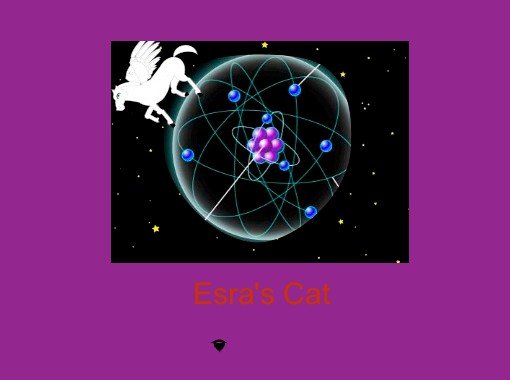
n. A unit of matter, the smallest unit of an
element, consisting of a dense, central, positively
charged nucleus surrounded by a system of
electrons, equal in number to the number of
nuclear protons, the entire structure having an
approximate diameter of 10-8 centimeter and
characteristically remaining undivided in
chemical reactions except for limited removal,
transfer, or exchange of certain electrons.


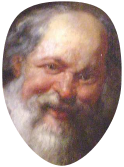


Democritus thought that it ended at
some point, a smallest possible bit of matter.
He called these basic matter particles, atoms.
For more than 2000 years nobody did
anything to continue the explorations that
the Greeks had started into the nature of
matter. Not until the early 1600's did people
begin again to question the structure of
matter.


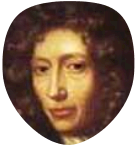

Robert Boyle Boyle published The
Skeptical Chymist. In this book he
overturned Aristotle’s conception of the four
elements and replaced it with the modern idea
of an element—namely that an element is a
substance that cannot be separated into
simpler components by chemical methods. The
Skeptical Chymist is recognized as the
foundation-stone of modern chemistry.

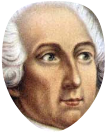


Antoine Lavoisier
In 1777 he demonstrated the
Conservation Of Matter( that being,
Matter cannot be created nor can it be
destroyed), in a chemical reaction.Then
used this to help him state the
difference between an element and a
compound.


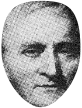




John Dalton- Proposed an "atomic
theory" with spherical solid atoms based
upon measurable properties of mass.
Dalton also proposed that each chemical
element is composed of atoms of a
single, unique type, and though they
cannot be altered or destroyed by
chemical means, they can combine to
form more complex structures (chemical
compounds).


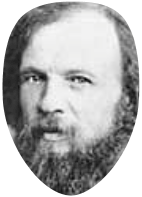


Demitri Mendeleev- Arranged
elements into 7 groups with similar
properties. He discovered that the
properties of elements "were
periodic functions of the their
atomic weights". This became
known as the Periodic Law.


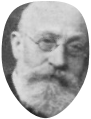


Eugen Goldstein - was a
German physicist. He was an
early investigator of discharge
tubes, the discoverer of anode
rays, and is sometimes credited
with the discovery of the proton.

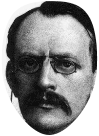


Sir Joseph John "J. J." Thomson
was a British physicist and Nobel
laureate. He is credited for the
discovery of the electron and of
isotopes, and the invention of the
mass spectrometer. Thomson was
awarded the 1906 Nobel Prize in
Physics for the discovery of the
electron and for his work on the
conduction of electricity in gases.





You've previewed 18 of 28 pages.
To read more:
Click Sign Up (Free)- Full access to our public library
- Save favorite books
- Interact with authors
- < BEGINNING
- END >
-
DOWNLOAD
-
LIKE
-
COMMENT()
-
SHARE
-
SAVE
-
BUY THIS BOOK
(from $5.59+) -
BUY THIS BOOK
(from $5.59+) - DOWNLOAD
- LIKE
- COMMENT ()
- SHARE
- SAVE
- Report
-
BUY
-
LIKE
-
COMMENT()
-
SHARE
- Excessive Violence
- Harassment
- Offensive Pictures
- Spelling & Grammar Errors
- Unfinished
- Other Problem





COMMENTS
Click 'X' to report any negative comments. Thanks!