Dedicated to Mr. Boisture, of course.



When you see something or hear something, a lot of things happen in your eyes and ears.
There are many parts of your eyes and hears that help you see and hear the world around you!

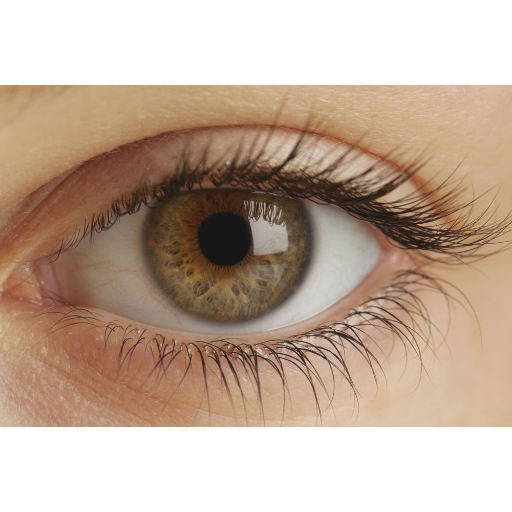
Lets start with your eyes. The outside of your eye is made up of many parts. But I'll only mention a 2.

Pupil: The pupil allows a certain amount of light into your eye.
Iris: The iris controls the pupil and helps with allowing light into the eye too!
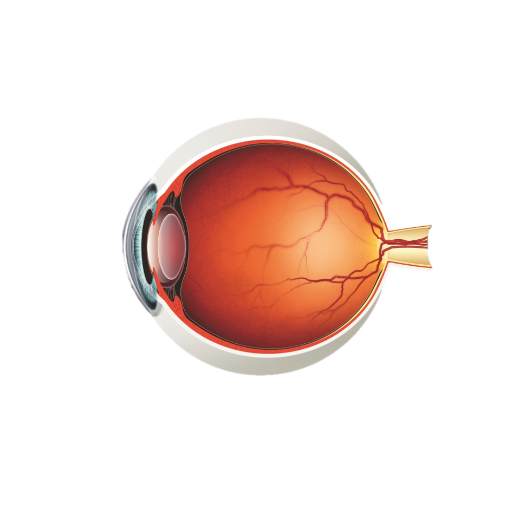
Now lets look into the inside of your eye!

Lens: The lens helps you focus on things near and far and make them clearer!

Retina: The retina takes the things you see with your eyes and turns them into messages your brain can read!

Fovea: The fovea helps you see clearly and see details!
Optic nerve: The optic nerve transfers the things you see to your brain!
Let's look closer...
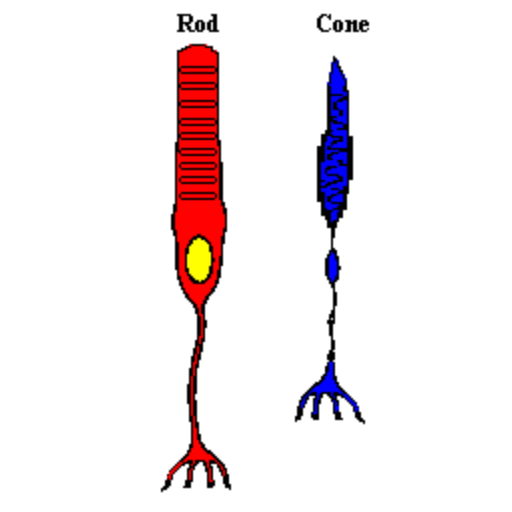
In the back of your eye, there are REALLY small rods and cones. The rods help with "peripheral vision" which is what you say see out of the corner of your eyes.
The cones help you with color vision. They come in red, green and blue. These three colors blend together to make the colors you see. This is called the "Trichromatic Theory".



Your BLIND SPOT
Did you know that you have a blind spot in your eye? This is a spot where there are no rods are cones. Want to see it? Try this!

Cover your left eye with your hand and stare at the circle. Then, move your eye to the left some more. You'll notice the X disappears! This is your blind spot! Cool, huh?
Bipolar and Ganglion Cells
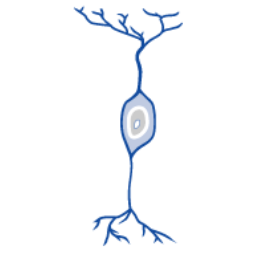
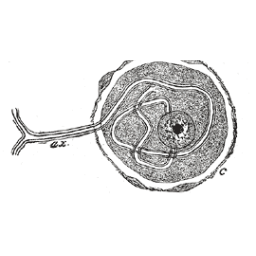
Also in the back of your eye with the rods and cones, there are two cells. The bipolar cell and the ganglion cell. The bipolar cells send information to the ganglion cells. Then, the ganglion cells send that information to the brain! They work together in a team.
Optic Chiasm/Visual Cortex
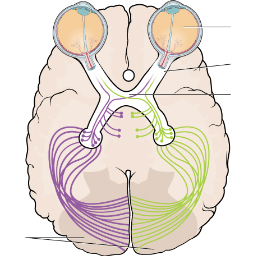
Lastly, there's a bunch of nerves, called the optic chiasm, that take all the information given from the eye and takes it over to a part of your brain called the visual cortex. This is how you know what you are seeing with your eyes!
Let's talk about colors!

Did you know colors are made up of waves? No, not the waves on the beach! Waves that look like this:
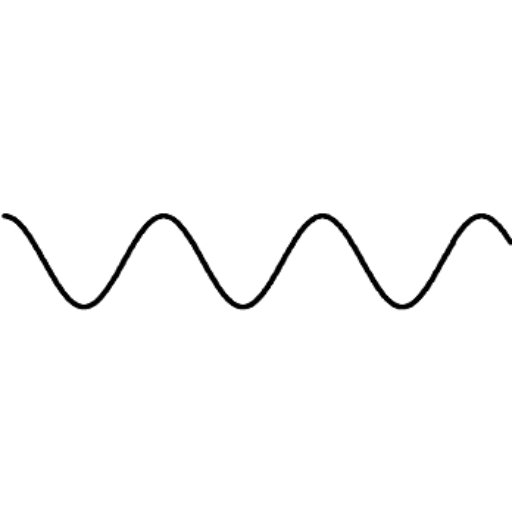
There are 2 parts of the wave that make the color what it is:

the amplitude: the amplitude, how tall/short a wave is, determines the hue of a color (reddish, blueish, greenish, etc.)
the frequency: the amount of times a wave passes through determines the brightness of the color. (low frequency = dim and high frequency = bright)
Opposite Colors
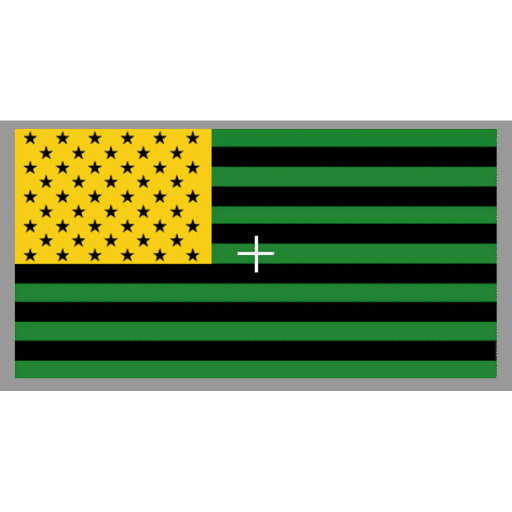
Stare at this picture for about 30 seconds. Then, look at a wall and blink a lot. Do you see the colors of the American flag? That's called an afterimage and it comes from the opposite colors. This is called the "Opponent-Process Theory".
The Electromagnetic Spectrum
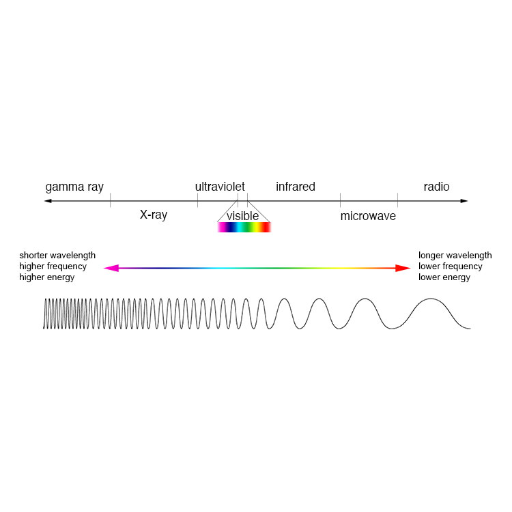
Like I mentioned before with how colors are made up of waves, specific colors are made of weaker or stronger waves. The "Electromagnetic Spectrum" shows the different waves that go with the different colors!
Let's talk about your ears!
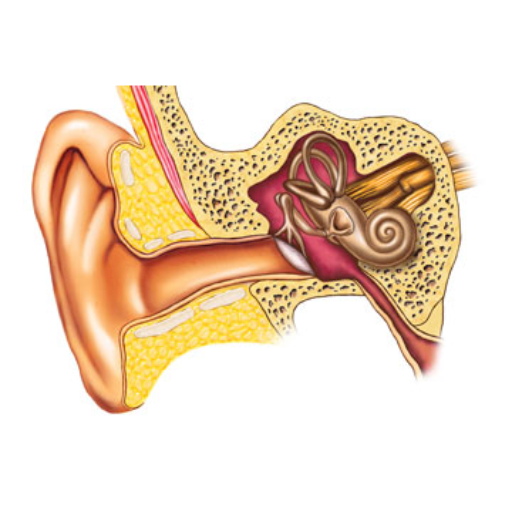
Ear Drum: Your ear drum carries sounds to bones in your ear!

Auditory Canal: Your auditory canal is like a passageway for noise to the inner ear!
Cochlea: Your cochlea transforms sounds into messages your brain can understand!
Hammer, Anvil and Strirrup: These are bones in your ear. They vibrate and cause a neural impulse to form.
Auditory Nerve: The auditory nerve takes those messages and takes them into the brain.
- Full access to our public library
- Save favorite books
- Interact with authors
- < BEGINNING
- END >
-
DOWNLOAD
-
LIKE(1)
-
COMMENT()
-
SHARE
-
SAVE
-
BUY THIS BOOK
(from $4.79+) -
BUY THIS BOOK
(from $4.79+) - DOWNLOAD
- LIKE (1)
- COMMENT ()
- SHARE
- SAVE
- Report
-
BUY
-
LIKE(1)
-
COMMENT()
-
SHARE
- Excessive Violence
- Harassment
- Offensive Pictures
- Spelling & Grammar Errors
- Unfinished
- Other Problem





COMMENTS
Click 'X' to report any negative comments. Thanks!