Dedicated to myself, for I am great.
Island Arcs are actually volcanic islands formed by convergent boundaries and cooling magma.
Mountain ranges are formed by two tectonic plates crumpling upwards.
There are three types of stress that shape the way the plates interact with each other.

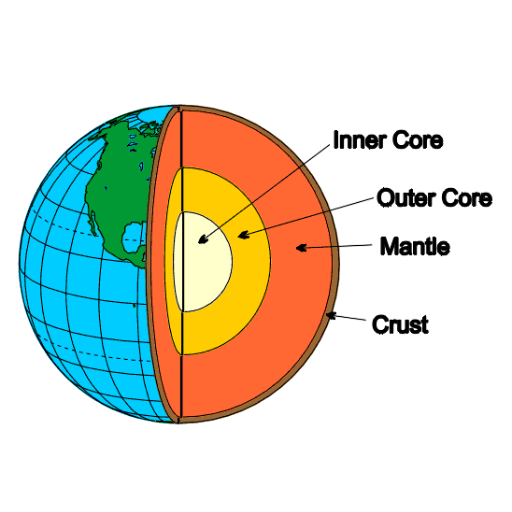
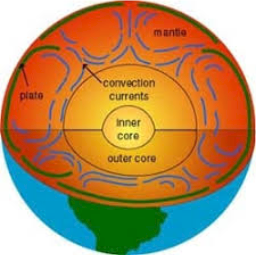
Convection Currents
Convection currents are located in the mantle.
Convection currents are the flow of matter, in this case molten rock, in a circular motion. They are caused by unequal heating, lowering the density of certain parts of the rock in the mantle which rise. Once at the top, the rock becomes denser and sinks down until it gets heated again, restarting the cycle. This constant motion of sinking and rising puts a strain on Earth's crust, which floats above the mantle, and moves the crust around.
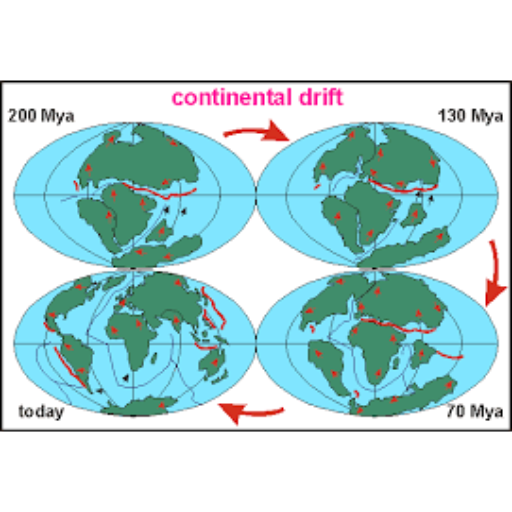
The Theory of Continental Drift, proposed by a German geologist named Alfred Wegner, stated that the continents move around constantly and once were connected in a super-continent named Pangea. Pangea, he postulated, eventually broke apart to form the continents as we know today. Wegner supported his theory with two fossils, mapping, and rock deposits:
-One of the fossils, named Glosspteris, supported his theory due to its location in multiple continents separated by ocean. The plants couldn't have spread from one continent to the next unless the continents were joined.
-Similarly, the Mesosaurus, a fossil found in multiple continents, helped Wegener's theory.
-The continents fit together like puzzle pieces, showing they could fit together.
-Coal was found in multiple locations were it couldn't have formed unless the continents were joined and their climates crossed.
Still however, many scientists were skeptical to Wegener's to the theory due to the fact that Wegener could not come up with an explanation to support his theory. Unfortunately, Wegener's theory was not accepted until later when convection currents and seafloor spreading was discovered.
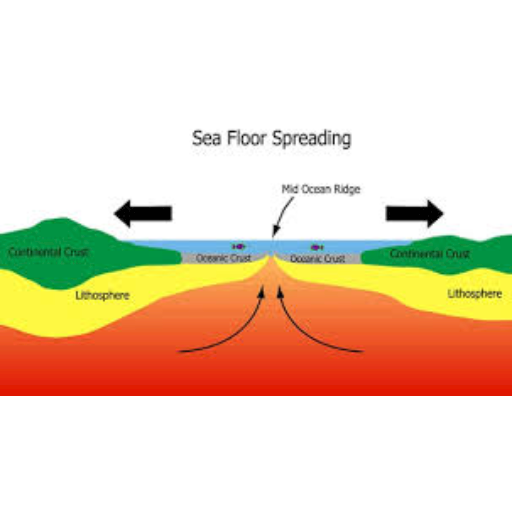
Sea Floor Spreading
Sea-floor Spreading, a theory proposed by Henry Wess, described a process continually adds new material to the ocean floor. Two plates of the crust move apart from each other, letting magma from below rise to the ocean floor and cooling to form new rock.
The theory was backed up with the observations such as:
- New molten material that erupted along these ridges and hardened quickly after contact with the water
- Drilling samples concluded rock near rifts were younger than those farther away
- Rocks that make up the ocean floor showed magnetic striping different from older rocks. When the older rocks formed, their stripes were locked in place and aligned to the old poles while the newer rocks aligned to the newly reversed poles. The difference in striping showed the rocks formed at different times.
Sea-floor spreading was instrumental in providing a reason for Wegener's continental drift: the plates moved and changed, with the expansion leading to the oceanic crust pushing up against the continental, changing the Earth's surface further.
Plate Tectonic theory
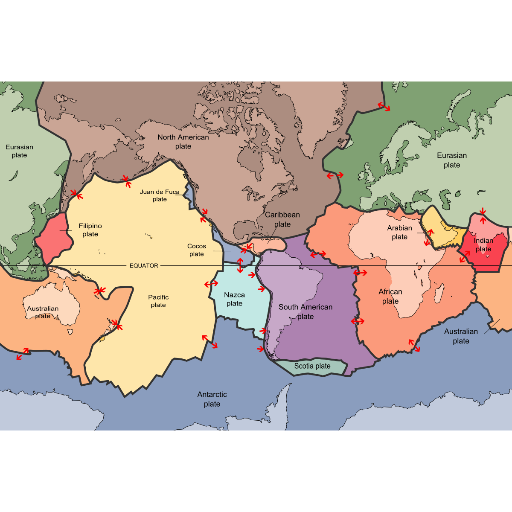
The theory of plate tectonics explains the Earth's crustal subduction, movement, and formation. Plates are separate sections of the Earth's crust and mantle (the lithosphere) that move around due to the convection currents in the layer below (asthenosphere). Combining the theory of sea-floor spreading and Wegener's Continental Drift Theory, the theory states that plates pull away, collide, and grind past each other. These three movements describe how the plates move among each other.
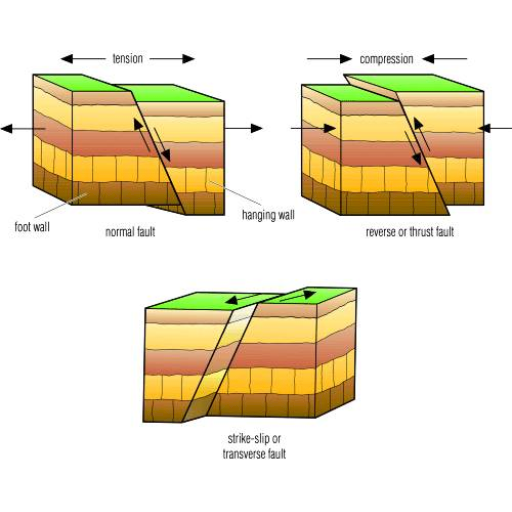
Stress is the built up potential energy a plate experiences when interacting with another plate, and releases as kinetic energy in the form tremors in the plates. These types of stress are:
Tension- plates move apart from one another, releasing energy between the two plates and giving way to the rising magma beneath
Shear- Plates slide past each other, grinding. The friction leads to build up of potential energy, which releases on the plates as tremors.
Compression- Two plates collide with each other, with the denser plate sinking below. The pressure of the two plates is quickly converted into kinetic energy, dispersing onto the plates and creating breakage in the plates themselves.
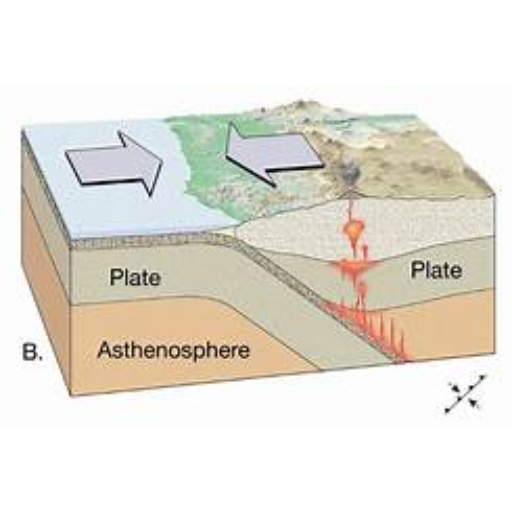
Convergent Boundary
A convergent boundary is the boundary between two plates colliding or moving towards each other. When this happens, the denser plate subducts and can create many land formations. The plate above, due to the pressure created by the subducting plates, can crumple upwards to form mountains. Magma can sometimes break through the crust and form a volcano through the weak crustal integrity near the mountains due the intense pressure. Like the mountains, a trench can form in the denser oceanic crust. Convergent boundaries can also result in island arcs, volcanic islands formed formed the released magma that have cooled into rock. This boundary gives way to many new landforms.
- Full access to our public library
- Save favorite books
- Interact with authors
- < BEGINNING
- END >
-
DOWNLOAD
-
LIKE
-
COMMENT()
-
SHARE
-
SAVE
-
BUY THIS BOOK
(from $3.99+) -
BUY THIS BOOK
(from $3.99+) - DOWNLOAD
- LIKE
- COMMENT ()
- SHARE
- SAVE
- Report
-
BUY
-
LIKE
-
COMMENT()
-
SHARE
- Excessive Violence
- Harassment
- Offensive Pictures
- Spelling & Grammar Errors
- Unfinished
- Other Problem






COMMENTS
Click 'X' to report any negative comments. Thanks!