Table of Contents
Page 15: Nixon's Presidency
Page 16: Ford and Carter's Presidency
Page 17: Reagan's Presidency
Page 18: George H. W. Bush's Presidency
Page 19: Bill Clinton's Presidency
Page 20: George W. Bush's Presidency
Page 21: Barrack Obama's Presidency
Pages 2-4: Content Vocabulary
Pages 5-6: Early Years of Vietnam
Pages 7-8: 1968
Pages 9-10: Later Years of Vietnam
Pages 11-12: 1960's Culture
Pages 13-14: Vietnam Timeline

Content Vocabulary (1/3)
Ho Chin Minh: leadere of the Indochinese communist party. He wanted Vietnamese independence.
Dien Bien Phu: French outpost in Northwest Vietnam taken by Vietnamese- French surrendered to Vietnamese in May of 1954.
Geneva Accords: resulted from conference led by Ho Chin Minh, in an attempt to settle conflicts between France and Vietnam.
Ngo Dinh Diem: South Vietnam's president, strong anti-communist. Was against North Vietnam's ways.
Vietcong: (1957) communist opposition group in South, attacked Diem government.
Gulf of Tonkin Resolution: granted Johnson broad military powers in Vietnam. All of Congress except 2 senators approved.
Ho Chin Minh Trail: the path Ho Chin Minh used to supply Vietcong with arms(weaponry).
Content Vocabulary (2/3)
Napalm: highly flammable substance that was used in flamethrowers and bombs.
Agent Orange: mainly known for being used in U.S. military as an herbicide . Several veterans have said it causes cancer and other diseases.
Credibility Gap: used in U.S. media to show skepticism of LBJ and what he stated about the Vietnam War. This created mistrust and suspicion in a lot of American people.
Vietnamization: gradual withdrawal of U.S. troops in order for South Vietnamese to take on a more active combat role in the war.
Silent Majority: moderate, mainstream Americans who quietly supported the U.S. involvement in Vietnam.
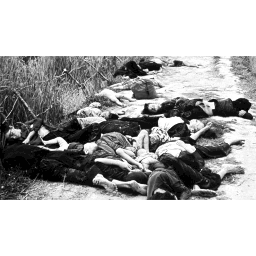
My Lai Massacre: Lieutenant William Calley massacred innocent civilians in village, My Lai, searching for Vietcong rebels.
Content Vocabulary (3/3)
Kent State University: A protest against the Vietnam War resulted in four college students at KSU(Ohio) to be fatally shot, and nine other people injured.
Pentagon Papers: exposed Harry Truman for aiding France against communist Viet Minh... automatically involving the U.S. with the Vietnam War.
War Powers Act: a law created the keep the president's power in check, and forbid the president to involve the U.S. with any military conflict without the consent given by Congress.
Early Years of Vietnam (1/2)
The U.S. got involved in the Vietnam War because we were already allies with South Vietnam. We also had a sort of grudge with the Soviet Union, and this intensified it.
Robert McNamara was the Secretary of Defense during JFK and LBJ's administration, and heavily influenced the early involvement in Vietnam. The Gulf of Tonkin Resolution, passed by Congress, allowed President Johnson to take whatever measures necessary to keep the peace and security in Southeast Asia. It also allowed him to retaliate in order to do so. College students were able to get out of the draft, and this was unfair because a lot of minorities couldn't afford to go to college so they had no way to opt out of the draft.
Early Years of Vietnam (2/2)
The main difference between the Vietnam War and other wars was that the U.S. was not fighting for territory. The U.S. was fighting a "friendly country", and trying to shut down possible riots that could lead to more.
The Tet Offensive changed the public perception of the war, because it showed the people that the U.S. ground forces in Vietnam were vulnerable. The event itself was a surprise attack on our troops, and then made Americans question how well of a grip we actually had on the war.
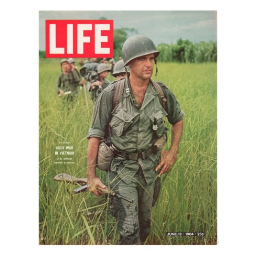
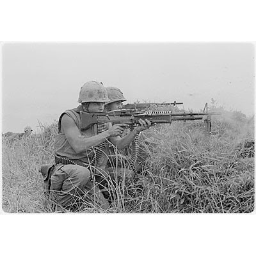
1968
MLK Assassination: MLK Jr. was assassinated on April 4th, 1968 on a hotel balcony by James Earl Ray. After his death, riots sparked and the want for equal rights was demanded.
Bobby Kennedy Assassination: Bobby Kennedy was in Los Angeles for presidential primaries, and was shot in the Ambassador Hotel. He was assassinated on June 5th, 1968. He was shot by Sirhan Sirhan, who was a very unstable man obsessed with hurting RFK.
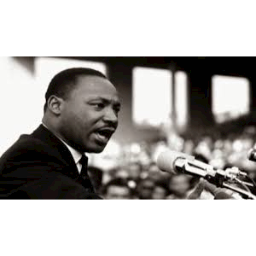
1968
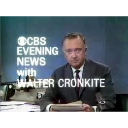
Tet Offensive: This was originally named The General Offensive and spanned from January 30th to September 23rd. It was a series of surprise attacks by rebel forces of Vietnam, called Vietcong. The Tet Offensive would be considered a turning point of the Vietnam War. Walter Cronkite: Up until 1968, news stations and public media outlets tended to keep out the gore and blood of the Vietnam War. But Cronkite had nightly newscasts
and influenced the public's
view about the Vietnam War.
Later Years of Vietnam
Nixon's strategy was to install Vietnamization, trying to get rid of U.S. involvement in the Vietnam War.
At Kent State University (Ohio), four college students were shot and killed during a protest against the Vietnam War.The Mai Lai Massacre was one of the most horrific events of the Vietnam War. Lieutenant Calley was convicted with murdering innocent civilians and sentenced to prison. The last of the U.S. troops left South Vietnam on March 29th, 1973.
Later Years of Vietnam
Vietnam vets were honestly treated so poorly. No parades were held to welcome them home, and they faced a lot of scrutiny for the never ending conflict with Vietnam. The war also took a lot of lives, and the country's feelings were divided. More than 58,000 U.S. soldiers' lives were taken during the war, and over 150,000 were wounded. During the years of 1967-1970, the U.S. spent from between 18.5 billion dollars to 26.5
billion dollars every year. President
Ford also sent around 700 billion
dollars to South Vietnam in
an effort to aid soldiers.
1960s Culture
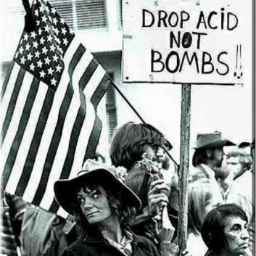
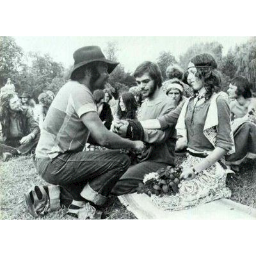
A hippie was kind of someone who didn't agree with the social norms, and didn't want to conform to the standards.
In the film, Los Angeles is talked about as bringing up the young generation and artisits, along with marijuana and rebellious music. The new generation would change the social norms and present new music and traditions.
1960s Culture
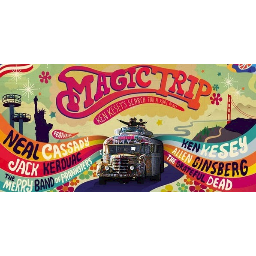
Kesey was an author who went to Stanford and participated in a government LSD experiment. He later became an ambassador for the drug and went around getting people to use it.
The video also talks about beggars who want to make a society that is all about sharing. Everything would be free and it would be treated like one big family that takes care of each other. They mainly wanted to promote change and sustain peace.
Vietnam Timeline
July 1954: A conference held in Geneva leads to the agreement of the division of Vietnam.
Nov 8th, 1960: JFK wins presidential election against Richard Nixon and LBJ becomes vice president.
Nov 22nd, 1963: JFK is assassinated and LBJ becomes president of the U.S.
August 1964: There are two incidents in the Gulf of Tonkin, resulting in LBJ requesting direct involvement with Vietnam.
Jan 31st, 1968: Vietcong troops use surprise attacks against South Vietnamese troops during the Tet Offensive.
- Full access to our public library
- Save favorite books
- Interact with authors
- < BEGINNING
- END >
-
DOWNLOAD
-
LIKE
-
COMMENT()
-
SHARE
-
SAVE
-
BUY THIS BOOK
(from $3.99+) -
BUY THIS BOOK
(from $3.99+) - DOWNLOAD
- LIKE
- COMMENT ()
- SHARE
- SAVE
- Report
-
BUY
-
LIKE
-
COMMENT()
-
SHARE
- Excessive Violence
- Harassment
- Offensive Pictures
- Spelling & Grammar Errors
- Unfinished
- Other Problem






COMMENTS
Click 'X' to report any negative comments. Thanks!