To Mrs. Livchin

is for Association Areas

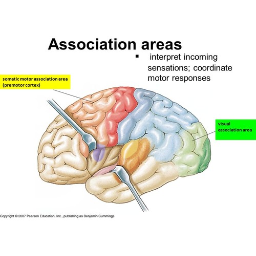
Areas of the cerebral cortex that are involved in functions that include learning, remembering, thinking, and speaking.
Ex: Kate has experienced severe damage to her visual association cortex may be able to see objects, but Kate will not be able to recognize these objects
is for Behavior Therapy
A type of therapy that applies learning principles to the elimination of unwanted behaviors.
Ex: If Jim gets a job in which he earns money, Jim may use that earned money for tangible items such as cars, food, or computers. This is an example of token economy.


is for Classical Conditoning

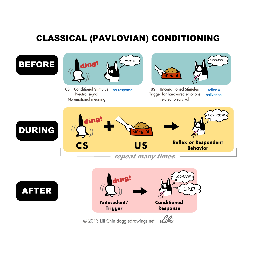
A type of learning in which one learns to link two or more stimuli and anticipate events.
Ex: Pavlov's dogs salivated to the sound of the bell when they anticipated food, because of the constant previous pairings of both the sounding of the bell and food.
is for Deindividuation

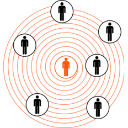
The loss of self-awareness and self-restraint occurring in group situations that foster arousal and anonymity.
Ex: Ross and his 3 other friends go trick or treating on Halloween in masked costumes. Ross and his friends stopped by a neighbors house for candy and took more candy than what the sign instructed. These actions can be results of deindividuation.
is for Egocentrism

In Piaget's theory, the preoperational child's difficulty taking another's point of view.
Ex: Little Timmy is blocking the TV and his mother told him to move because she can't see. Little Timmy doesn't understand why his mother can't see if he can see the TV clearly. This demonstrates egocentrism.
is for Fluid Intelligence

Our ability to reason speedily and abstractly; tends to decrease during late adulthood.
Ex: Samantha is having trouble solving a puzzle that usually took her around 12 minutes to solve in her early 30s , but is now taking 39 minutes. This is best demonstrated by fluid intelligence.
is for Generalization

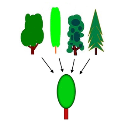
The tendency, once a response has been conditioned for stimuli similar to the conditioned stimulus to elicit similar responses.
Ex: If Sam was bitten by a white furry mouse when he was younger, he may grow up being afraid of all white fluffy animals.
is for Hypothesis

A specific, testable prediction.
Ex: If we increase the amount of light while participants are studying, then the participants scores will improve.
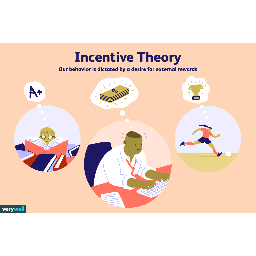
is for Incentive Theory

Suggests that people are motivated to do things because of external factors rather than intrinsic motivation.
Ex: David and Lisa are rivals, but this week they are required to perform a dance at a competition together. They put their differences aside to win the trophy and medals. The act of them working together can be owed to external factors such as the trophies.
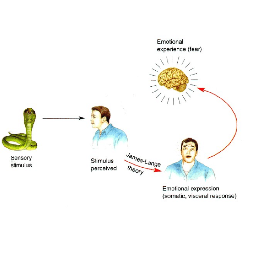
is for James- Lange Theory

Suggests that when you see an external stimulus it leads to an physiological reaction.
Ex: We're sad because we cry, we are angry because we punch.
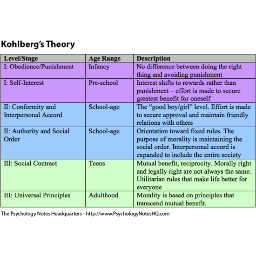
is for Kohlberg Moral Development

Lawrence Kohlberg found the moral stages of development which defines a process in which children develop proper attitudes towards the members of society, based on social and cultural norms, rules, and laws.
is for Latent Conent

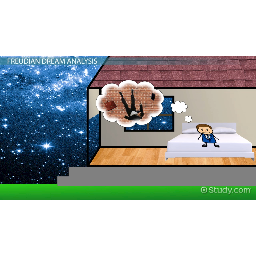
Is defined as the hidden psychological meaning of a dream.
Ex: If an individual was dreaming of falling (Manifest Content), the meaning behind this dream is having no control of one's life, a severe fear of heights, or giving into temptations.

is for Manifest Content

describes the plot or the literal subject of a dream.
Ex: Having a dream where you get pulled over by a cop for speeding and receiving a ticket.
is for Narcolepsy

A disorder that causes excessive daytime sleepiness accompanied by brief attacks of " sleep.

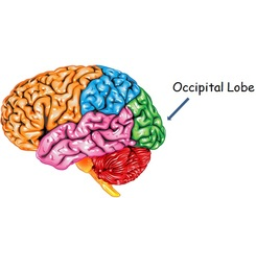
is for Occipital Lobe

A lobe in the cerebral cortex in which is responsible for basic visual stimuli such as visual acuity, contrast sensitivity, perception of color, form, and motion.
is for Parasympathetic Nervous System

One of the two branches of the nervous system. This nervous system calms your heart rate, conserves energy, and increases intestinal/ gland activity.
Ex: After Marcus nearly is involved in a car accident, his heart rate slows and his pupils return back too their normal state. This is due to the function of the parasympathetic nervous system.
- Full access to our public library
- Save favorite books
- Interact with authors
- < BEGINNING
- END >
-
DOWNLOAD
-
LIKE
-
COMMENT()
-
SHARE
-
SAVE
-
BUY THIS BOOK
(from $5.19+) -
BUY THIS BOOK
(from $5.19+) - DOWNLOAD
- LIKE
- COMMENT ()
- SHARE
- SAVE
- Report
-
BUY
-
LIKE
-
COMMENT()
-
SHARE
- Excessive Violence
- Harassment
- Offensive Pictures
- Spelling & Grammar Errors
- Unfinished
- Other Problem






COMMENTS
Click 'X' to report any negative comments. Thanks!