To our great science class Fall 2019 :)

Table of Contents
Pages 3-10 ~ What are seasons, why do they happen?
Pages 11-13 ~ Summer
Pages 14-15 ~ Autumn
Pages 16-17 ~ Winter
Pages 18-19 ~ Spring
Pages 19-24 ~ Activity
Page 25 ~ Read-Aloud
Page 26 ~ News
Page 27 ~ Reference Page
What are Earth's Seasons?
We divide up the year into four seasons: spring, summer, autumn, and winter. Each season lasts 3 months with summer being the warmest season, winter being the coldest, and spring and autumn lying in between.
The seasons have a lot of impact on what happens on the earth. In the spring, animals are born and plants come back to life. Summer is hot and is when kids are usually out of school and we take vacations to the beach. Often crops are harvested at the end of the summer. In autumn the leaves change colors and fall off the trees and school starts again. Winter is cold and it snows in many places. Some animals, like bears, hibernate in the winter while other animals, like birds, migrate to warmer climates.


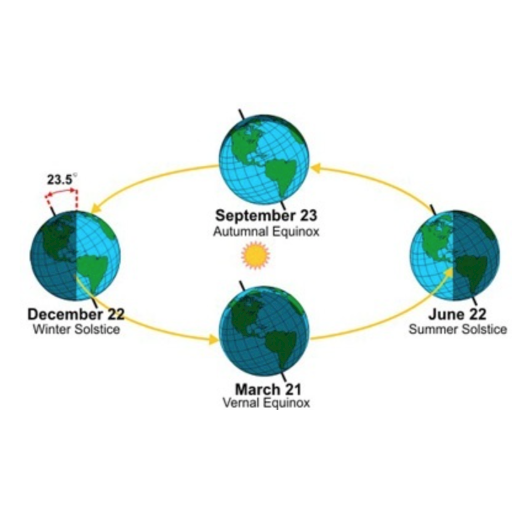
Seasons are caused because of the Earth's changing relationship to the Sun. The Earth travels around the Sun, called an orbit, once a year or every 365 days. As the Earth orbits the Sun, the amount of sunlight each location on the planet gets every day changes slightly. This change causes the seasons.
Why do seasons occur?
The Earth is Tilted
Not only does the Earth revolve around the Sun every year, but the Earth rotates on its axis every 24 hours. This is what we call a day. However, the Earth doesn't rotate in a straight up and down manner relative to the Sun. It is slightly tilted. In scientific terms, the Earth is tilted 23.5 degrees from its orbital plane with the Sun.
Why does our tilt matter?
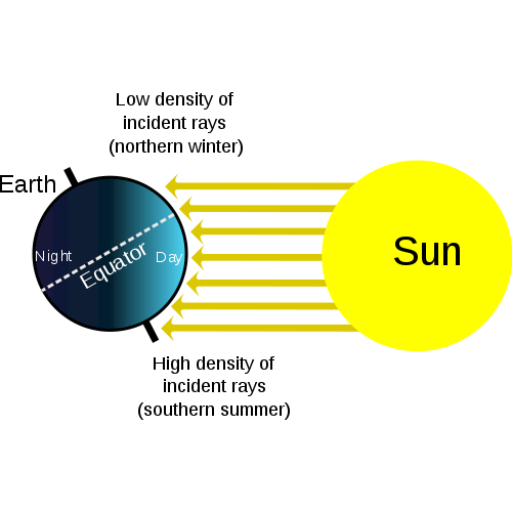
The tilt has two major effects: the angle of the Sun to the earth and length of the days. For half of the year the Earth is tilted such that the North Pole is more pointed towards the Sun. For the other half the South Pole is pointed at the Sun. When the North Pole is angled toward the Sun, the days on the northern part of the planet (north of the equator) get more sunlight or longer days and shorter nights. With longer days the northern hemisphere heats up and gets summer. As the year progresses, the Earth's tilt changes to where the North Pole is pointing away from the Sun producing winter.
Why does our tilt matter?
For this reason, seasons north of the Equator are the opposite of seasons south of the Equator. When it's winter in Europe and the United States, it will be summer in Brazil and Australia.
We talked about the length of the day changing, but the angle of the Sun changes as well. In summer the sunlight shines more directly on the earth giving more energy to the Earth's surface and heating it up. During the winter the sunlight hits the Earth at an angle. This gives less energy and doesn't heat the Earth as much.
Longest and Shortest Days
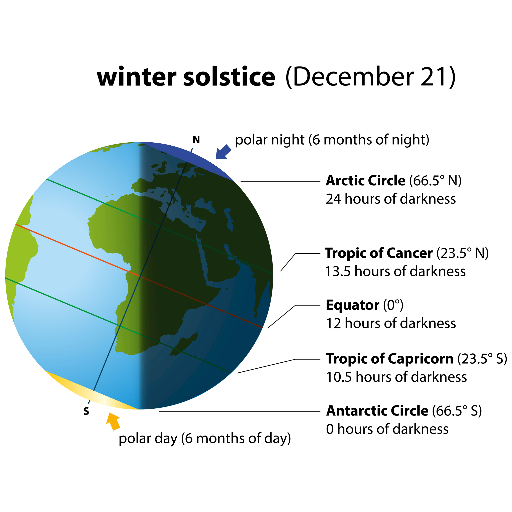
The shortest and longest days of the year are known as solstices. On the shortest day, the winter solstice, the sun rises in the morning, but the highest point it reaches in the sky during the day is the lowest of any day in the whole year. This day has the fewest hours of sunlight in the whole year.
On the longest day of the year, the summer solstice, the sun reaches it's highest point in the sky in the whole year. This day has the most hours of daylight in the whole year.
The summer and winter solstices are six months apart.
Longest and Shortest Days
In the Northern Hemisphere the longest day is on June 21st while the longest night is on December 21st. It's just the opposite in the Southern Hemisphere where the longest day is December 21st and the longest night is June 21st. There are two days a year where the day and night is exactly the same. These are September 22nd and March 21st.
Summer Season
Summer is the hottest Season of the year. The temperature can stay warm even after the sun has gone down at night. There are plenty of leaves on the trees and lots of plants have flowers on them. Many trees and other plants produce fruits during the summer. People spend a lot of time outside enjoying the warm weather.
In the northern hemisphere, Earth's upper half, it is summer from June to September. In the Southern Hemisphere, Earth's lower half, it is summer from December to March.

Summer Season Facts
-The first modern Olympic Games were held in the summer in 1896 in Athens, Greece.
-Watermelon is one of summer’s best summer treats.
-The Eiffel tower actually grows in the heat of the summer. Due to the iron expanding, the tower grows about 6 inches every summer.
-The “dog days of summer” refer to the dates from July 3rd to August 11th. They are named so after the Sirius the Dog Star. This star is located in the constellation of Canis Major.
-August was named after Julius Caesar’s nephew. He had received the title of “Augustus” which means “reverend”.
Summer Season Holidays in the United States: June 14- Flag Day, July 4- Independence Day, August 3- National Watermelon Day.
Northern and Southern Hemisphere
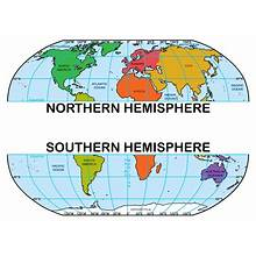
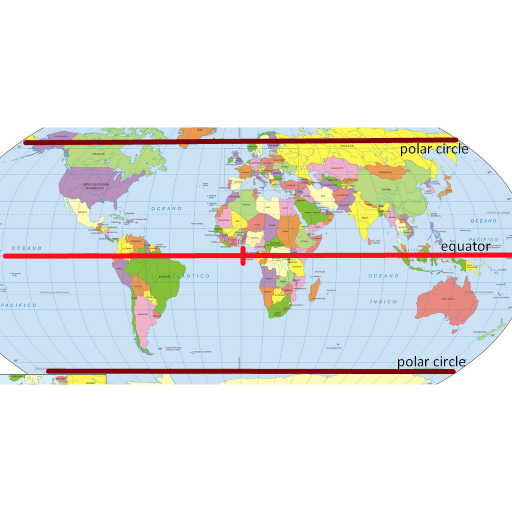
An imaginary line called the equator divides the Northern and Southern hemispheres. The equator is also called 0° latitude. It runs east and west around Earth’s middle. Places north of the equator are part of the Northern Hemisphere. Places south of the equator are in the Southern Hemisphere.
Autumn
More commonly known as "fall" because the leaves fall off of deciduous trees during the season. The history of autumn began with the time of harvest for people who worked and depended on farming to survive. Autumn was even called "harvest" in the 1500s because this was when fruits and vegetables were ready to be picked and stored for the winter.Some holidays that fall during the time of autumn are Thanksgiving and Halloween.
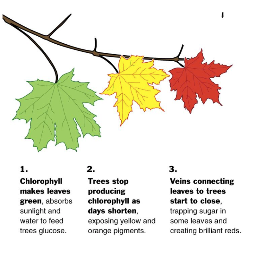
The months of autumn depend on what part of the world it is in relation to the equator. While it is autumn in September through November in the United States, Europe, as well as all the other countries in the Northern Hemisphere, for the Southern Hemisphere where Australia, New Zealand, and parts of Africa and Asia lie, autumn comes from March to May.
Autumn
Winter Season
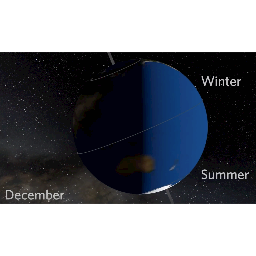
Winter is the coldest season of the year. For the Northen Hemisphere the winter months are December, January, Febuary, and part of March. The Southern Hemisphere winter months are Junne, July, August, and part of September. The temperatures drop bellow freezing which is 32 degrees Fahrenheit and 0 degrees Celesius. These low temperatures causes water to freeze and turn into snow.
Screen shot
Winter is caused by the axis of the Earth in that hemisphere being oriented away from the Sun. The Winter Solsits is the shortest day of the year. It is around December 22 in the Northern Hemisphere and June 21st in the Southern Hemisphere.
- Full access to our public library
- Save favorite books
- Interact with authors
- < BEGINNING
- END >
-
DOWNLOAD
-
LIKE
-
COMMENT()
-
SHARE
-
SAVE
-
BUY THIS BOOK
(from $5.19+) -
BUY THIS BOOK
(from $5.19+) - DOWNLOAD
- LIKE
- COMMENT ()
- SHARE
- SAVE
- Report
-
BUY
-
LIKE
-
COMMENT()
-
SHARE
- Excessive Violence
- Harassment
- Offensive Pictures
- Spelling & Grammar Errors
- Unfinished
- Other Problem





COMMENTS
Click 'X' to report any negative comments. Thanks!