







READ 515
Michelle Herrera
Professor Voleti

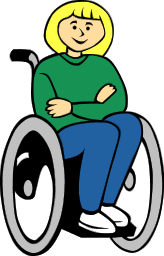
Hi, my name is Melody Brooks. “I have never spoken one single word. I am almost eleven years old” (Draper, 2012, p. 2).


I have cerebral palsy, so I cannot walk, talk, or do a lot of things that most people can do. But the thing is, I have something that many others don’t have: a photographic memory. . .

I remember everything everyone tells me. I remember all words and everything I have seen. But, no one knows this about me because I cannot tell anyone I know this stuff. . . and it's really frustrating.

I am super smart, and none of my peers would have never known that if I did not try out for the Wiz Kids team.
I'm glad I made the team because since I cannot speak or write, many people assume I am illiterate. They assume I am not competent before they even know me. I want to be treated like the "normal" kids and be given an equal opportunity like all my peers.


I believe disability should be conceptualized in a social model. Do not try to diagnose and fix me. Do not listen to medical assessments that tell you who you will amount to be. Mine actually said I am, "severely brain-damaged and profoundly retarded" (p. 22).
NOT TRUE!
These tests don’t measure your intelligence at all. And they do not ask things that are of my interest, like music. They are invalid and unreliable when you, "act like the retarded person they think I am" (p. 18).


When people see that I have a disability, they think of what I can never do. You should not assume that we are all the same or incapable. Do not focus on our deficits.

“In an institution that typically equates learning with the mastery of skills, LD will be defined in terms of skill deficits” (Dudley-Marling, 2004, p. 484).
My doctor told my mom, “Melody will never be able to walk on her own or speak a single sentence. She will never be able to feed herself, take care of her own personal needs, or understand anything more than simple instructions” (p. 24).


Disability should not be viewed as something is wrong with you. People should presume competence. Do not talk to me like I am an idiot and or about me like I cannot hear or understand. Don't be afraid of me because I look and do things differently. The best way for people to better understand me is through inclusive classrooms.
Inclusion gives all students the same education. Instead of learning the same things every year in the self-contained room with the same people, I can now go to different classes, work with my peers, and finally be challenged. I am now being assessed the same way as my peers and showing everyone what I can do. I am learning!!!
- Full access to our public library
- Save favorite books
- Interact with authors
Resources
Collins, K. (2011). “My mom says I’m really creative!” Dis/Ability,
positioning, and resistance in multimodal instructional
contexts. Language Arts, 88(6), 409-418.
Copeland, S. R. & Keefe, E. B. (Eds.). (2018). Effective literacy
instruction for learners with complex support needs.
Baltimore, MD: Brookes Publishing.
Draper, S. (2012). Out of my mind. New York: Atheneum Books
for Young Readers.
Dudley-Marling, C. (2004). The social construction of learning
disabilities. Journal of Learning Disabilities, 37, 482-489.

- < BEGINNING
- END >
-
DOWNLOAD
-
LIKE
-
COMMENT()
-
SHARE
-
SAVE
-
BUY THIS BOOK
(from $3.39+) -
BUY THIS BOOK
(from $3.39+) - DOWNLOAD
- LIKE
- COMMENT ()
- SHARE
- SAVE
- Report
-
BUY
-
LIKE
-
COMMENT()
-
SHARE
- Excessive Violence
- Harassment
- Offensive Pictures
- Spelling & Grammar Errors
- Unfinished
- Other Problem

COMMENTS
Click 'X' to report any negative comments. Thanks!