
I would dedicate this project to David Lagos who took my plant home with him prior to Covid-19 school closures.

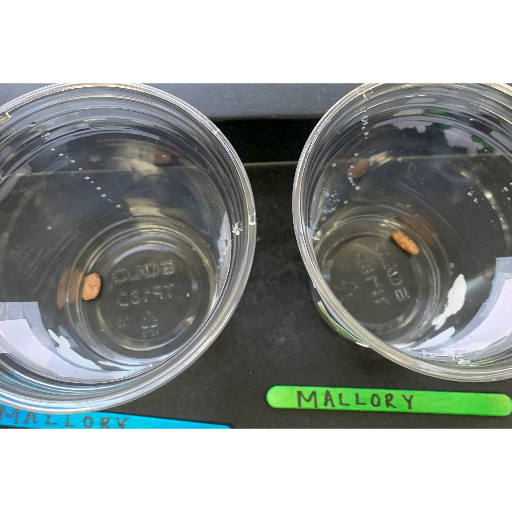
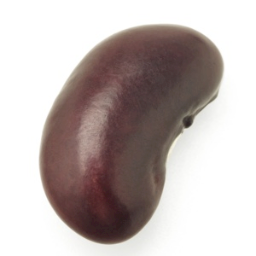
My picture of my own seeds was not clear enough, so I imported a bean to label from the internet.
cotyledon
Testa
embryo
Seed Structure and Function
The testa is outer shell of seed, protects cotyledon and the embryo of the seed from external factors. It is the seed coat and softens to allow for growth during germination
There are two cotyledons per bean. The cotyledon stores food and energy for the plant to use prior to photosynthesis.
The embryo is composed of the epicotyl, hypocotyl, radicle and cotyledon. It eventually grows into an adult plant. (notes)
Germination
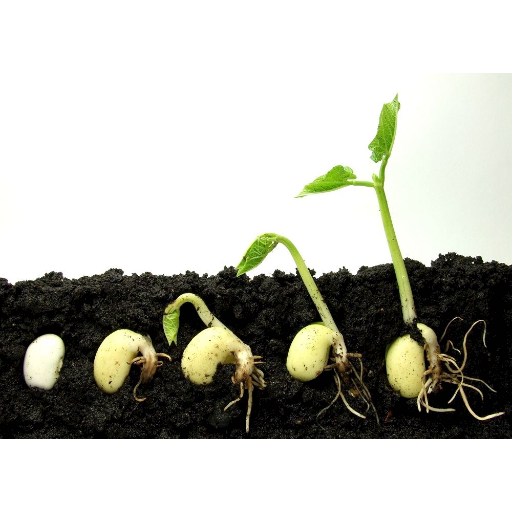
Germination is the process in which the embryo of seeds begin to grow.
With proper exposure to outside factors such as warmth, water, and oxygen the seeds of the embryo begin to enlarge. The seed coat or testa softens and breaks open to allow the growth. The radicle emerges and then the plumule. The plumule is what contains the leaf and stem of the plant. (notes)
Factors that Influence Germination
Imbibition is the uptake of water by a dry seed. With more water, the seeds expand and the cotyledons with food supply become hydrated. Enzymes are also hydrated and spark metabolic activity in the seed.
Water uptake creates turgor pressure, which is shown in the image to the left causing cells to enlarge and the plant to grow stiff and straight.
Germination is also influenced by temperature, pH levels, and accessibility to oxygen for gas exchange. (notes)
terminal bud
node
bud
cotyledon (technically)
leaf
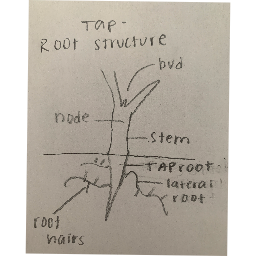
Terminal bud: primary growing point at the top of the stem of the plant, where the flower will open up
bud: growth point on the plant in which will become a leaf, flower, or shoot
leaf: flattened part of plant, connected to stem, used for gas exchange and light absorption
node: part of the plant stem in which more than one branch of stem or leaves emerge
cotyledon: becomes the plants first leaves, holds nutrients
root hairs: microscopic growths on roots to absorb nutrients and moisture from soil
stem: holds the plant upright for structure, main part of plant
tap root: main root and largest root, connecting to the plants stem to provide water and nutrients
Lateral roots: laterally connected to tap root, collect water and nutrients
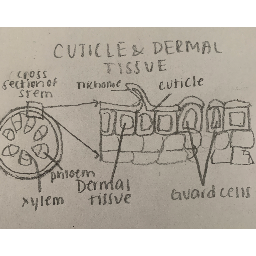
dermal tissue: composed of dermal cells which compose the stem
cuticle: waxy protective layer on the outside of dermal tissue (notes)
Plant Growth Explanation
The plant meristem is composed of undifferentiated cells and allows for plant tissue to grow and for differentiation to occur. The apical meristem allows for vertical growth and is at the tip of buds. This "vertical growth" is known as primary growth because the apical meristem is synonymous for primary meristem increasing in length of height.
Secondary meristems, or lateral meristems, allow for lateral growth in width. This secondary growth allows for the thickening of the stem.
The vascular cambium makes up both the apical and lateral meristems. It has the xylem, phloem, and cork of the plant allowing for a transport of water and nutrients. It is where meristems are found. (notes)
Auxin is the main hormone associated with plant growth. They control the differentiation of meristem cells into vascular tissue. Auxins are mainly responsibly for gravitropism and phototropism. Phototropism is when plants grow in the direction of sunlight. High auxin allows cell elongation and in roots high auxin inhibits cell elongation.
Cytokinins are a hormone that induce cytokinesis, or cell division. In turn, more of this hormone promotes mitosis and cell differentiation.
(notes/bioninja)
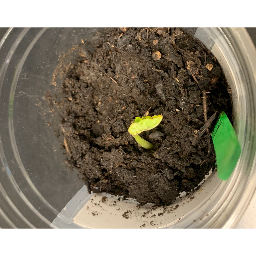
I viewed phototropism, which is clear in the photo with the plant and its leaves growing up towards the sunlight since we placed them in a light box.
- Full access to our public library
- Save favorite books
- Interact with authors
My plant died RIP plant.
- < BEGINNING
- END >
-
DOWNLOAD
-
LIKE
-
COMMENT()
-
SHARE
-
SAVE
-
BUY THIS BOOK
(from $2.99+) -
BUY THIS BOOK
(from $2.99+) - DOWNLOAD
- LIKE
- COMMENT ()
- SHARE
- SAVE
- Report
-
BUY
-
LIKE
-
COMMENT()
-
SHARE
- Excessive Violence
- Harassment
- Offensive Pictures
- Spelling & Grammar Errors
- Unfinished
- Other Problem





COMMENTS
Click 'X' to report any negative comments. Thanks!