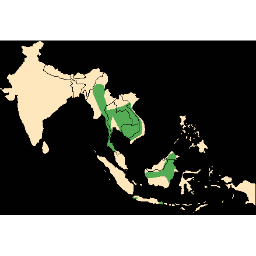

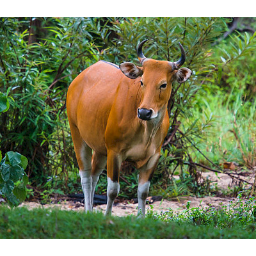
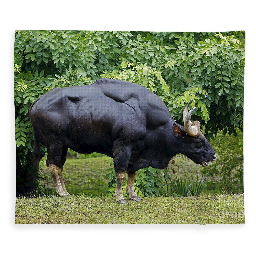
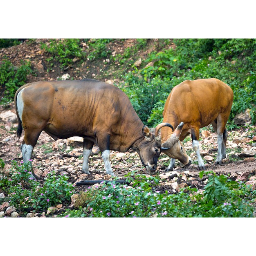
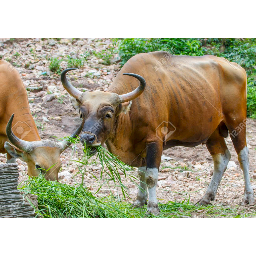
Bos javanicus, commonly known as the Bantang, is a unique animal that tends to reside in the forest region and the grassland region. Banteng tends to precede over 3 major countries which include Thailand, Laos, and Cambodia where they mostly prosper. Additionally, the Banteng survives in other small countries such as Kalimantan.
Habitat/Map of Distribution


The location where they live and survive.
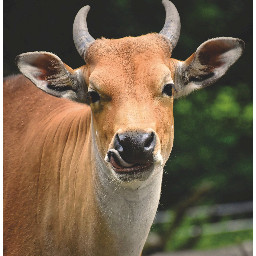
Picture of a Bantang
Cause of species endangerment
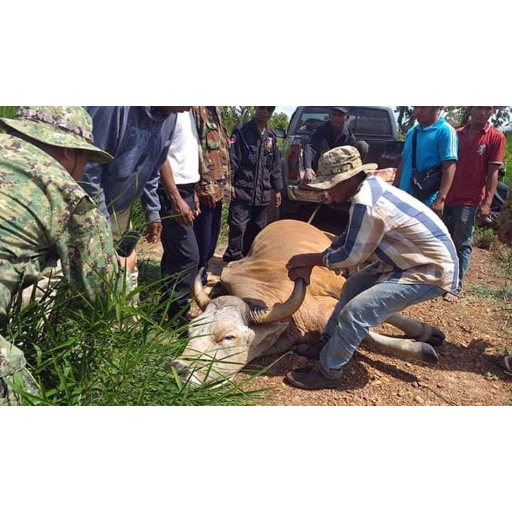
There is a multitude of circumstances for the Banteng's endangerment and decrease in number. Some circumstances for this include being hunted, commercially traded and deprived of natural habitat due to natural forms of destruction such as forest fires. However, Bantengs are primarily dropping in numbers due to a horrific act of poaching. Since Banteng has been low in numbers from the start, having these circumstances take place is a true burden for the species.


Banteng being Poached/hunted
Gender Description/Visual Differences
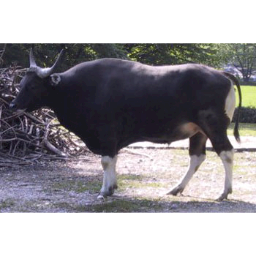
When it comes to Bantengs there is a multitude of factors that separate a male and a female. Some of these factors include color. A male Bantang is generally the color black and/or chocolate brown. They usually look sturdier with more muscles along their body. However, unlike males, female Bantangs are an assortment of buff colors which stand out more than a male. They are characterized by a long dark line along their back.


Male Banteng
Female Banteng
When it comes to the Bantang they have developed a variety of adaptations as time has passed, to cope with the environment surrounding them. However, one adaptation that caught my eyes was how Banteng created more insulation due to the change in weather over the years. Back then, Banteng lived in tropical weather with warmth surrounding them, however, due to climate change and other factors, their environment got colder making it inhabitable for Banteng. However, over the years they adapted to it by generating more fat and muscle and creating techniques to uniquely warm up their bodies.
Physical Adaptations

Banteng with extra fat and muscle

Unique Banteng warming technique
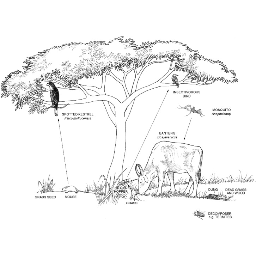
When it comes to Banteng, their diet isn't as special compared to other animals. Bantengs are herbivores known for eating a countless amount of plants. Some plants that Banteng feast on include fruits, shrubs, grasses, and even bamboo. Even though they primarily eat the plants listed, they can feast on practically any form of greenery they see. Additionally, since Bantengs are very versatile with their diet, humans do not really affect what they eat and do not encroach on their food source.
Diet and Food Web


Banteng eating grass and shubbery
Food web about Banteng
- Full access to our public library
- Save favorite books
- Interact with authors
APES CITATIONS -
- "Banteng." The Animal Facts, www.theanimalfacts.com/mammals/banteng/. Accessed 6 Nov. 2020.
- "Species Thailand." Thai National Parks, www.thainationalparks.com/species/
banteng. Accessed 6 Nov. 2020.
-"Banteng (Bos javanicus)." Altina Wildlife Park, 2017, www.altinawildlife.com/
banteng/#:~:text=Interesting%20facts%3A,up%20to%2075cm%20in%20length.
Accessed 6 Nov. 2020.
-Cardiff University, editor. "Protecting the Bornean banteng." Phys.org, 5 Apr.
2018, phys.org/news/2018-04-bornean-banteng.html. Accessed 6 Nov. 2020.
ESA CITES -
- "The Endangered Species Act Q&A." WWF, www.worldwildlife.org/stories/
the-endangered-species-act-q- a#:~:text=Passed%20with%20bipartisan%20support%20in,
as%20recovered%20under%20the%20ESA. Accessed 6 Nov. 2020.
-Aguilera, Jasmine. "The Trump Administration's Changes to the Endangered Species
Act Risks Pushing More Species to Extinction." Time, 14 Aug. 2019, time.com/
5651168/trump-endangered-species-act/. Accessed 6 Nov. 2020.

- < BEGINNING
- END >
-
DOWNLOAD
-
LIKE
-
COMMENT()
-
SHARE
-
SAVE
-
BUY THIS BOOK
(from $3.59+) -
BUY THIS BOOK
(from $3.59+) - DOWNLOAD
- LIKE
- COMMENT ()
- SHARE
- SAVE
- Report
-
BUY
-
LIKE
-
COMMENT()
-
SHARE
- Excessive Violence
- Harassment
- Offensive Pictures
- Spelling & Grammar Errors
- Unfinished
- Other Problem

COMMENTS
Click 'X' to report any negative comments. Thanks!