
Table of Contents
Introduction to Chinstrap Penguins.............................pg 3
Chapter 1: Appearance....................................................pg 4
Chapter 2: Habitat and Survival....................................pg 6
Chapter 3: The Diet...........................................................pg 8
Chapter 4: Threats and Predators..............................pg 10
Chapter 5: Life Cycle and Lifespan.............................pg 12
Chapter 6: Chinstrap Penguins’ Abilities..................pg 14
Xtra News!.........................................................................pg 15
The Fun Factor.................................................................pg 16
Glossary.............................................................................pg 18
Introduction to Chinstrap Penguins
Have you ever heard of a Chinstrap penguin? Well, you might have definitely heard of a penguin, but what about these Chinstrap penguins? Well, these animals are one of the many different types of penguin species.
In this book, you will learn many things about Chinstrap penguins, starting from their appearance to their abilities of surviving in the cold south. There are also some fun facts and Extra information on these information, where you can learn even more cool facts and info. So, lets read on!
Chapter 1: Appearance
Appearance
Lets start off with the appearance of a Chinstrap penguin. Chinstrap penguins have a black narrow band under their head, as if they were wearing a black helmet, which makes it easy to identify for most people once they know about them. This is where their name comes from.
Just like most species of penguin, they only appear in the colors black and white. They also have a blue-black back, just like other penguins. But, they are one of the few types of penguin species that have a white head.
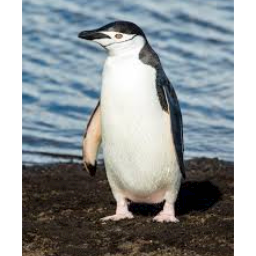
A picture of a Chinstrap penguin on a rocky island
Body Parts
Now lets discuss the body parts of a Chinstrap penguin. The body parts of a penguin are the same across different species, so this might end up as Body Parts of a Penguin.
Penguins have two main body parts that contain of more specific body parts, which are just the head and the main body. The head contains the eyes, the neck, and the bill. The main body of a penguin contains their flipper-like wings, a big belly, claws, and webbed feet.
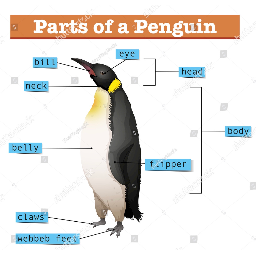
Chapter 2: Habitat and Survival
Habitat
Chinstrap penguins, just like any other species of penguins, live in the continent of Antarctica, AKA the Antarctic Peninsula. They also live on the coastal islands of the Southern Cone of South America and Antarctica, for example, South Shetland Islands, South Orkney Island and South Sandwich Island.
Surviving in their Habitat
Chinstrap penguins live in very cold temperatures. Chinstrap penguins can withstand in these cold tempura teas and survive due to insulation provided by their densely packed feathers that are waterproof. Underneath these feathers is a layer of blubber that is used to store energy from eating. They also have blood vessels in their extremities to redirect heat to important organs.
Chapter 3: The Diet
Chinstrap penguins eat a variety of sea animals, such as:
Krill
Squid
Small fish
Shrimp
and other Crustaceans.
Chinstrap penguins are considered near-shore feeders due to the fact that they get their prey near the shore. They get their food by pursuit-diving using their flippers to ‘fly’ through and into the water. Almost 95-99% of the diet of Chinstrap penguins is krill, while the 1-5% is just other tiny sea animals.
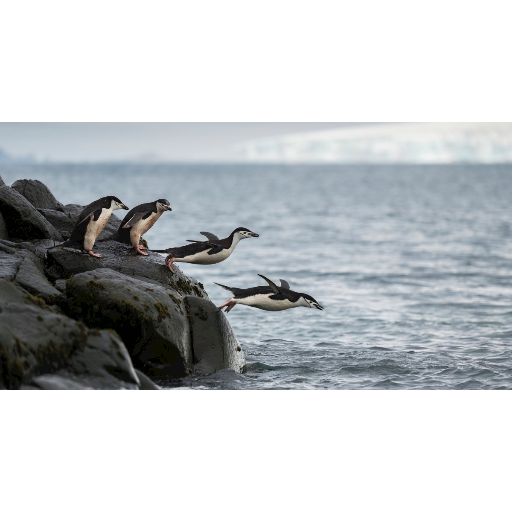
Penguins diving in the water to get food for themselves.
Chapter 4: Predators and Threats
Even though Chinstrap penguins eat lots of sea animals, they also face many threats and predators. In the water the penguins’ main predator is the leopard seal. On land, chinstraps face threats from skuas, giant petrels, and other birds that steal the penguins’ eggs and attack chicks, as well as a more unusual threat: volcanic activity. An eruption in 2016 on Zavodovski Island "covered much of the colony in ash as the birds were undergoing their annual molt," according to the Irish Times. During molt, when they lose their waterproof feathers, they are land-locked and can’t go in the sea until their feathers regrow.
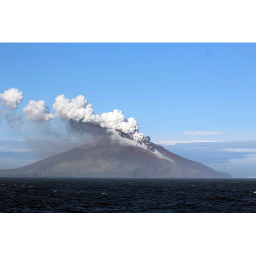
An eruption from a volcano on Zadvodovski Island
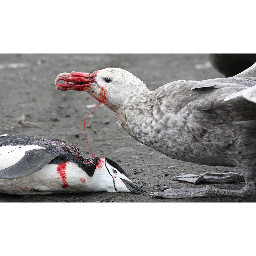
A Giant Petrel eating a Chinstrap Penguin
Chapter 5: Life Cycle and Lifespan
Life Cycle
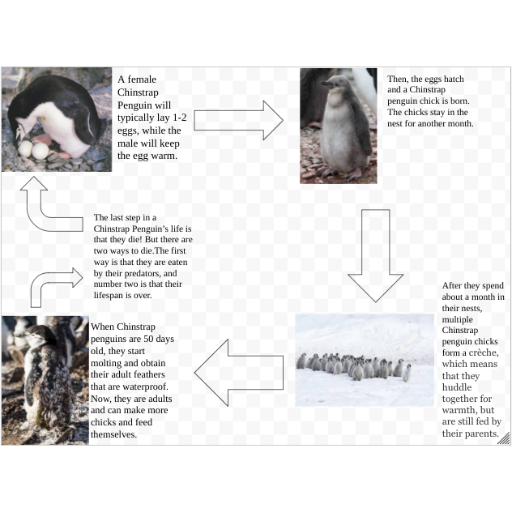
This is the life cycle of a chinstrap penguin:
Lifespan
The lifespan of a Chinstrap penguin is about 15-20 years, but some records say that they can life for up to 40 years. Sometimes, Chinstrap penguins can even live for only a month due to the fact that they can be captured even when they are a chick or still in the egg.
- Full access to our public library
- Save favorite books
- Interact with authors
- < BEGINNING
- END >
-
DOWNLOAD
-
LIKE(1)
-
COMMENT()
-
SHARE
-
SAVE
-
BUY THIS BOOK
(from $3.99+) -
BUY THIS BOOK
(from $3.99+) - DOWNLOAD
- LIKE (1)
- COMMENT ()
- SHARE
- SAVE
- Report
-
BUY
-
LIKE(1)
-
COMMENT()
-
SHARE
- Excessive Violence
- Harassment
- Offensive Pictures
- Spelling & Grammar Errors
- Unfinished
- Other Problem





COMMENTS
Click 'X' to report any negative comments. Thanks!