 We dedicate this book to Mr. Cook,
 all the Disney Princesses,
and Justin Timberlake
This book was created and published on StoryJumper™
©2010 StoryJumper, Inc. All rights reserved.
Publish your own children's book:
www.storyjumper.com


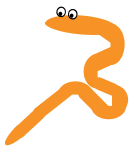
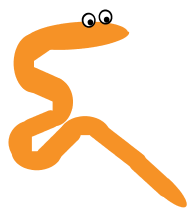 Once upon a time there was a strand of
 DNA.And on one half of that strand of DNA
was a small segment, or nucleotide named
Pinocchio.


2

 I wonder what it's like to be a
real protein?
3


 Hey look!!
4
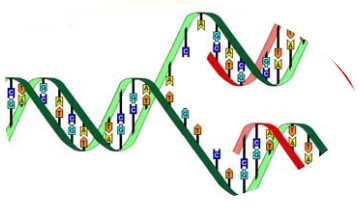
So Pinocchio looked and he saw helicase speeding towards him, separating the strand of DNA he was on down the middle. He looked at his other half, a G
base, for he was a C base, and said a quick goodbye before he was pulled away.

5
It felt like only a second later that he and the half of the strand of DNA he had been
on before were speeding away from his old
friends.


6
Looking back he could see a few DNA
polymerase moving down the strand
and helping the two halves move back
together and join together again. Looking
down at his new strand, he saw a couple
of RNA polymerase finishing forming his
strand.Transcription is the process that makes RNA. A nucleic acid attaches to a single
strand of DNA and goes down, copying it and leaving a string of RNA behind in.
As soon as the nucleic acid passes, the DNA strands come back together. After
the nucleic acid gets to the end of the strand, it stops and drops off, breaking the
RNA strand so that it can be sent out into the cell. It occurs in the nucleus.
7
Looking at himself he realized that he was no longer DNA at all, buta string of RNA! That meant that he had went through transcription
to change into RNA, copies of DNA used to send messages through
the cell! He could tell that it was transcription and not replication,
because a second strand of DNA was not made after being seperated
by a helicase. Instead, he had been turned into RNA!
 DNA is made of two strands of while RNA is only made of one. DNA is
 like a master blue print (or the original) while RNA is just copies of strands
of DNA.
8
 “Before, I was DNA. That means
 that I was made up of three parts.
I had a sugar part, a phosphate
group, and a nitrogenous base.

 The replication of DNA occurs when a helicase splits the DNA strands by breaking the hydrogen bonds between the
nitrogen bases. Then, DNA polymerase comes and adds nucleotides to the existing DNA to build new strands. This is
necessary because by building new strands of DNA from old strands, it leaves less of a chance of an error occurring
during the copying process.
9
 My base is called C. Now that I
 am RNA, all of my friends that
were T bases are now called U bases. The DNA strand
that I was on was split, and my half was replicated and
recreated, and now I am RNA.


10
What just happened to Pinocchio? - He changed from DNA to RNA
How did he change?
- RNA polymerase separated the two strands of DNA and
duplicates half the strand, while DNA polymerase puts the two halves
back together.Checkpoint 1
11
 “We need to go to the ribosome outside, all the way
by the cell membrane,” one of other bases further
up the strand called out.


12
Pinocchio gulped. The cell membrane was far away, especially for him. He had
never even been outside of the
nucleus before!


13
But, no matter how nervous he was of going on this new adventure, the idea of fulfilling his dream of becoming a
real protein was so exciting that he forgot his nervousness.


14
 “Lets go!” a base called, and
 then the whole strand of
brand new mRNA was off.


15
The strand of mRNA made their way toward the nuclear membrane and before he knew it, Pinocchio
was outside of the nucleus and inside of the cell!



16
Pinocchio looked at all the new organelles aroundhim and felt excited. This really was an adventure!


17
Checkpoint 2Where is Pinocchio going?- To a ribosome
Is the ribosome inside the nucleus?
- No
18
He wasn’t sure exactly how long it took him and his strand to get to the ribosome,
but didn’t feel like very long to him at all.



19
When he finally saw the ribosome he felt even more excited. This just meant that
he was one step closer to becoming a protein!DNA is not used directly for the translation of protein because the DNA can't leave the
nucleus while the RNA can and translation occurs in the cytoplasm, which is outside the
nucleus.



20
 “Okay, we have to go
 inside the ribosome now,”
a base called back to the
rest of the strand.


21
 Pinocchio waited for his turn to
 go into the ribosome. He was
so excited that he didn’t even
notice what was starting to
grow over the ribosome until
another base on his strand
shouted, “Hey look!”


22
Over the ribosome was the beginning of a polypeptide chain! And since Pinocchio knew
that a polypeptide chain was what made up a
protein, he knew that after he got to go through
the ribosome as well he really would become a
protein!
 Looking closer at the polypeptide chain,Pinocchio was able
 to see that the polypeptide chain was made of codons, or
groups of three nucleotides. Looking at his friend the tRNA
next to him, who knew that he was be his anti-codon, or
adjacent codon.


23
 Pinocchio watched as the string of amino acids
 got longer and longer and before he knew it it
was his turn!

24
 He felt himself be pulled into the ribosome and for a
 second he almost felt nervous again until a voice
called out to him.
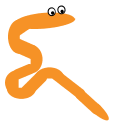
 “Hey! Are you Pinocchio,
 a C nitrogen base?”Looking at who had called him, Pinocchio saw that
it was a G nitrogen base.



25
 “Yes, that’s me, who are
 you?” Pinocchio asked.
 “I’m a piece of tRNA and I’m going to be your new
 other half on the polypeptide chain! I’m carrying an
amino acid and if we hurry and get into line
quick then we can be added to the amino acid string!”




26
You've previewed 26 of 40 pages.
To read more:
Click Sign Up (Free)Benefits:
- Full access to our public library
- Save favorite books
- Interact with authors
27

READ

- < BEGINNING
- END >
-
DOWNLOAD
-
LIKE
-
COMMENT()
-
SHARE
-
SAVE
BUY THIS BOOK (from $7.99+)
-
BUY THIS BOOK
(from $7.99+) -
BUY THIS BOOK
(from $7.99+) - DOWNLOAD
- LIKE
- COMMENT ()
- SHARE
- SAVE
- Report
Liked By
X
Encourage this author
-
BUY
-
LIKE
-
COMMENT()
-
SHARE
Problem with this book
X
- Excessive Violence
- Harassment
- Offensive Pictures
- Spelling & Grammar Errors
- Unfinished
- Other Problem
Which pages have problems?
Please describe the problem:
left text
right text
"Pinocchio"
This is a creative and educational story about a DNA strand named Pinocchio who dreams of becoming a real protein. The story takes us through the process of transcription and translation in a cell, explaining complex biological processes in an engaging way.
(41 pages)
Privacy level:
PUBLIC
22 reads
Report





COMMENTS
Click 'X' to report any negative comments. Thanks!