I dedicate this to the periodic table, as it was my main source and reference to help me create this project.

Families, Periods and Groups

Periods
From 1-7, periods group elements together by rows. Each row has a specific amount of energy shells, which is what the period number represents. Every element in the period will have the same amount of energy shells. Each energy shell holds 8 electrons, but the shell closest to the nucleus only holds 2.
Families
There are 9 families. Alkali Metals, Alkaline Earth Metals, Transition Metals, Boron Family, Carbon Family, Nitrogen Family, Oxygen Family, Halogens, and Noble Gases. Every element in a family will have similar general properties, both physical and chemical. These are often grouped into 3 categories, metals, metalloids, and nonmetals.
Groups
Groups are sectioned by columns in the periodic table, going from 1-18. They will have the amount of valence electrons for every element in the group as well, which will be listed under the group number.
Roles of the Subatomic Particles

Protons have a positive charge and are represented by the atomic number in an element. They determine the element's identity and mass. Since protons are represented by the atomic number, they will be placed increasing from left to right each period on the periodic table.
Neutrons have a neutral charge. The amount of neutrons in an atom is calculated by subtracting the mass from the atomic number, as the atomic number represents protons and protons + neutrons = mass.
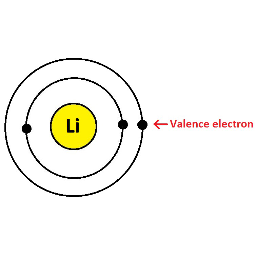
Electrons have a negative charge and are also represented by the atomic number. Electrons rest on energy shells, but the outer shell and the amount of electrons on it is very important. Those electrons on the outer shell are called valence electrons (also represented by the number under the group number the element is in).
Also, protons determine where the element is on the periodic table due to the periodic table's order. Since the protons are represented by the atomic number on the element, they are said to determine where elements are placed. In the periodic table, elements are placed so their atomic number increases left to right each period. Remember, the atomic number also is the amount of electrons.
Metals

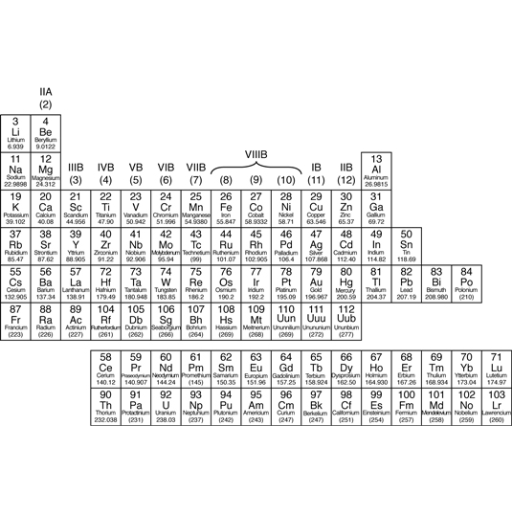
Metals are located throughout the whole periodic table, starting from the second period and first group all the way to the very last row on the periodic table and the 17th group. Metals are often described as great conductors of heat and electricity, being lustrous, shiny, malleable, and opaque. Some popular examples are aluminum, titanium, and steel.
Non-metals

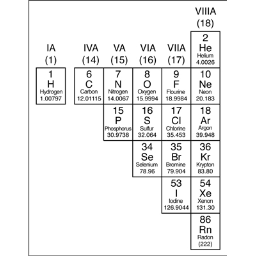
Nonmetals are located from the 1st period and 1st group to the 18th group and 6th period, mainly located to the right of the periodic table with the exception of hydrogen. Nonmetals can come in the form of gases, liquids, or solids. They do not conduct heat or electricity well, and they are brittle. Along with that, they are non-lustrous.
Metalloids
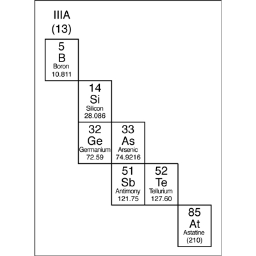
Metalloids are located from period 2 to period 6, and from group 13 to group 16. They are formed in a zig-zag pattern, going downwards. They are semiconductors, meaning they are able to intermediately conduct electricity and heat. They appear similar to metals but have properties of nonmetals, which is why they are considered a mixture of both.
Valence Electrons
Valence electrons determine roles of a certain element very often.
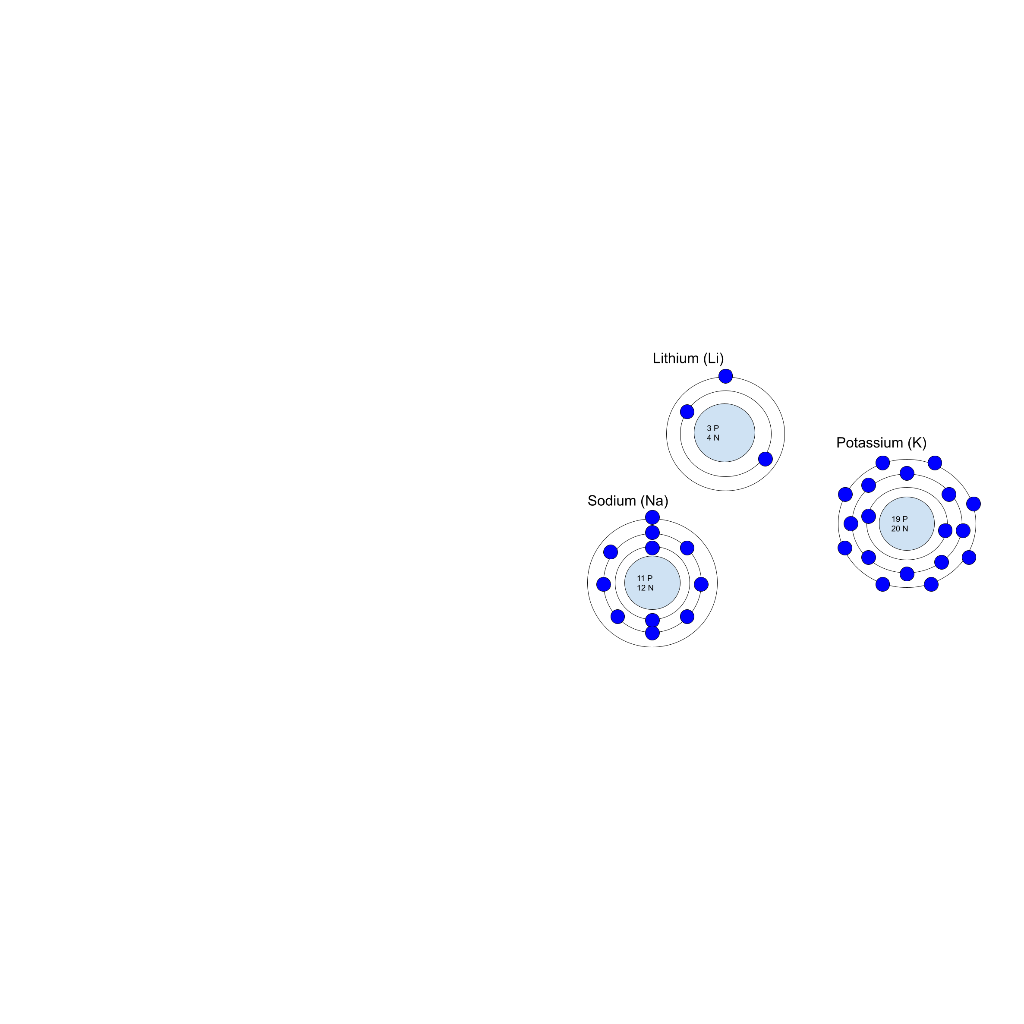
Firstly, they determine reactivity. The lesser amounts of valence electrons, the more reactive it is. This is because they need 8 valence electrons in total, so elements with valence electrons less than 4 would be considered highly reactive in most cases. This can be seen in the first group of the periodic table and in the Lithium Bohr Model, as every element that period including Lithium has 1 valence electron and every element in there is highly reactive.
Next, they determine what group the element is in. Valence electrons are listed underneath the group number, ranging from 1-8. This is because an element will have 1-8 valence electrons, so it is listed in ascending order with the group number. For example, group 1 will have 1 valence electron, group 2 will have 2 valence electrons, etc. Though, it will loop back at group 11 to 1 valence electrons. You might be thinking: why not start back at group 8? Wouldn't that be right, since group 8 would have 8 valence electrons? Well, the periodic table skips groups 8 and 10 while counting the amount of valence electrons in every group. This means group 9 would be counted with 8 valence electrons (8B). Therefore, the cycle would start back at group 11.
Families in the Periodic Table

Alkali Metals
Alkaline Earth Metals
Transition Metals
Boron Family
Carbon Family
Nitrogen Family
Oxygen Family
Halogens
and Noble Gases
Alkali Metals
Alkali metals are the most reactive metals in the periodic table, with a +1 charge in the first group of the periodic table. The +1 symbolizes how they have an "extra valence electron to spare" to make a creation with 8 valence electrons. They are also highly conductive of heat and electricity. They are soft and shiny, with low melting points. They are categorized under the "metal" category. They cannot be found naturally in nature, and they do not occur freely in nature.
Some examples of elements in this family are Potassium (K), Sodium (Na), and Lithium (Li). These are well known.
Potassium is an important element for your body, as it provides nutrients that help your muscles contract and your nerves to function. We are advised to consume foods high in potassium because of this. Along with this, potassium is used to create plant fertilizer since it has properties that help plant growth.
Sodium is often recognized as a component of salt, combining with Chlorine to create a neutralized atom since chlorine has 7 valence electrons. Sodium is also beneficial to our bodies, used to maintain blood pressure.
Lithium serves the purpose of fueling batteries to charge phones, electric vehicles, laptops, and anything that can be charged. It is also used in medicine, commonly to treat mental illnesses such as bipolar disorder. It is known as a mood stabilizer.
Bohr Models for Lithium (Li), Sodium (Na), and Potassium (K).
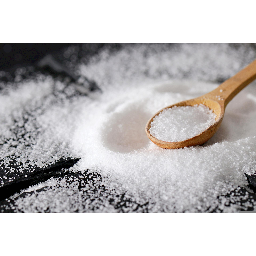
Sodium: used for salt
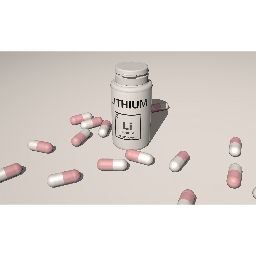
Lithium: used for medicine
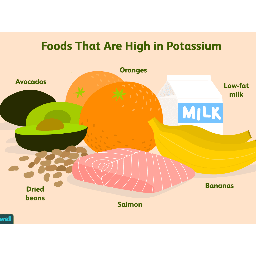
Potassium: component in food to benefit health
Real Life Uses
Alkaline Earth Metals
Alkaline earth metals are in the second group of the periodic table, which means every element has 2 valence electrons and a charge of +2 in the alkaline earth metal family. This leads us to the conclusion that they are highly reactive. They have higher melting points compared to alkali metals, but it is still considered low. Alkaline metals are normally silver or grey, but this is more on the darker side. Like alkali metals, they are soft.
Some popular examples of alkaline earth metals are Calcium (Ca), Beryllium (Be), and Magnesium (Mg).
Calcium is most commonly known for providing strength to our bones, keeping them maintained so they can function. Calcium is also used in soaps alone with other alkaline earth metals, coming in the form of "stearate".
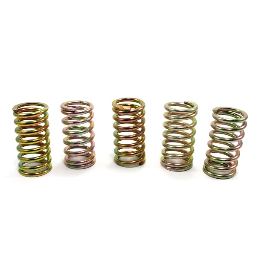
Springs are made of beryllium, since alkaline earth metals are malleable and easy to bend. Along with this, beryllium is factored into the creation of gyroscopes along with copper or nickel.
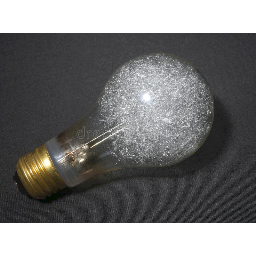
Magnesium, like sodium, is used to regulate blood pressure levels. It also keeps muscles and nerves functioning regularly, along with regulating blood sugar levels. It is also part of an extremely big invention that changed our lives, which was the lightbulb. This is caused due to the fact that magnesium burns with a fervent flame, mainly used for photography.
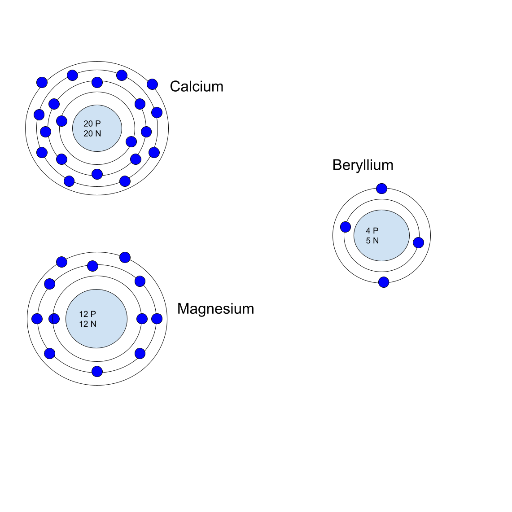
Bohr Models for Calcium (Ca), Beryllium (Be), Magnesium (Mg)
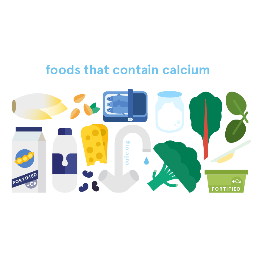
Real Life Uses
Calcium: Healthy foods
Beryllium: Springs
Magnesium: Light bulbs

Transition Metals
Transition metals are located in the middle of the periodic table, between groups 2 and 13. These are considered the common type of metal, good at conducting heat and electricity, malleable, hard, and ductile. Their reactivity varies depending on the element, as certain metals might have a different amount of valence electrons even if they're in the same group.
Some popular examples are Copper (Cu), Iron (Fe), and Gold (Au).
As a lot of people know, pennies were composed of copper. Now, they are made with zinc, another transition metal, which is coated with copper. Along with that, it is very often used as a conductor for electricity in electrical equipment.
Iron is used for a lot of things that factor into your everyday life, like utensils. Though, iron is also flowing through your bloodstream as well. Iron factors into making red blood cells that transport oxygen to everywhere in your body. I have iron-deficiency myself, which means I do not have enough red blood cells and I experience fatigue more often.
One of the most expensive forms of jewelry is gold jewelry. Since gold is a beautiful golden, as the name implies, it is crafted into jewelry. Even if this isn't a very common use, people do also use gold as a form of economy. Gold is very expensive.
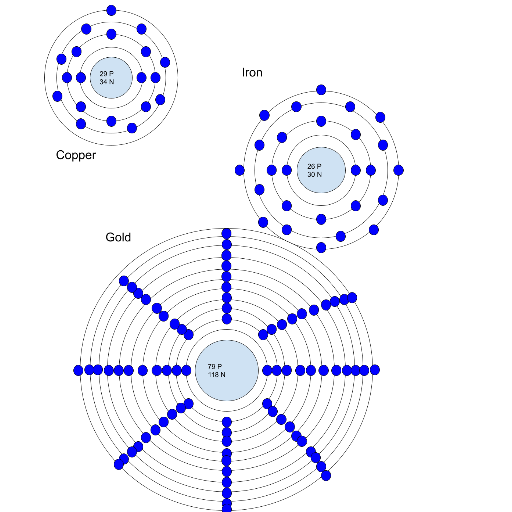
Bohr Models for Copper (Cu), Iron (Fe), Gold (Au)

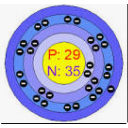
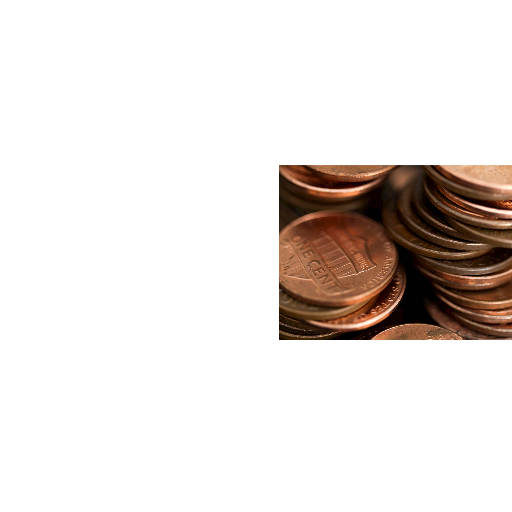
Real Life Uses
Copper: Pennies
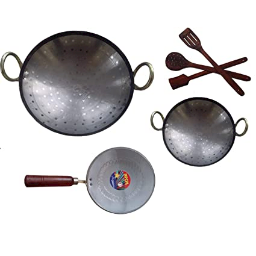
Iron: Utensils
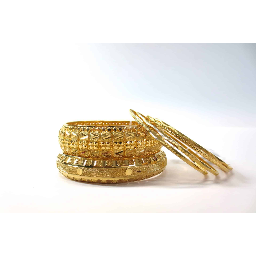
Gold: Jewelry
Boron Family
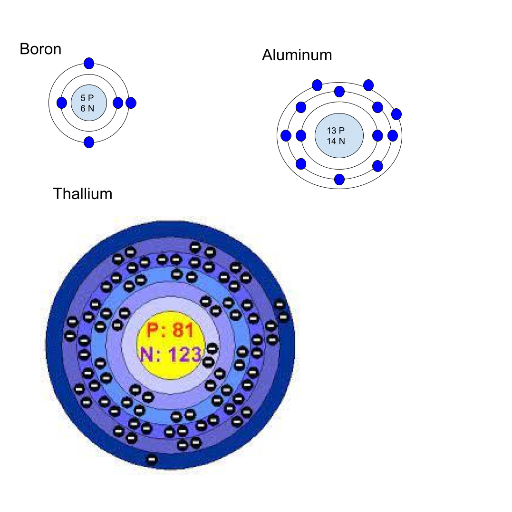
The Boron Family consists of only (technically) 6 elements, boron, aluminum, gallium, indium, thallium, and nihonium. These are all located in group 13, meaning they all have the same amount of valence electrons which is 3. Most of the group consists of metals, though Boron, the one the family is named after, is a metalloid. Every element in this family besides boron has a silver/grey color, is soft, and can conduct heat and electricity well. Though, boron has a black color to it, and is a poor conductor of heat and electricity.
Examples have been listed, but some popular ones are boron, aluminum, and thallium.
Boron is used in ceramics to establish that the surface of the piece is smoother, along with speeding up the time needed to turn the piece into glass (along with other components) after glazing. Along with this, they make pieces look smoother and glassy. Boron is also used in detergents.
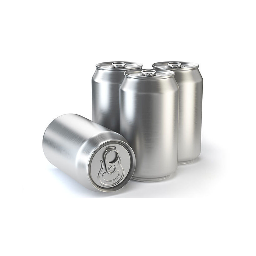
A popular use for aluminum is aluminum foil, since the foil is very sturdy and reliable when storing food. Another popular use is for cans, like soda cans. Once again, they're very sturdy and sustainable. Foil is thinned out compared to soda cans, yet they are both very commonly used.
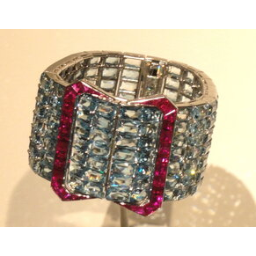
Thallium is common in the photography industry, mainly for camera lenses since the glass produced using a bit of thallium is refractive. Surprisingly, thallium is also used in jewelry. Though, not a lot of people will want thallium jewelry. So, thallium jewelry is used as "imitation jewelry" to imitate more expensive jewelry.
Bohr Models for Boron (B), Aluminum (Al), Thallium (Tl)

Boron: Ceramics
Real Life Uses
Aluminum: Cans
Thallium: Jewelry
Carbon Family
The carbon family is group 14 on the periodic table. The family consists of one nonmetal, two metalloids, and two (or three, including flerovium) metals. Because of this, they will have different properties. Though, they all still have the same amount of valence electrons which is 4. Because of this, they are all in group 14. Since they have 4 valence electrons, they are generally semi-reactive. Carbon is the only non-metal, so it will react much differently compared to the other elements in the group. Otherwise, metalloids in this family are poor conductors at their purest form and have a shiny, greyish-blackish appearance.
Some examples are carbon, silicon, and lead.
Carbon is known as carbon dioxide, a gas that is unhealthy for humans to consume. We are known for breathing in oxygen and breathing out carbon dioxide. Carbon also has a diamond form, which is used for jewelry.
Silicon is used in technology for being a transistor, controlling charge because it is a semiconductor. Along with that, silicon is used in bricks since it stops raw bricks from going out of shape.
Lead is used in bullets, since it is makes bullets more lethal and dangerous. Along with that, it is used to create a positive charge through the anode.
- Full access to our public library
- Save favorite books
- Interact with authors
Thank you so much for reading!
- < BEGINNING
- END >
-
DOWNLOAD
-
LIKE
-
COMMENT()
-
SHARE
-
SAVE
-
BUY THIS BOOK
(from $9.99+) -
BUY THIS BOOK
(from $9.99+) - DOWNLOAD
- LIKE
- COMMENT ()
- SHARE
- SAVE
- Report
-
BUY
-
LIKE
-
COMMENT()
-
SHARE
- Excessive Violence
- Harassment
- Offensive Pictures
- Spelling & Grammar Errors
- Unfinished
- Other Problem






COMMENTS
Click 'X' to report any negative comments. Thanks!