
Atoms
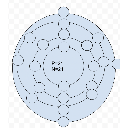
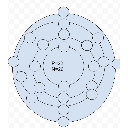
What exactly is an atom? An atom is essentially the smallest "something" that can hold the physical and chemical properties of multiple particles (I'll get to that soon). Atoms are the smallest "stuff" in existence. Everything is made up of atoms, everything you feel, hear, see, and smell. An atom is made up of 7 energy levels at most (in theory, that is), which are what all subatomic particles reside on or in. The first shell is called the nucleus, where all of the mass of an atom comes from. The number (sometimes in decimals) usually below the name of the element in a periodic table shows you the atomic mass, which is the number of the total particles in the nucleus.
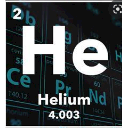
The number 4.003 is the atomic mass.
Protons


Protons are what we call "subatomic particles", which means particles smaller than an atom. Protons reside IN the first shell, known as the nucleus. They determine the atomic number and physical properties of an atom. Protons have a positive charge (P+).

Electrons
Electrons are mostly the reason why there can be up to 7 energy levels in an atom, because they lie ON the energy levels (shells). More electrons= more energy shells. In the first shell, there can be 2 electrons, the second is 8, and 18, and so on. Electrons have a negative charge (E-).
Neutron
Neutrons are neutrally charged (meaning they have no charge. This means that they do not impact the charge of an atom (-Ion, +Ion, Neutral Atom). They live in the nucleus with the protons.
Valence Electrons
Valence electrons are essentially electrons, but they are the electrons that reside in the outer shell. These valence electrons determine the reactivity of an element. Also, valence electrons can be determined in the periodic table by looking at the groups with 8A or 7A under it means there is 8 valence electrons for group 18, and so on.

1A= 1 valence electron
Families (Groups)
What are families (otherwise known as groups)? They are the columns in a periodic table, up and down. There are 18 groups in the periodic table and as explained with valence electrons, the bottom number in the group number shows you the number of valence electrons, which helps determine the reactivity. Also, elements in the same group will always have the same number of valence electrons.
Periods
What are periods in a periodic table? Periods are rows in a periodic table, as in left to right. They determine the number of energy shells in an element. Elements in the same period have the same number of energy shells. This means that they do not need to have the same properties, since the atomic mass increases left to right.
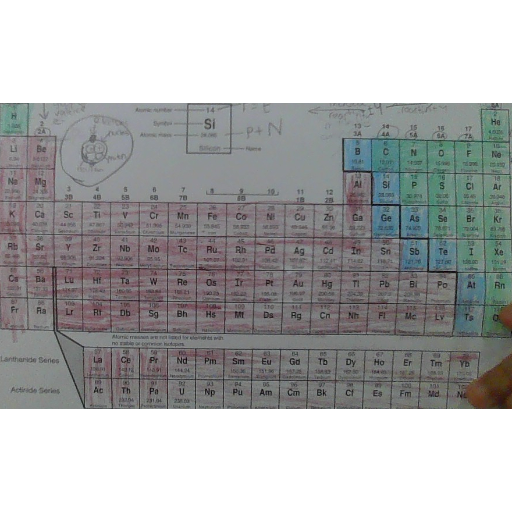
So now that you know what a periodic table looks like, what are the elements in a periodic table? Well, the redish-pink color are called metals, and their properties are shiny, malleable (can be compressed), and conductive, as in they can conduct electricity and heat. The green is nonmetals, which are dull and brittle (can break easily). Nonmetals make very good insulators. Lastly, metalloids (blue) share the properties of both nonmetals and metals.
Alkali Metals
Some examples of Alkali metals are Lithium, Hydrogen, and Sodium. Alkali metals are extremely reactive and are mostly metals with the exception of Hydrogen, which makes them shiny, malleable, and good conductors.
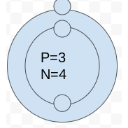
This element is Lithium, and this element is in everyday uses with rechargeable batteries mostly. This includes things like pacemakers or phones.
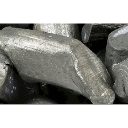
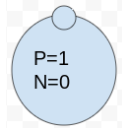
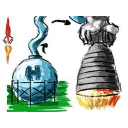
This element is Hydrogen, and this element is in everyday use with fertilising and manufacturing plastic.
Alkali Earth Metals
Some examples of Alkali Earth Metals are Calcium, Beryllium, and Magnesium. Alkali Earth Metals are also very reactive since they only have 2 valence electrons. They are all metals, meaning they are all shiny and malleable and make good conductors.
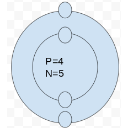
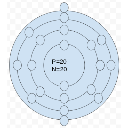
This element is Calcium, and it helps give you strong bones, which relates to everyday life. Also, it helps maintain your health.
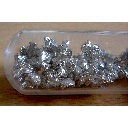
This element is Beryllium and it can be found in everyday life in gears and cogs.
Transition Metals
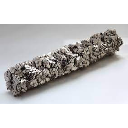
Transition Metals can essentially be reactive or non reactive, since they are a widespread group of elements in the body of the periodic table. Some examples of these elements are Scandium, Titanium, and Copper. Also, they are metals, so they are shiny and malleable.
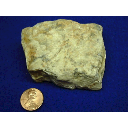
This element is Scandium and it can be found in everyday life in sports equipment such as bike frame and fishing rods.
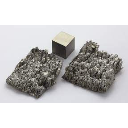
This metal is Titanium and it is used in everyday life for golf clubs, laptops, or bicycles.
- Full access to our public library
- Save favorite books
- Interact with authors
- < BEGINNING
- END >
-
DOWNLOAD
-
LIKE
-
COMMENT()
-
SHARE
-
SAVE
-
BUY THIS BOOK
(from $2.99+) -
BUY THIS BOOK
(from $2.99+) - DOWNLOAD
- LIKE
- COMMENT ()
- SHARE
- SAVE
- Report
-
BUY
-
LIKE
-
COMMENT()
-
SHARE
- Excessive Violence
- Harassment
- Offensive Pictures
- Spelling & Grammar Errors
- Unfinished
- Other Problem






COMMENTS
Click 'X' to report any negative comments. Thanks!