This is dedicated to all the time and effort I put into this, go me.

Table of Contents
Geography - Pages 4 & 5
History - Pages 6 & 7
Language - Pages 8 & 9
Religion - Pages 10 & 11
Culture - Pages 12 & 13
Economy & Business - Pages 14 & 15
Food & Diet - Pages 16 & 17
Education - Pages 18 & 19
Entertainment - Pages 20 & 21
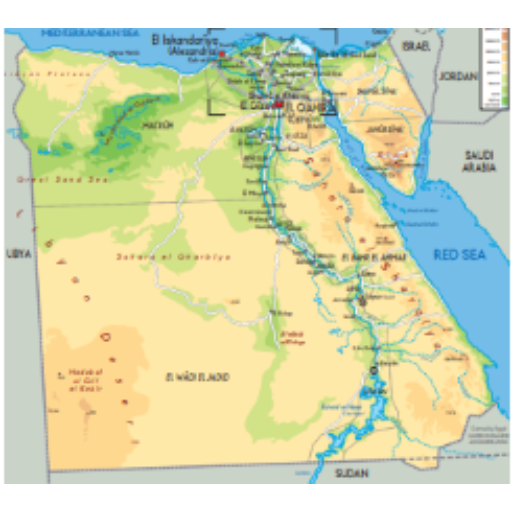
Geography
Egypt, formally known as the Arab Republic of Egypt, is located on the northeastern coast of Africa. The country borders Libya to the west Sudan to the south, and Isreal to the northeast. Egypt is also located along the Red Sea and the Mediterranean Sea. Egypt includes the hard-fought Sinai Peninsula. Ninety-six percent of Egypt is desert, however, the the Nile River, Nile Valley, and the Nile River Delta provide rich, bountiful areas that support Egypt's agriculture. The population, as of July 2021, is approximately 106.4 million with 99.7% of the country identifying with the Egyptian ethnicity. 95% of Egyptians live within 12.4 miles of the Nile River Delta which includes the capital city of Cairo
History
The Egyptian dynasty began in 3000 BC when the kingdoms of upper and lower Egypt united. Over the course of the country's existence, it has been ruled by a plethora of empires such as the Persians in 525 BC, Greece in 332 BC, and the Ottomon Empire in the 16th century. France and Britian vied for influence over Egypt throughout the 19th century and continued to exert increasing control over Egyptian affairs after the Suez Canal was completed in 1869. Egypt was a protectorate of Great Britain from 1911 until it was granted official independence in 1922, although Egyptians regard 1952 as the year that began their real independence. In 1952, a military coup overthrew the British-supported monarchy, and Muhammed Najib became the first President. 1953 was the year that Egypt became an official republic.
Egypt went to war with Isreal twice during President Nassar's rule in 1956 and 1967, the latter in which Egypt lost the Sinai Peninsula. In 1973, Egypt waged another war on Isreal to regain the Sinai Peninsula, and the two countries signed a peace treaty in 1979 making Egypt the first Arab nation to sign a peace treaty with Isreal. January of 2011 is when anti-government protests broke throughout the country during Arab Spring. In February of that year, President Mubarak was forecfully removed from office which led to the military's control of Egypt. Egypt saw another military coup in 2013 due to a rise in social unrest and political division. Currently, Egypt is under the authoritarian rule of President Abdel Fattah al-Sisi leading to increases in crackdowns on journalism, protesting, and political opponents.
Language
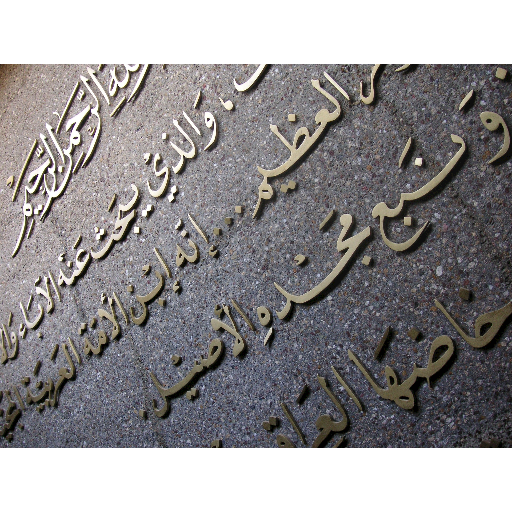
The official language in Egypt is Arabic. There are many dialects of Arabic that are spoken throughout the country with the majority of the population speaking Egyptian Arabic followed by Sa'idi Arabic and other minority dialects. Egyptian Arabic is the most widely understood dialect among Arabic speakers, but speakers of differing dialects can still easily communicate with one another.
Religion
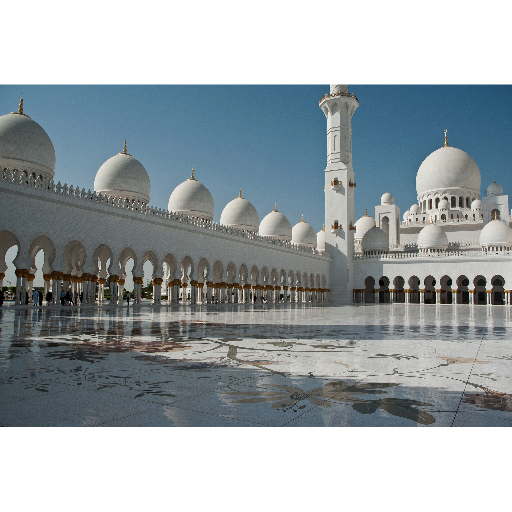
The vast majority of Egyptians are Muslim, mostly Sunni Muslim, and the Islamic ideology is deeply rooted in Egyptian society and influences many aspects of their daily lives. Although Egypt is officially a secular state, Islamic principles guide the nation's laws, business relations, and social customs. Islam was introduced to Egypt in 642 AD after Arab forces took control of Egypt. Roughly ten percent of the population is Christian with Coptic Christians, whose religion dates back to the first century AD, are the largest religious minority.
Culture
Egyptians tend to live an unhurried life and use the phrase Ma'alesh, which roughly translates to 'don't worry', which is used to dismiss concerns or worries that are inevitable or not serious. Egypt is socially conservative and enforces strict social prohibitions on women and the LGBTQ+ community. The country also has a low gender equality ranking of 102 out of 162 countries, and women and girls face significant obstacles in economic participation as well as sexual harassment and educational enrollment gaps. Egyptian women are also repressed by laws and social codes that restrict their freedom and opportunities.
The LGBTQ+ population is also oppressed as public morality laws are in place to punish those suspected of homosexuality and those who are sympathetic to the community. Egypt ranks low on the Human Development Index with a score of 116 out of 189 countries. Family connection is important to their lifestyle, and Egyptian parents are responsible for providing for their children with the children paying respect to their parents. It is common for relatives to gather on the weekends and religious holidays together especially during the month of Ramadan.
- Full access to our public library
- Save favorite books
- Interact with authors
- < BEGINNING
- END >
-
DOWNLOAD
-
LIKE
-
COMMENT()
-
SHARE
-
SAVE
-
BUY THIS BOOK
(from $3.99+) -
BUY THIS BOOK
(from $3.99+) - DOWNLOAD
- LIKE
- COMMENT ()
- SHARE
- SAVE
- Report
-
BUY
-
LIKE
-
COMMENT()
-
SHARE
- Excessive Violence
- Harassment
- Offensive Pictures
- Spelling & Grammar Errors
- Unfinished
- Other Problem






COMMENTS
Click 'X' to report any negative comments. Thanks!